

China Smooth HDPE Geomembrane: Durable Solutions for Modern Containment Projects
2026-06-16
In modern containment projects, the choice of lining material can make or break long-term performance. China smooth HDPE geomembrane has emerged as a top contender, offering exceptional durability and chemical resistance. But not all geomembranes are created equal—sourcing from a trusted manufacturer is key. At WEN FENG STONE, we combine advanced production techniques with rigorous quality control to deliver solutions that stand the test of time. In this post, we’ll explore why smooth HDPE geomembrane is the go-to option for demanding applications and how our products help you achieve reliable containment.
Why Project Engineers Rely on This Material for Critical Containment
When designing systems that handle hazardous or high-value fluids, project engineers need more than just a barrier—they need confidence. This material has earned that trust by consistently performing under conditions that would rapidly degrade ordinary options. Its molecular structure resists chemical attack across a wide pH spectrum, while its mechanical properties hold steady even when thermal cycling pushes temperatures from cryogenic lows to steam-sterilization highs. There’s no guesswork involved; decades of field data back up every design curve, so engineers can specify it without second-guessing long-term integrity.
In critical containment, downtime isn’t an inconvenience—it’s a potential disaster. That’s why the low maintenance demand of this material is such a decisive factor. Unlike coated metals that blister or elastomers that crack after repeated exposure, this material shrugs off fatigue. Its inherent toughness means fewer replacements, fewer inspections, and a dramatically reduced leak risk over the asset’s life. For engineers balancing capital cost against total cost of ownership, that math is straightforward: a higher upfront spend that eliminates mid-life retrofits is almost always the more economical path.
Beyond pure performance, there’s a practical versatility that keeps this material on the specification shortlist. It can be machined, welded, or formed into complex geometries without compromising its containment-grade properties. Need a one-off pressure vessel with integrated baffles? It’s achievable. Retrofitting an existing plant with custom-fitted liners? Done. This adaptability means project engineers don’t have to redesign their entire system around the material’s constraints—instead, the material bends to the project’s demands, all while delivering the non-negotiable containment reliability that the application requires.
A Closer Look at the Physical Properties That Matter Most
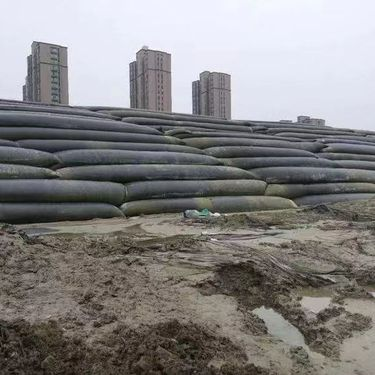
When choosing materials for a project, it’s easy to get lost in a sea of technical specs. But some physical properties genuinely shape how a material performs day after day. Density often sets the tone—lighter isn’t always weaker, but it changes how a structure feels and behaves under stress. Then there’s hardness, which hints at wear resistance and how a surface will age over time. These aren’t just numbers on a datasheet; they’re the quiet reasons a part lasts or fails unexpectedly.
Thermal and electrical conductivity often get less attention during early design, yet they can make or break an application. A material that expands too much with heat might warp in a tight assembly, while one that conducts electricity well could open up design possibilities you hadn’t considered. Elastic modulus, too, deserves a closer look—stiffness influences everything from vibration damping to the feel of a product in someone’s hand. Sometimes the most telling property isn’t the most obvious one, but the one that interacts with everything else.
Corrosion resistance sits in a category of its own, blending chemistry with everyday environment. A part that looks perfect on paper can degrade fast if the coating or alloy choice overlooks moisture or salt. Fatigue strength matters just as much in moving parts, where repeated loading gradually steals performance long before a visible crack appears. Ultimately, the properties that matter most depend on asking the right questions: not just “how strong?” but “strong for how long, under what conditions, and at what cost?”
Where Smooth HDPE Excels Beyond Traditional Liners
Unlike traditional liners that often develop wrinkles and folds trapping debris, smooth HDPE provides a truly flat, low-friction surface. This drastically reduces the buildup of organic matter and biofilm, which not only simplifies cleaning but also helps maintain water quality in sensitive environments like aquaculture tanks or potable water reservoirs. The absence of fabric-like textures means there’s nowhere for pathogens to hide, a critical edge where hygiene is non-negotiable.
Its superior chemical resistance sets smooth HDPE apart in industrial applications. While rubber or reinforced polyethylene liners can swell, crack, or leach when exposed to harsh chemicals, HDPE remains stable against a wide spectrum of acids, alkalis, and solvents. This durability makes it the first choice for containing aggressive liquids in mining leach pads, chemical storage, and landfills without the risk of sudden failure or costly remediation.
Installation efficiency is another overlooked advantage. Smooth HDPE can be prefabricated into large custom panels, drastically cutting on-site seaming and welding time compared to rigid geomembranes or multi-layered composites. Because it flexes without stress whitening, it adapts gracefully to uneven subgrades and thermal expansion, maintaining a continuous barrier that traditional liners often fail to guarantee after years of ground settlement.
The Installation Edge: Faster, Cleaner, and More Reliable Seams
A smart interlocking design cuts installation time sharply. The boards slide into place and click shut with a distinct snap, so there’s no need to fuss with glue bottles or clamps. Built-in alignment tabs mean you’re not constantly measuring and nudging; the edge guides itself into the correct position, even on uneven subfloors. What used to take a full afternoon now wraps up before lunch.
Mess is practically nonexistent with this approach. Since adhesives are out of the picture, you avoid sticky overspill and the dusty cleanup that follows. No rags, no solvent smells, no dried residue marring the surface. The workspace stays tidy, and the panels themselves remain spotless—just a few dry wipes and the floor is ready for furniture the same day.
The reliability of the joint comes down to how the profile manages stress. Instead of relying on a brittle glue bond that can crack or weaken, the locking geometry distributes tension evenly along the full length of the seam. It handles seasonal humidity shifts without pulling apart, and stays resilient under heavy rolling loads. Years later, the connection holds as solidly as it did on day one.
Longevity in the Field: Stories of Decades-Long Performance
There's a quiet magic in watching someone who has spent a lifetime mastering their craft. It’s not about flawless execution—though that often comes—but about the layers of experience that seep into every gesture, note, or line delivered. Take the cellist who, after five decades on stage, still finds new shadows in a Bach suite. Her fingers move with a familiarity that borders on instinct, yet each performance feels like a quiet conversation with time itself. Decades-long performance isn’t about repeating the same act; it’s about deepening it, letting life’s textures reshape the work.
Consider the stage actor who has inhabited the same role across forty years. The lines remain unchanged, but his body carries the weight of personal losses and quiet triumphs. Audiences who saw him in his thirties now bring grandchildren, and they witness not just a character but a living archive of emotion. This is the gift of longevity: the ability to turn a single performance into a palimpsest, where the old and new coexist. It shatters the illusion that art is fixed, revealing it as something that breathes alongside its maker.
Then there are the unsung heroes—the dancers who adapt their movements as joints stiffen, the jazz pianists who reinvent standards nightly for six decades. Their stories aren't about defying age but embracing it as an instrument. One aging soprano described her voice not as diminished but as "seasoned, like a cast-iron skillet." These performers remind us that mastery is a moving target. The real show is watching them navigate the tension between the artist they were and the one they're still becoming.
Balancing Budget and Safety Without Compromise
Striking the right balance between fiscal responsibility and workplace safety often feels like walking a tightrope. Many organizations mistakenly believe that robust safety measures inevitably drain financial resources, but truly effective safety strategies don't have to break the bank. Instead of viewing safety as a cost center, forward-thinking companies treat it as an investment that prevents expensive incidents, reduces downtime, and protects their most valuable asset—their people. The key lies in identifying high-impact, cost-efficient solutions that align with operational realities.
A practical approach begins with a thorough risk assessment to prioritize hazards that pose the greatest threat. Rather than blanket spending on generic safety programs, resources are directed where they matter most. Simple, low-cost interventions—like improved signage, regular equipment maintenance, and targeted training—often deliver significant risk reduction. Engaging employees in the process also yields inventive ideas that cost little but improve daily practices. When safety becomes part of the cultural fabric rather than a top-down mandate, compliance becomes organic and incidents decline.
Ultimately, balancing budget and safety is about making smarter choices, not compromises. Leveraging technology, such as data analytics to predict and prevent incidents, can optimize spending and demonstrate clear return on investment. A well-designed safety framework proves that financial prudence and employee well-being can coexist, fostering resilience and long-term stability without sacrificing either goal.
FAQ
It is a high-density polyethylene liner with a uniform, non-textured surface. In China, it's commonly produced through a flat-die extrusion process, where resin is melted and formed into sheets, then cooled and wound into rolls. The smooth finish ensures consistent thickness and low permeability.
They offer exceptional resistance to chemicals, UV radiation, and environmental stress cracking. The high-density structure provides superior tensile strength and puncture resistance, making them long-lasting even under harsh conditions like landfill leachate or mining slurries.
They are widely applied in landfills, mining heap leach pads, wastewater treatment ponds, aquaculture, and canal linings. The smooth surface is ideal for applications where sliding or low friction is required for installation or fluid flow.
Installation involves field seaming using hot-wedge welding, rigorous non-destructive testing like air pressure tests on seams, and careful subgrade preparation. Certified technicians typically handle deployment to minimize wrinkles and ensure contact with the subgrade.
Reputable manufacturers adhere to international standards such as ASTM, GRI-GM13, or ISO certifications. Key parameters tested include thickness, density, tensile properties, tear resistance, and carbon black content for UV protection.
Smooth geomembranes have lower interface friction, making them suitable for slopes where a slip layer is needed or for covering large flat areas efficiently. Textured versions provide higher friction for steep slope stability, often used in landfill covers or side linings.
Yes, many suppliers offer custom prefabrication services, where panels are welded into large custom shapes in the factory. This reduces field seaming, speeds up installation, and minimizes waste on site.
Long-term performance is ensured through the use of stabilizers like carbon black for UV resistance (even in buried applications as a safeguard), high-quality welding techniques, and protective layers such as geotextiles above and below to prevent puncture from sharp objects.
Conclusion
In modern containment projects, the choice of liner material often determines the long-term success or failure of an installation. China smooth HDPE geomembrane has emerged as a material that project engineers turn to with growing confidence, not because of industry buzz, but because it consistently solves real problems. Its molecular structure resists chemical attack and stress cracking in ways that traditional liners simply cannot match, keeping hazardous substances sealed even under thermal cycling. The physical toughness goes beyond mere thickness—tear resistance, puncture strength, and dimensional stability hold up when subgrades shift or heavy machinery passes over, making it the quiet workhorse of landfills, mining ponds, and water reservoirs.
What sets smooth HDPE apart in the field is more than a spec sheet; it’s the way it performs when budgets tighten and safety can’t be compromised. Welding technologies have matured to the point where crews can lay down seams that are actually stronger than the parent sheet, slash installation time, and eliminate the kind of leaks that destroy reputations. Decades-long case histories from regions with brutal UV exposure and aggressive leachate show this material outlasting its design life with minimal upkeep, proving that the upfront investment pays off in ways accountants understand. By balancing raw material costs against catastrophic failure risks, China smooth HDPE geomembrane offers a practical path—tough enough for the job, cost-effective enough to specify without hesitation, and backed by a track record that speaks louder than any marketing claim.
Contact Us
Contact Person: Jennifer LEE
Email: [email protected]
Tel/WhatsApp: 8618553418999
Website: https://vip.e-baixing.com/wenfengshitong