
Custom HDMI Coaxial Cable: Key Factors for Reliable AV Setup
2026-11-16
Nothing kills a perfect movie night or a critical presentation faster than a flickering screen or sudden signal dropout. While most people obsess over projectors, receivers, and displays, the humble cable running behind the wall often decides whether your AV setup feels premium or painfully unreliable. That’s where a custom HDMI coaxial cable from EBCYX changes the game—built to handle longer runs, tighter bends, and real-world interference that off-the-shelf cables simply can’t.
Why Signal Loss Happens Faster Than You Think
Most people assume signal loss creeps in gradually, but in practice it can hit like a dropped call in a tunnel. The physics of radio waves doesn't wait for a warning—obstacles like concrete walls, metal framing, or even dense foliage can attenuate a signal by 20 or 30 dB in a fraction of a second. What makes it feel sudden is the nonlinear way receivers respond: once the signal-to-noise ratio dips below a critical threshold, the connection doesn't degrade gracefully, it collapses.
Another factor is multipath interference. In urban canyons or indoor spaces, signals bounce off surfaces and arrive at the antenna slightly out of phase. These reflections can cancel each other out almost instantly, creating deep nulls that move as you move. You might step half a meter and lose 40 dB, which feels like the signal vanished out of nowhere rather than fading slowly.
Then there's the hardware side. Automatic gain control and digital error correction can mask a weakening signal for a while, giving you a false sense of stability. But once those mechanisms hit their limits—often within a few hundred milliseconds—the perceived drop is steep. That's why moving just a little, or turning your head, can be the difference between full bars and no service.
The Shielding Layer Most DIY Cables Skip
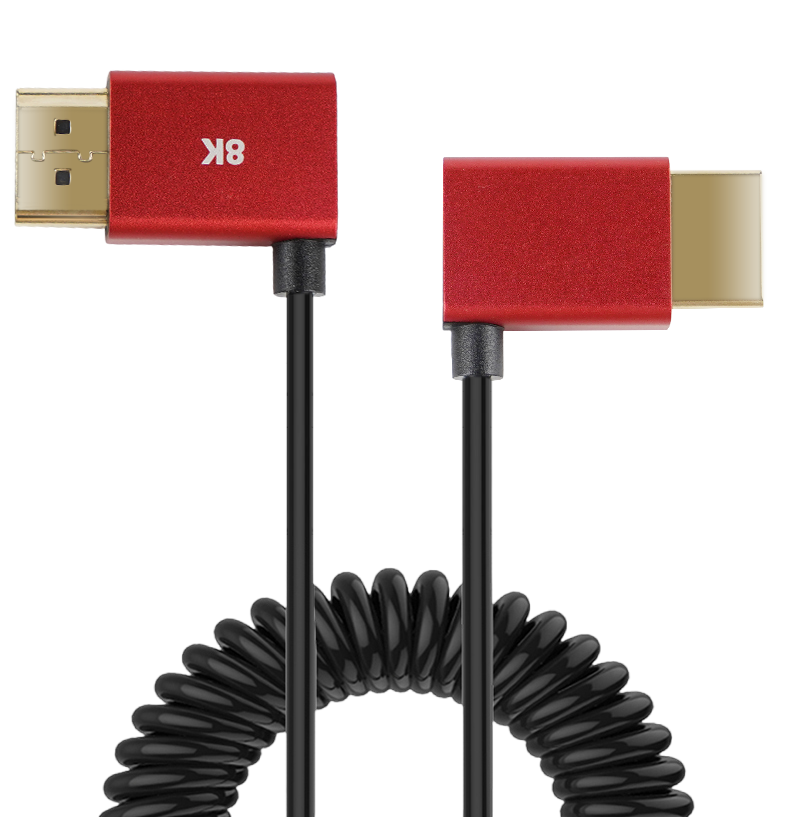
When you strip back a commercial cable and compare it to a homemade one, the first thing that often jumps out isn't the conductor gauge or the connector quality — it's the absence of that metallic or conductive wrap hugging the inner wires. Most DIY builds focus on clean soldering and durable outer jackets, but they completely skip the shielding layer because it seems redundant for short runs or low-frequency signals. In reality, that layer isn't just about blocking obvious interference; it also controls how the cable itself behaves as an antenna, picking up stray noise from nearby power supplies, LED dimmers, or even your phone's radio bursts.
What makes shielding so easy to overlook is that the cable works fine on a test bench. The problems only surface later: a faint hum in the audio, intermittent data dropouts, or a subtle rise in error rates when multiple devices are active. A proper shield — whether braided copper, spiral wrap, or foil with a drain wire — needs to be grounded correctly, usually at one end to avoid ground loops. The extra twenty minutes of work feels unnecessary until you realize that the “invisible” layer is exactly what separates a cable that merely functions from one that stays quiet and reliable in a messy real-world setup.
Connector Crimping Mistakes That Cause Dropouts
A lot of intermittent signal loss isn't from bad cable or interference—it's from a crimp that looks fine on the outside but has a loose gas-tight connection inside. If the crimp height is even a few thousandths too large, the terminal doesn't fully collapse around the conductor strands, leaving micro-gaps that open up under vibration or thermal cycling. The result is a dropout that only appears when the harness gets warm or gets bumped.
Another common fault is using the wrong die set or crimping too close to the insulation. When the die is meant for a different terminal barrel size, it can fold the wire barrel unevenly or cut strands at the edge. Strands that are nicked or sheared carry less current and become stress points; they can fracture later after repeated flexing. Crimping over the insulation also reduces metal-to-metal contact because part of the barrel is wasted clamping plastic instead of copper.
Finally, skipping a proper pull test or not inspecting the bellmouth lets weak crimps ship. A bellmouth that's too small or absent means the wire can fatigue right at the crimp entrance, while a bellmouth that's too large reduces the contact area. Simple hand checks won't catch these margins—only a calibrated crimp height micrometer and occasional cross-sectioning will reveal whether the crimp is solid enough to avoid random dropouts on the road.
Cable Length: Where Signal Degradation Begins
Every conductor resists the flow of electricity, and that resistance accumulates with distance. A signal leaving a source at full strength loses voltage as it travels, and by the time it reaches the far end, the waveform may be too weak or distorted to be decoded reliably. Short runs hide this effect because the loss is negligible, but once you pass a threshold that depends on cable gauge, material, and frequency, the degradation becomes measurable and then catastrophic.
Higher frequencies suffer earlier because attenuation is not linear across the spectrum. A digital video signal, for instance, relies on sharp transitions and tight timing; as the cable lengthens, capacitance and inductance smear those edges, causing bit errors or complete dropouts. The same principle applies to analog audio, where long unbalanced cables invite hum and high-frequency rolloff, often mistaken for a poor source rather than the wire itself.
Practical limits vary, but the fix is rarely to keep adding boosters indefinitely. Running a powered repeater or switching to a balanced connection can extend usable length, yet the cleaner approach is to shorten the path or move to fiber when distance becomes a hard requirement. Knowing where your signal starts to fall apart matters more than memorizing maximum cable lengths, because real-world conditions rarely match a spec sheet.
Environmental Factors That Shorten Cable Life
Cables rarely fail on their own; it’s the world around them that does the damage. Heat is one of the biggest culprits, whether it’s direct sunlight baking an outdoor run or the ambient temperature inside a crowded conduit. As temperatures climb, insulation materials soften, oxidize faster, and lose their flexibility, leading to cracks that let in moisture and contaminants. Even short-term heat spikes can permanently alter the dielectric properties, reducing the cable’s ability to handle voltage stress over time.
Moisture is another relentless factor. Water can seep into tiny nicks or poorly sealed splices and then travel along the conductor strands through capillary action. Once inside, it accelerates corrosion of the copper or aluminum, thinning the conductor and raising resistance. In colder climates, trapped water freezes and expands, physically separating the insulation from the core or splitting the outer jacket. Humidity alone—even without liquid water—encourages mold and mildew on organic jacket materials, which can degrade surface conductivity and lead to tracking.
Ultraviolet radiation, ozone, and chemical exposure round out the list. UV breaks down polymer chains in the jacket, making the surface chalky and brittle; ozone does the same but attacks at stress points, like bends or clamp locations. Industrial solvents, oils, and even some cleaning agents can swell or dissolve cable jackets, especially PVC types. The cumulative effect of these environmental factors means a cable that should last twenty years can fail in five—often without a single overload event ever occurring.
Pre-Installation Checks That Prevent AV Failures
Most AV deployment failures trace back to an environment that wasn't fully prepared, not the installer itself. Before you even download the package, confirm the operating system build and patch level are in line with the vendor's support matrix—an older Windows 10 LTSC or a freshly installed Server Core can miss required components and throw cryptic errors midway. Also look for leftovers from previous security software: uninstalling a competitor product through Control Panel often leaves behind kernel drivers or registry entries that later block the new AV's real-time scanner from starting. Running the previous vendor's dedicated removal tool, or at least checking for stale services under the hood, saves a lot of troubleshooting later.
Disk space is another silent killer, but not in the way most people expect. The installer might only need 500 MB, yet the temporary extraction folder or a system drive that's down to a few hundred megabytes will cause the setup to roll back without a clear reason. Make sure the %TEMP% directory isn't pointed at a small RAM disk or a network share with slow I/O. It's also worth verifying the system clock and time zone—certificate validation during installation depends on accurate time, and a skewed clock can produce vague signature errors. Finally, if the AV needs to pull the latest definitions from the internet, test the proxy or firewall rules beforehand; a blocked update server often masquerades as an installation crash.
FAQ
The main difference comes down to matching the cable to the actual install. A custom cable lets you choose the exact conductor gauge for the distance, use a double-layer shield that actually blocks nearby power lines or Wi-Fi interference, and terminate with connectors that fit snugly into recessed ports. Off-the-shelf cables rarely account for tight conduits or long ceiling drops, which often leads to signal dropouts.
Length is one of the biggest factors. Beyond 25 feet, higher gauge conductors start losing high-frequency content, and the eye pattern closes enough to cause flickering or no picture at all. For runs between 30 and 50 feet, I usually step up to a thicker center conductor or add a small active equalizer near the display. Custom builds let you compensate for length rather than hoping a thin cable holds up.
A combination of aluminum foil and a high-coverage copper braid is the most practical choice. The foil handles high-frequency interference, while the braid deals with lower-frequency hum and adds mechanical strength. For especially bad environments, I have seen builders use a second foil layer with a drain wire, but the foil-plus-braid combo covers most AV racks and in-wall runs.
Impedance mismatches cause reflections that eat away at the signal, especially at high data rates. A well-made custom cable keeps the differential impedance stable along the entire length, which means the conductor spacing and dielectric dimensions must not wander. That stability is what lets a cable pass an 18 Gbps or 48 Gbps signal without random sparkles or audio dropouts.
Connectors are where custom cables often fail if corners are cut. Look for gold-plated contacts, but more importantly, check that the strain relief grips the jacket and not just the inner wires. For permanent installs, a low-profile connector with a locking mechanism can prevent loosening from vibration or cable weight. Soldered or properly crimped terminations also hold up better than cheap molded ends.
Yes, and exceeding it is a silent killer. For most HDMI coax-style cables, keep the bend radius at least 10 times the cable diameter. Tight 90-degree bends through conduit or behind a wall plate can deform the dielectric and shift impedance, causing intermittent failures that are hard to trace. Use gradual sweeping curves and leave slack at both ends.
It depends on the bandwidth rating and length. A cable built with solid copper conductors, precise impedance, and strong shielding can carry 4K60 or even 8K60 up to a certain distance, typically around 15 to 25 feet without active help. For longer runs, you may need to move to a fiber-based hybrid or add an extender. Custom coaxial builds are best for moderate distances where a stock cable cannot be routed cleanly.
Conclusion
Most people assume a custom HDMI coaxial cable will simply work as long as the ends fit, but that belief collapses quickly in real installations. Signal loss rarely announces itself until a screen flickers or audio drops out mid-presentation. One common culprit is cable length: beyond certain distances, the coaxial core's attenuation climbs, and the signal that leaves the source no longer resembles what arrives. Pair that with weak shielding, and you have a recipe for interference from nearby power lines or wireless equipment. Many DIY builders skip the braided foil layer or leave gaps at the connectors, letting noise leak in and data packets vanish. Crimping mistakes compound the issue—if the center conductor isn't aligned properly inside the connector, intermittent dropouts become a constant headache.
Reliability depends on much more than buying a high-end spool. Before running cable through walls or conduit, a few checks can prevent late-night service calls. Physical stress, heat, and moisture all shorten cable life, especially in attic or outdoor runs where temperature swings loosen connector joints. A quick continuity test after soldering or crimping—followed by a full bandwidth check—catches most faults before they become hidden problems. If you build your own HDMI coaxial cables, treat the shielding as a continuous envelope from connector to connector, avoid sharp bends near termination points, and document exactly how each run is installed. That kind of careful, boring preparation is what separates a dependable AV setup from one that only works on the bench.
Contact Us
Contact Person: David Yang
Email: [email protected]
Tel/WhatsApp: 8615814734054
Website: https://www.ebcyx.com/