

Professional USB 3.2 Gen 2 Type-C Cable Benefits You Should Know
2026-11-02
If you’ve ever wondered why your USB-C cable delivers sluggish transfer speeds or barely keeps up with fast charging, the problem usually isn’t your port—it’s the cable itself. A professional USB 3.2 Gen 2 Type-C cable changes the game, and not all cables are built equal. Before you settle for whatever came in the box, here’s why upgrading to an EBCYX cable can unlock the full performance your devices are designed for.
Move 4K video files in seconds, not minutes
Transferring a 20GB 4K clip used to mean watching a progress bar crawl while you found something else to do. Now, with USB 3.2 Gen 2x2 or Thunderbolt 4, the same file lands on your drive in the time it takes to check a text message. The waiting is gone, and so is the habit of planning transfers around breaks.
On a busy shoot, that changes everything. You offload cards between setups instead of at the end of the day. An assistant can hand a full drive to the DIT and get it back before the next scene is lit. The transfer step stops being a scheduling problem and becomes something you just do.
It also keeps your workflow cleaner. When moving footage takes seconds, you don't postpone imports or let cards pile up. You transfer as you go, which means every clip is logged, backed up, and ready to edit while the project is still fresh in your mind.
One cable for laptop, phone, and 4K display
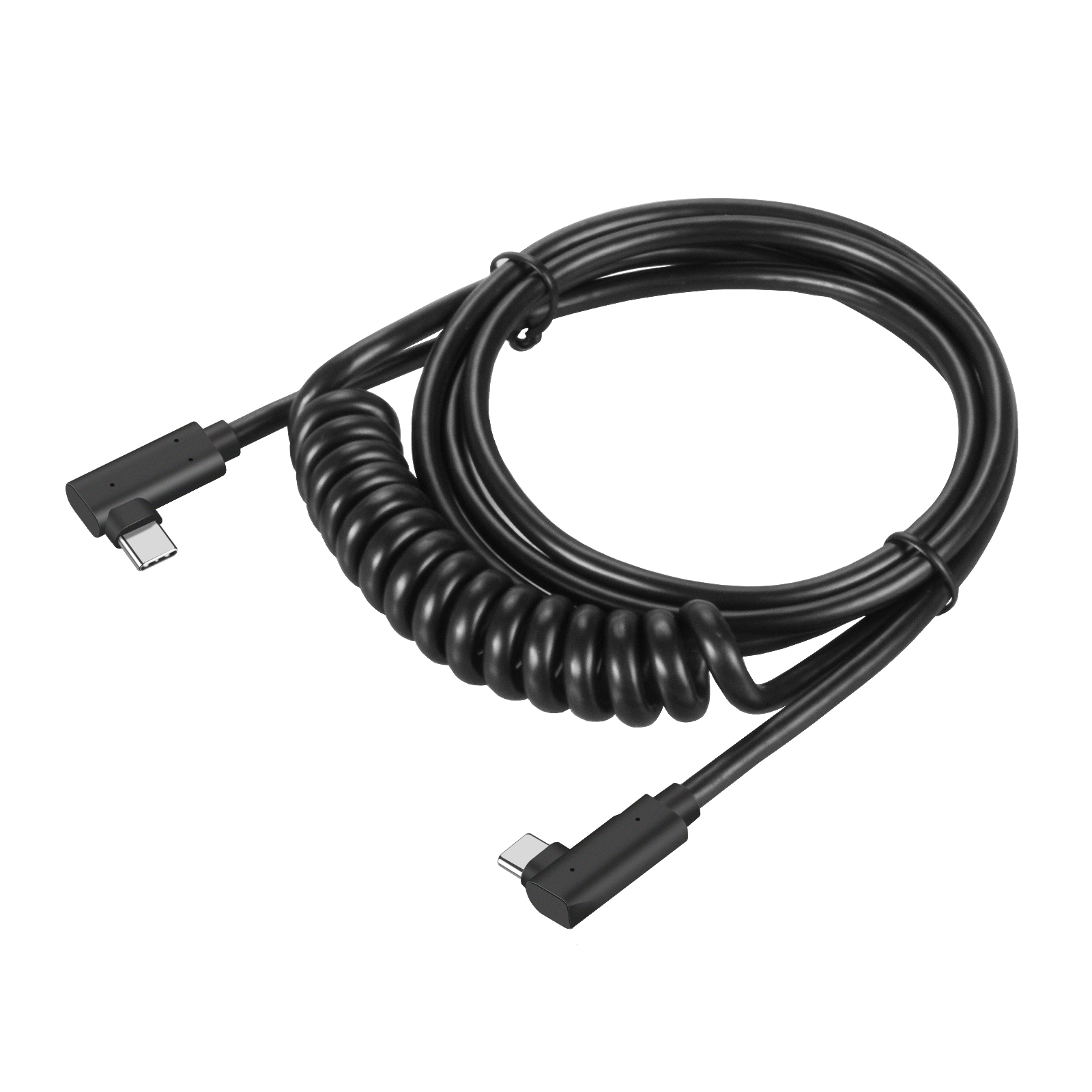
You know the drill: a charger for the laptop, another cable for the phone, and a separate HDMI or DisplayPort line snaking to the monitor. With this single cable, all three connect through one USB-C link. It carries power, data, and video simultaneously, so the laptop stays charged, the phone syncs or tops up, and the 4K display gets a clean signal—no adapter pile on the desk.
Plug the cable into a compatible USB-C port and the electronics handle the rest. The display side supports full 4K resolution at 60Hz, keeping text sharp and motion smooth. Meanwhile, the phone can fast-charge or transfer files at the same time without interrupting the video feed. It is a practical way to reduce clutter and avoid hunting for the right connector every morning.
For anyone who moves between home and office, this one-cable setup saves real time. Toss it in a bag, and you have a single link for presentations, desk setups, and charging on the go. No software to install, no settings to fiddle with—just connect and everything talks to everything else.
100W charging that ends cable clutter
One charger, one cable, every device. A single 100W output is powerful enough to top up a laptop, fast-charge your phone, and still handle earbuds or a tablet without hunting for a different brick. Instead of a drawer stuffed with incompatible plugs and tangles of cords, the only thing you need to reach for is a single braided cable that stays coiled neatly on your desk.
That kind of headroom changes how you think about charging. You stop worrying about whether the USB-C port on your laptop will pull too much current, or if your phone is getting enough voltage for a quick boost before you head out. The charger intelligently negotiates the right power for each device, so a 15-minute top-up can add hours of runtime without leaving a nest of abandoned low-wattage adapters behind.
The real bonus is what disappears: the habit of unplugging one thing to power another, the jumble of short cables coiled under a monitor stand, the slow trickle from a hotel USB port when you forgot your fast charger. With 100W in a compact body, you can keep a single tidy setup at home and toss one into a bag for travel, knowing it will handle whatever needs juice. Less clutter on the desk, fewer cables in the drawer, and no more guessing which plug belongs to which gadget.
Twist it, bend it, throw it in a bag
Some things demand careful packing. This isn't one of them. Give it a twist, fold it over, shove it into whatever pocket of your bag still has room—it won't complain. The shape might look a little odd for a moment, but once you pull it back out, everything settles right back where it should be. No creases, no weak spots, no need to treat it like glass.
That kind of freedom changes how you carry it. You stop reaching for a dedicated case or clearing out a safe corner of your backpack. Instead, it ends up tossed next to your keys, jammed beside a water bottle, or wedged between books. And because it's built for exactly that kind of everyday chaos, it still works just as well on day one as it does after months of being thrown in a bag.
No more dongle roulette for your new laptop
You know the drill: you sit down at a desk, plug in a monitor, and then the hunt begins. Is it the USB-C to HDMI adapter you need, or the one for DisplayPort? Maybe you grabbed the USB-C hub that only does data, not video. It feels like spinning a wheel, hoping the right dongle is hiding at the bottom of your bag. That daily gamble wastes time and leaves your workspace looking like a cable salad.
A modern laptop with a proper port selection ends that game for good. Built-in HDMI or DisplayPort means one less thing to forget. A couple of USB-A ports let you plug in a mouse, a flash drive, or an older printer without hunting for a converter. Throw in an SD card reader and a headphone jack, and you're ready for photos, audio, and everyday peripherals the moment you open the lid. No adapters, no fiddly little pieces that vanish into the void.
That simplicity changes how you work. You stop carrying a pouch of dongles and start trusting your machine to just connect. A clean desk, fewer moving parts, and one less decision between you and the task at hand. It turns out the best laptop accessory is the one you never have to buy.
USB-C that won't be outdated next year
Most USB-C ports promise versatility but quietly lock you into last year’s bandwidth ceiling. This one doesn’t. It’s built around the USB4 2.0 spec and Thunderbolt 5 readiness, so it already handles 80Gbps data transfers and dual 6K display streams—standards that most laptops won’t even demand until 2026. Rather than swapping the port when new peripherals arrive, you just plug them in.
Charging gets the same treatment. Instead of topping out at 100W like older implementations, the power path supports PD 3.1 Extended Power Range up to 240W. That means a single cable can drive a beefy workstation dock, a gaming laptop, or a fast-charging phone without negotiating itself into a corner. The internal e-marker chip also stores updated capability tables, so firmware tweaks can expand compatibility without touching the hardware.
What really keeps it from aging is the full pin-out and alt-mode support baked in from day one—DP 2.1, PCIe tunneling, and even legacy USB 3.2 fallback all coexist on the same connector. There’s no “version lottery” where you wonder if your port is the fast one. It just handles whatever you throw at it next year, and the year after that.
FAQ
The main difference is shielding and power delivery handling. A professional cable uses better insulation, often includes multiple layers of foil and braid, and maintains signal integrity at 10Gbps even when bent or routed near power sources. Many cheap cables only support USB 2.0 speeds or drop connection under load.
Yes, if the cable is rated for 100W or higher USB Power Delivery. Look for an E-Marker chip inside the connector—this tells the charger and laptop to negotiate higher wattage safely. Without it, the cable may limit charging to 60W or less.
USB 3.2 Gen 2 runs at 10Gbps, which is double the 5Gbps of USB 3.1 Gen 1. In practice, transferring a 20GB video project takes roughly half the time—about 16-20 seconds of sustained transfer versus 35-40 seconds, assuming your storage drive can keep up.
Many professional cables support DisplayPort Alt Mode, letting you drive a 4K monitor at 60Hz directly from a laptop or phone. The Type-C connector carries video, audio, and data simultaneously, so you can connect a dock and run external displays without a separate HDMI cable.
Quite important. The USB-IF spec lists 1 meter as the typical max for passive Gen 2 cables. Beyond that, signal attenuation can drop speeds to 5Gbps or cause disconnects. For longer runs, look for active cables with built-in signal repeaters, though they tend to cost more and draw a little power.
Not always, but professional cables usually use reinforced strain relief and thicker gauge wire. The weak point is almost always the connector joint. If the cable has a metal shell, overmolded TPE jacket, and a bend radius rated for 10,000+ cycles, it will survive daily unplugging much better than a generic PVC cable.
Yes, they work with USB 3.0, USB 2.0, and even USB 1.1 ports. The cable just falls back to the speed of the slowest device in the chain. So if you plug a Gen 2 cable into an old USB 2.0 port, you get 480Mbps—no harm, just slower transfer.
First, confirm the device supports Gen 2 speeds and the features you need, like Thunderbolt 3/4 or PD charging. Then look for certification logos or Genuine USB-IF certification. Check the wattage rating, video alt mode support, and length. Avoid cables that only list 'USB-C' without any speed class—they are often USB 2.0 in disguise.
Conclusion
If you're still juggling multiple cables or waiting forever for large files to transfer, a professional USB 3.2 Gen 2 Type-C cable changes the game. We're not just talking about a marginal speed bump—you can move 4K video files in seconds, not minutes, which matters when deadlines are tight. One cable now covers your laptop, phone, and even a 4K display, so you stop hunting for the right connector. And with 100W charging built in, you can power a laptop while transferring data, ending the mess of separate chargers and cables on your desk.
Durability is often overlooked, but this cable is meant to be twisted, bent, and thrown in a bag without falling apart. Plug it into a new laptop and there's no dongle roulette—it just works with USB-C ports directly. Best of all, the spec isn't a dead end; it's designed to stay relevant next year, so you're not buying something that becomes obsolete when standards shift. For professionals who hate friction, this single cable quietly removes most of the daily annoyances around connectivity and power.
Contact Us
Contact Person: David Yang
Email: [email protected]
Tel/WhatsApp: 8615814734054
Website: https://www.ebcyx.com/