

Reliable Gantry Cranes: How to Choose the Best Crane for Your Needs
2026-07-26
When it comes to lifting heavy loads in demanding industrial environments, not all gantry cranes are created equal. From construction sites to busy shipyards, the right crane can mean the difference between smooth operations and costly downtime. But with so many options on the market, how do you pinpoint the perfect match for your specific needs? In this guide, we'll break down the key factors to consider, from load capacity and span length to mobility and durability. And if you're looking for equipment that checks every box, LugongMachinery has been quietly redefining reliability with cranes built for the long haul. Let's dive in and find the crane that will keep your projects moving forward—without the headache of constant maintenance.
Pinpointing the Workhorse: Matching Crane Capacity to Your Daily Demands
Most job sites don’t need the biggest crane on the lot—they need the one that lifts exactly what’s required, without wasting fuel or hours. Start by mapping out your typical loads: weigh the heaviest single piece you move on a regular basis, not the once-a-year exception. Then factor in how far that weight needs to travel horizontally and vertically. A crane’s load chart isn’t a single number; capacity drops sharply as the radius increases, so a machine rated for 50 tons at a tight radius might only handle 12 tons at full reach. Matching these curves to your daily workflow prevents both underperformance and overinvestment.
Beyond raw capacity, consider how rhythm affects your choice. If your team runs multiple lifts per hour, a slightly larger crane operating at 70% of its limit often outperforms a smaller one straining at 100%. The larger machine cycles faster, runs cooler, and gives the operator more control—especially when wind or uneven ground comes into play. That headroom also extends the crane’s service life, since components aren’t constantly pushed to their design limits. Think of it not as oversizing, but as building in a fatigue buffer that pays off across thousands of cycles.
Finally, look at your site’s physical constraints. A compact crane with a high-capacity chart in tight quarters can outwork a larger machine that can’t even set up properly. Crawler, rough-terrain, or truck-mounted—each platform has a sweet spot for access and footprint. The right match is the one that lets you work at a natural pace, without constant repositioning or load-splitting. When the crane fits the daily reality rather than the brochure specs, both safety and efficiency climb.
Beyond the Spec Sheet: Real-World Durability Factors Most Buyers Overlook
Most shoppers fixate on the numbers—processor speed, megapixels, maybe even IP ratings. But true durability often hides in the parts that don’t make it onto a comparison table. Take the hinge on a laptop, for example. A sturdy, well-tested hinge won’t appear in any spec line, yet it’s the difference between a device that feels rock-solid after three years and one that wobbles like a loose tooth. The same goes for the adhesive used to bond a phone’s display to its frame. Cheaper, less resilient glues degrade with heat and humidity, slowly compromising dust and water resistance long before the seals visibly fail.
Then there’s coating and surface treatment. Anodized aluminum can be incredibly durable or utterly prone to chipping, depending entirely on the quality of the process—something no datasheet will tell you. Keyboard key legends that are laser-etched rather than pad-printed won’t fade, but you’ll only notice this years into ownership. Even the material chosen for internal cable ribbons matters: some become brittle in cold climates, others lose flexibility over repeated flex cycles. These choices aren’t marketing bullet points, but they accumulate into a product that either ages gracefully or crumbles before its time.
Lastly, pay attention to repairability and component isolation. A device with a unibody design might feel premium, but if a single drop transfers impact directly to the logic board, you’re in for a costly fix. Brands that incorporate subtle shock-absorbing bumpers or sacrificial layers around sensitive internals often don’t advertise it, yet field failure rates tell the real story. The most durable device isn’t the one that looks toughest on paper—it’s the one engineered with quiet, almost invisible decisions that keep it running long after the warranty expires.
Space, Height, and Headroom: The Hidden Geometry of Your Worksite
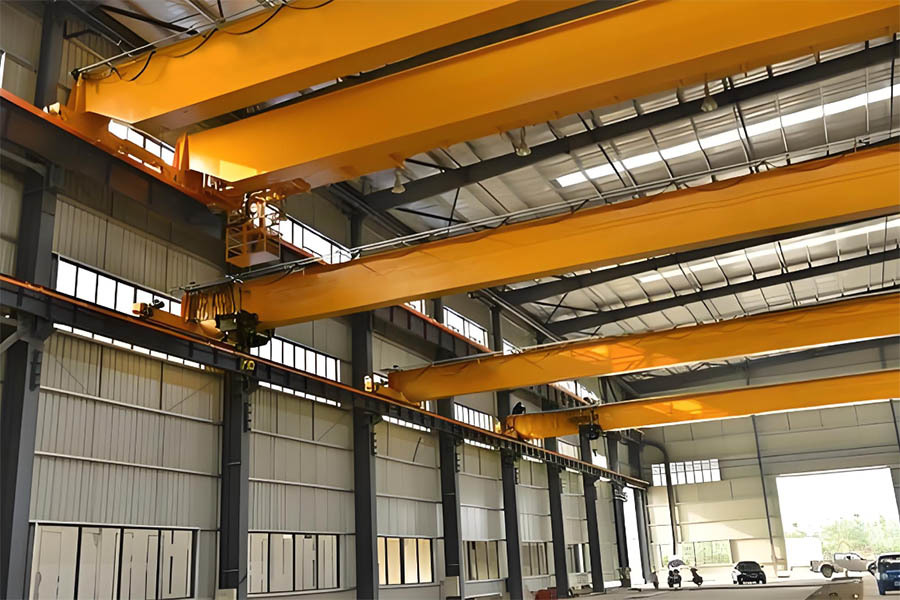
On any active job site, what you can’t see often defines what you can—or can’t—get done. The way vertical clearance, swing radiuses, and load paths interact turns a straightforward lift into a spatial puzzle. Overlook that puzzle, and you risk delays, equipment damage, or worse. The geometry of a worksite isn’t about theoretical angles; it’s about knowing whether a boom can arc freely under a pipe rack or if that new steel column has enough breathing room for the crane’s counterweight to rotate without a blind spot.
Headroom constraints don’t announce themselves with warning signs. They hide in the gap between a suspended ceiling and the roof deck, in the unexpected slope of a graded lot, or in the temporary scaffolding that wasn’t there last week. Seasoned crews develop an instinct for spotting these limits, but relying on instinct alone is a gamble. Real spatial awareness means measuring twice, calculating the true operating radius under full load, and accounting for dynamic factors like deflection or wind sway. A lift chart is only as good as the clearance you actually have.
Mastering worksite geometry often boils down to respecting the vertical dimension as much as the footprint. When you start treating height as a resource rather than a given, placement of equipment, materials, and even pedestrian pathways shifts. Suddenly, that tight corner becomes workable because you thought in cross-sections, not just plan views. The geometry isn’t hidden—it’s just waiting for someone to look up.
Power and Precision: Selecting Drives and Controls for Smooth Operation
Getting a machine to run without hiccups starts with matching the drive to the actual load. Oversizing leads to wasted energy and sluggish responses, while undersizing invites trips and premature wear. The key is looking beyond the nameplate ratings and understanding the torque demands during acceleration, constant speed, and deceleration. A drive that can deliver consistent torque at low speeds, for instance, prevents that annoying judder when a conveyor starts up under full load.
Precision in motion control isn't just about the numbers on a datasheet; it's about how the components talk to each other. A high-resolution encoder paired with a drive that has poor update rates will still leave you with a laggy system. Pay attention to the communication protocols and the drive's ability to execute quick, closed-loop corrections. When the feedback loop is tight, you can hold a cutting head within microns of its target even as the material properties change.
Smooth operation often comes down to the small tuning details that get overlooked during initial setup. Adaptive algorithms can help, but there's no substitute for manually dialing in the ramp profiles and jerk settings for your specific application. Take the time to test the system with actual production loads rather than an empty jog. A drive tuned only for an unloaded motor will misbehave the moment you add the mass and friction of a real process.
Safety That Isn’t Just a Checklist: Intelligent Features That Prevent Accidents
Real safety doesn’t come from ticking boxes on a compliance form. It’s woven into the machine’s behavior, anticipating risks before they unfold. Modern systems rely on a blend of sensor fusion and contextual awareness to interpret their surroundings—not just detecting obstacles, but understanding when a person is distracted, when a surface is unexpectedly slippery, or when a routine operation turns unpredictable. The intelligence lies in acting on that understanding in milliseconds, often without the operator even noticing the intervention.
These features don’t just react—they learn. Over time, algorithms adapt to the specific environment, recognizing patterns that signal danger long before a human would. For instance, a forklift might sense a change in floor traction on a particular curve after a spill, adjusting its speed autonomously the next time it passes. This isn’t a programmed rule; it’s an emergent behavior from continuous observation, making safety dynamic rather than static.
The real breakthrough is how unobtrusive it all feels. There’s no blaring alarm or sudden halt unless absolutely necessary. Instead, subtle corrections—slight steering nudges, gentle deceleration—keep everything on track. Workers stay safer, not because they’re following a protocol, but because the equipment itself has become a silent, proactive partner in avoiding mishaps.
Total Cost Reality: From Installation Quirks to Long-Term Upkeep
The initial price tag rarely tells the full story. Installation can spiral when you discover that your “standard” setup requires custom brackets, additional electrical work, or unexpected structural reinforcements. These surprises aren’t just annoying—they bloat your upfront spend before the system even powers on.
Then comes the quiet drain: maintenance. Components degrade unevenly, consumables need replacing more often than brochures suggest, and software subscriptions add a recurring bite. Over a decade, these expenses can rival the original investment, yet they’re conveniently absent from most marketing materials.
The real cost emerges through operational quirks—energy inefficiencies that creep up when settings drift, idle consumption you stop noticing, and the labor hours lost to troubleshooting finicky parts. Factoring in these realities from day one means the difference between a wise long-term asset and a budget leak you learn to regret.
FAQ
A gantry crane is a type of overhead crane that runs on rails or wheels along the ground, with a bridge supported by legs on either side. You'll commonly find them in shipyards, warehouses, and construction sites, moving heavy materials where a fixed overhead crane isn't practical.
Start by looking at the heaviest load you handle regularly, then add a safety margin of at least 20%. Also consider any future needs—choosing a little extra capacity upfront can save you from having to upgrade too soon.
Single girder cranes are lighter and more affordable, with the trolley riding on the bottom flange. Double girder designs give you more headroom and stability for heavier loads, plus the trolley runs on top of the girders, which can make maintenance easier.
Definitely, the setting impacts the build. Outdoor cranes need weather protection, like galvanized finishes and rain covers, and often require a larger footing for wind loads. Indoor cranes can be more compact and don't need the same weatherproofing.
Both are critical. The span determines how far the crane can reach across your workspace, while lifting height dictates how high you can stack or lift items. Always measure your actual site dimensions and leave clearance for the hook and load.
Non-negotiable features include overload protection, emergency stop buttons, limit switches, and alarms for movement. A reliable crane also has sturdy rail sweeps and clear warning systems to protect both the operator and anyone nearby.
Check the build quality—look at weld integrity, the grade of steel used, and the robustness of components like wheels and drives. Ask about service intervals and whether the manufacturer offers easy access to parts. A crane that's too cheap might cost more in the long run with frequent repairs.
Yes, ensure the crane meets relevant standards in your region, like CMAA, FEM, or ISO certifications. The manufacturer should provide compliance documents, and the crane should undergo rigorous testing before delivery. Never skip this step—it's about both safety and liability.
Conclusion
Choosing a gantry crane that genuinely matches your daily workflow isn’t just about lifting capacity on paper—it’s about understanding the rhythm of your operations. The crane’s rated tonnage should comfortably handle your heaviest routine loads without constantly pushing its limit, as constant strain accelerates wear on critical components. But equally vital are the durability factors often hidden from spec sheets: the quality of gearbox seals, the corrosion resistance of electrical enclosures, and how the structural welds hold up under repeated dynamic loading. A crane that works perfectly in a climate-controlled factory might fail prematurely in a coastal yard or a dusty foundry. You also need to factor in the physical geometry of your site—ceiling height, floor obstructions, and the true headroom available. A top-running double-girder design might maximize hook height, but if your building can’t support overhead runways, a self-supporting or semi-gantry system becomes the smarter choice. All of this geometry directly impacts load swing control and operator visibility, so ignoring spatial constraints can lead to expensive retrofits or daily inefficiencies.
Beyond the hardware fundamentals, the way a crane moves and responds to operator commands defines its long-term reliability. Variable-frequency drives (VFDs) and closed-loop positioning systems might add upfront cost, but they eliminate the harsh mechanical jolts of across-the-line starters and provide the micro-speed control essential for precision placement. Intelligent safety features have also evolved far beyond mandatory limit switches—load sway prediction algorithms, collision avoidance with defined slow-down zones, and automatic overload cutoffs that still permit critical emergency lifts under supervised mode are now achievable. Finally, a realistic total cost assessment must go past purchase price to include installation quirks like reinforced foundations or power supply upgrades, ongoing inspection requirements, and the actual availability of spare parts in your region. A crane that seems economical at first glance can become a constant headache if no local technician understands its proprietary control system. True reliability stems from matching every element—capacity, environment, workspace shape, controls, safety logic, and maintenance realities—to your specific reality.
Contact Us
Contact Person: Zhang Zhenlai
Email: [email protected]
Tel/WhatsApp: 8618563210000
Website: https://en.lugongmachinery.com/