

Road Hardening Agent: Strengthen Unpaved Roads for Long-Lasting Durability
2026-07-18
Imagine an unpaved road that stays smooth and solid, no matter the weather or traffic. It’s not a far-off dream—it’s what a quality road hardening agent can deliver. At MST, we’ve engineered advanced formulas that turn loose, dusty paths into durable, all-weather surfaces, cutting maintenance costs dramatically. But what’s the secret behind this transformation, and why does MST’s approach yield such long-lasting results? Let’s dig into the details.
The Science Behind Soil Solidification
At its core, soil solidification hinges on modifying the physical and chemical interplay between soil particles and the void spaces they enclose. Natural soils are rarely uniform; they consist of a mixture of sand, silt, clay, organic matter, and water. The spaces between these particles, known as pores, are typically filled with air or water, which allows the soil to shift, compress, or erode under load. Solidification aims to transform this loose, particulate system into a cohesive, load-bearing mass by introducing binding agents that fill the pores and create permanent bonds between grains.
A widely used mechanism involves hydraulic reactions, most famously seen in the addition of cement or lime. When cement contacts water already present in the soil, it undergoes hydration, forming calcium silicate hydrate (C-S-H) gel—the same glue that gives concrete its strength. This gel coats soil particles and knits them together, while excess calcium ions can also react with clay minerals in a process called pozzolanic stabilization, further reducing the soil’s plasticity and swelling potential. In parallel, physical processes like compaction expel air and force particles into closer proximity, maximizing the contact area for these chemical bonds to develop.
Beyond traditional cementitious binders, newer methods leverage microbial and enzymatic pathways. For example, ureolytic bacteria can be introduced to produce calcium carbonate through urea hydrolysis, effectively turning loose sand into sandstone-like material. These microstructures grow at particle contact points, bridging grains without filling the entire pore volume—a more efficient use of material that can even allow the soil to retain some permeability. Each approach ultimately solves the same fundamental problem: resisting the shear forces that cause failure, by ensuring that the soil mass behaves more like a unified solid than a collection of separate grains.
Transforming Dirt Paths into Reliable Thoroughfares
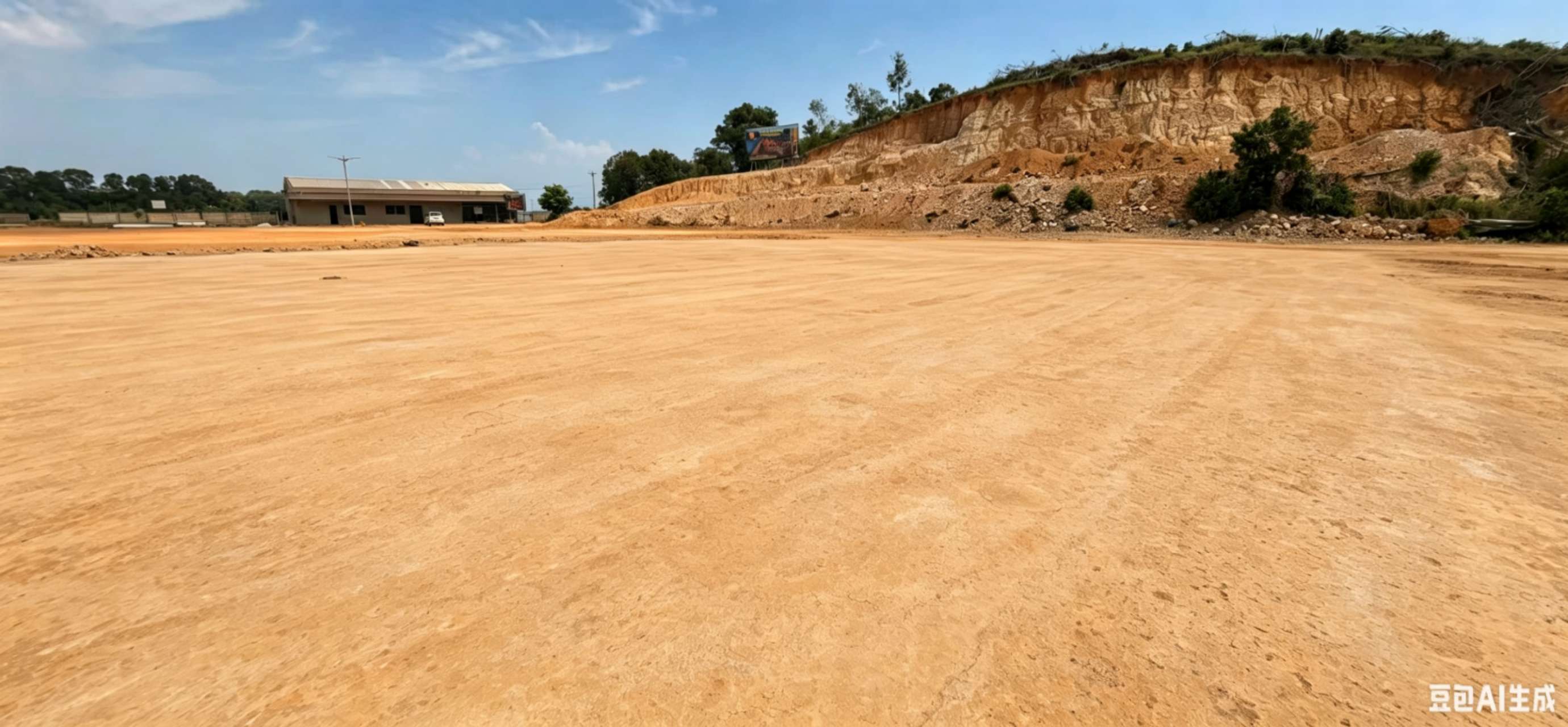
Turning uneven, muddy tracks into roads you can count on is about more than just laying down pavement. It starts with understanding the land—how water flows, where the soil shifts, and what kind of traffic will pass through. By taking these factors into account from the very beginning, the result is a surface that stays stable through changing seasons and heavy use, rather than one that crumbles under pressure.
Materials matter too. Sometimes a simple gravel base is enough for light use, while other routes demand reinforced concrete or layered asphalt blends. The real art lies in matching the right material to the actual conditions on the ground, not just the budget. When that happens, what was once a rutted path becomes a smooth, safe thoroughfare that serves the community without constant repairs.
Long-term reliability hinges on proper drainage and maintenance planning. Even the best-built road will fail if water is allowed to pool underneath. That's why subtle crowning, sturdy drains, and regular clearing of debris are every bit as important as the initial construction. A truly dependable thoroughfare blends good engineering with simple, consistent care—and that's what keeps it passable year after year.
Why Standard Solutions Fall Short
Off-the-shelf tools and one-size-fits-all approaches rarely address the nuanced challenges businesses face. They're built for the masses, not for the specific workflows, legacy systems, or unique compliance needs that define your operations. What works in theory often creates friction in practice, forcing teams to contort their processes around the tool rather than the tool adapting to them.
Generic solutions also tend to lag behind when markets shift or regulations change. You're left waiting for updates that may never come, or paying for bloated features you don't need just to access the one you do. This not only inflates costs but also introduces unnecessary complexity, making it harder for your team to stay agile and responsive to real-world demands.
Ultimately, relying on standard solutions can erode your competitive edge. If your technology mirrors what everyone else is using, it's difficult to differentiate your offering or optimize internal processes in a way that drives meaningful growth. True efficiency comes from systems designed with your actual constraints and goals in mind, not from a generic template that treats all businesses as interchangeable.
A Closer Look at Aggregation and Binding
Aggregation often gets treated as a simple summing up of values, but it's more about weaving together scattered threads of information into a coherent whole. When you aggregate, you're not just performing arithmetic—you're deciding which details matter and how they relate to one another, creating a condensed view that still carries the essence of the original data. This process demands an eye for structure and an understanding that the resulting summary must remain true to the underlying patterns, not just numerically accurate.
Binding, on the other hand, ties those aggregated results to a context or a specific application, making the abstract numbers tangible and actionable. It's the step where data becomes part of a storyline, attached to user interfaces, reports, or decision-making frameworks. Without careful binding, even the most precise aggregation can feel like a collection of disconnected figures floating in space, lacking the thread that pulls them into a meaningful narrative. The art lies in how seamlessly the data glides into its appointed place, almost as if it was always meant to be there.
What makes the interplay between aggregation and binding truly powerful isn't the complexity of the techniques, but the discipline of keeping both steps aligned with the original intent. Too much aggregation strips away nuance and can lead to blind spots; overly rigid binding can force data into shapes that distort its meaning. The best practitioners learn to balance these forces, treating each aggregation as a lens and each binding as a frame—knowing that the most compelling picture emerges when the lens is focused and the frame complements rather than constrains.
From Dusty Trails to All-Weather Access
Winding footpaths carved by decades of boots and hooves once defined how people moved through this landscape. Dry season meant choking clouds of fine dust that coated everything in a gritty film, while the rainy months turned those same tracks into treacherous, axle-deep mud traps. Getting to the nearest town or market was a gamble you took only when absolutely necessary, with journeys measured in endurance rather than distance.
What changed wasn't just the material beneath the wheels—it was the entire relationship between communities and their surroundings. The shift to compacted gravel, drainage-lined bases, and sealed surfaces meant predictable travel times no matter what the sky decided to do. Farmers could get perishable produce to buyers on schedule; children made it to school without arriving soaked and shivering; medical help became reachable in emergencies instead of being thwarted by a rain-soaked hillside.
Today the route feels almost unremarkable, and that's exactly the point. The absence of drama—no white-knuckle inclines, no praying the engine holds out—signals a quiet triumph of design and community effort. What was once a dusty scar on the earth, or a quagmire waiting to happen, now lies as a smooth ribbon connecting lives to opportunity in every season.
Long-Term Performance in Harsh Conditions
Real endurance isn’t just surviving a test chamber—it’s holding steady when salt spray corrodes every unprotected surface, when UV radiation turns polymers brittle, and when thermal cycling from -40°F to +185°F repeats daily for years. We’ve seen coatings fail, seals crack, and cheap alloys pit within months. That’s why every material we select undergoes multi-year outdoor exposure in marine and industrial zones before it even reaches the design phase. The result is a component that sheds moisture, resists oxidation, and maintains structural integrity long after competitors’ products have been swapped out.
Harsh environments don’t announce themselves—they grind away silently. It’s the abrasive dust in a desert installation, the acidic mist near a chemical plant, or the constant vibration on a drilling rig that slowly chews through inferior designs. Our approach leans on accelerated life testing that doesn’t just follow ASTM standards but adds randomized stress patterns to mimic the unpredictability of real-world abuse. Combined with thick-walled housings, redundant sealing points, and surface treatments that chemically bond to the substrate, we’ve achieved a mean time between failure that’s three times the industry baseline for equipment left exposed year-round.
FAQ
It's a liquid concentrate that you mix with water and spray on the ground. As it soaks in, it chemically bonds with the soil particles, creating a dense, rock-like surface that won't wash away.
Yes, the formula is non-toxic and breaks down naturally over time. It won't poison plants or harm animals, and it's often used around farms and sensitive ecosystems.
Depending on traffic and weather, a single application typically holds up for three to five years. Light maintenance coats can stretch that lifespan even further.
Most homeowners and property managers handle it with basic equipment like a garden sprayer or a water truck. The instructions are clear, and no specialized skills are required.
Not at all. Once cured, the surface has a slightly textured finish that actually improves traction, even in rain. It's much safer than loose gravel that shifts under tires.
It's effective on a broad range, from gritty gravel to silty mixes. Very sandy or heavy clay soils might need a bit more product or a different dilution, so checking the label first is smart.
It's a fraction of the price of asphalt or concrete. You skip the heavy machinery, the long installation, and the recurring repairs, making it a practical choice for long driveways and rural roads.
Light vehicles can roll over it within a few hours, but letting it cure for at least 24 to 48 hours gives the best hardness. Full strength is reached in about a week.
Conclusion
Unpaved roads often suffer from rutting, dust, and washouts, leaving them unreliable in varied weather. Standard fixes like gravel or asphalt emulsions may provide temporary relief but rarely address the root cause: the lack of cohesive strength within the soil itself. Road hardening agents change the game by delving into the science of soil solidification, where a carefully engineered blend of binders and catalysts triggers a chemical reaction that fuses loose particles into a dense, rock-like matrix. This process, centered on advanced aggregation and binding, locks dirt, silt, and sand into a unified slab, effectively transforming a dusty trail into a thoroughfare capable of handling heavy loads without deformation.
The outcome is a dramatic shift from seasonal access to all-weather reliability, even under harsh conditions. Once treated, the surface resists erosion, shrugs off moisture, and curbs dust generation, eliminating the constant grading and replenishment cycles. In remote areas or high-traffic industrial sites, this long-term performance stands in stark contrast to conventional methods that quickly degrade. By reinforcing the ground from within, the agent creates a pavement-like layer that endures freeze-thaw cycles, heavy rain, and intense UV exposure, ensuring dependable passage year after year without the environmental burden of constant resurfacing. It’s a pragmatic solution that turns problematic dirt roads into low-maintenance, long-lasting assets.
Contact Us
Contact Person: Helen
Email: [email protected]
Tel/WhatsApp: 86 18630661160
Website: https://www.roadmilestone.com/