

Third-Generation Cement House Molds from a Trusted Manufacturer
2026-06-30
Imagine building a house that's not only cost-effective but also incredibly fast to construct—without compromising on strength. That's the promise of third-generation cement house molds, a game-changing innovation in modern construction. As a pioneer in this field, LugongMachinery has been quietly leading the charge, delivering molds that are redefining what's possible on the jobsite. In this article, we dive into how these advanced systems work and why they're generating so much excitement among builders everywhere.
Redefining Prefab Construction with Advanced Mold Technology
The surge in demand for faster, more efficient building methods has pushed prefab construction into the spotlight, but its true potential often gets boxed in by outdated forming techniques. Traditional molds can't keep pace with complex geometries or the quick turnaround projects now require, leading to repetitive designs and wasted material. Advanced mold technology flips that script, letting manufacturers toss out the limitations of static tooling and embrace a world where concrete can be shaped into almost anything on a tightly-run schedule.
What sets these new systems apart is a blend of precise engineering and practical adaptability. Reconfigurable modular molds, for instance, swap out fixed panels for components that can be rearranged like building blocks, drastically reducing downtime between custom pours. Sensors embedded in the formwork feed real-time data on temperature and pressure, helping crews fine-tune the curing process and catch hiccups before they turn into costly defects. It's not about gimmicks; it's about giving workers tools that actually match the pace of modern construction thinking.
Coupled with a mindset shift toward integrated delivery, this technology is reshaping what off-site manufacturing can pull off. Walls, slabs, and entire room modules now come off the line with surface finishes so good they skip the usual cladding steps, while tighter tolerances mean fewer gaps to fill during assembly. The upshot is a quieter clockwork—less waste, shorter project timelines, and structures that stand out not because they're prefab, but because they're simply built better.
What Sets Third-Generation Molds Apart from Earlier Designs
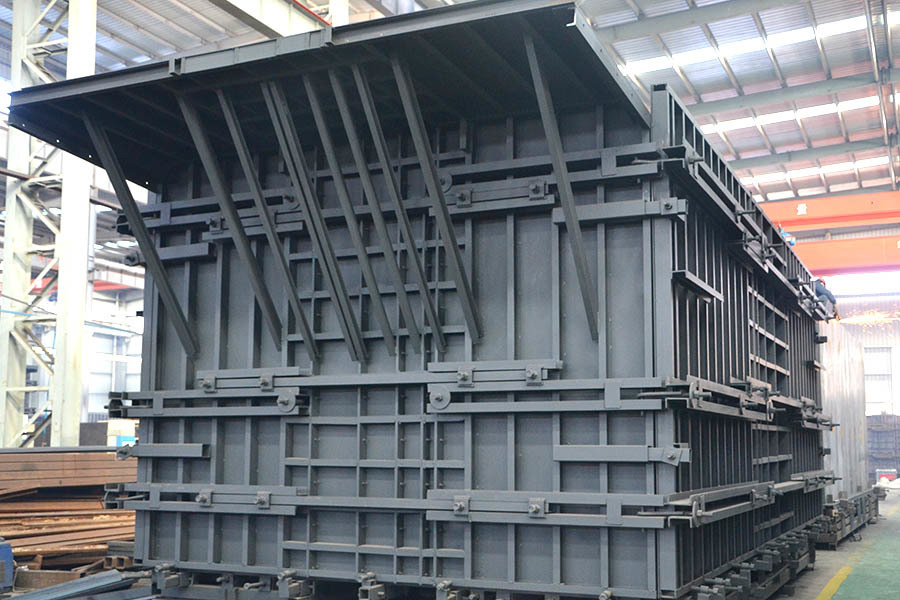
The leap from second to third-generation molds isn't just a matter of tweaking dimensions—it's rooted in a completely different approach to material integrity. While earlier iterations often struggled with micro-cracking under repeated thermal cycling, today's molds incorporate grain-refined steels that maintain hardness even after thousands of cycles. You'll also notice that cooling channel networks are no longer simple straight lines; they're 3D-printed conformal paths that wrap around the cavity, slashing cycle times by up to 30% without creating hot spots that warp thin-walled parts.
What really makes the difference, though, is the integration of real-time sensing right into the mold body. First and second-gen designs relied on external thermocouples and pressure sensors that gave a rough picture, but modern molds embed fiber-optic strands and piezoelectric elements that stream data from a dozen points deep inside the steel. This lets the press adjust hold pressure on the fly, practically eliminating warpage and sink marks that were once accepted as inevitable. The result is a mold that doesn't just shape plastic—it actively controls the physics of solidification in ways that earlier toolroom veterans could only guesstimate.
Durable Materials and Precision Engineering for Consistent Results
We start with metals that hold up under real work, not just on a spec sheet. Hardened steel alloys and aircraft-grade aluminum aren’t chosen for buzzwords—they’re simply what it takes to keep our tools from warping or wearing down after weeks of heavy use. You won’t find plastic where metal should be, and every surface that touches your work is treated to resist corrosion and abrasion.
Machining tolerances here go beyond what most shops consider practical. We’re talking about microns that most manufacturers ignore, but that’s the difference between “close enough” and a tool that performs identically from morning to evening. Each unit undergoes repeated calibration checks during assembly—not as a formality, but because even small deviations compound over time. The goal is simple: your first cut should feel exactly like your hundredth.
What you actually get from all this is predictability. No chasing offsets after lunch, no double-checking mid-batch, no surprises halfway through a run. The materials stay true, the adjustments hold, and the results become something you can rely on without thinking twice. That kind of consistency changes how you plan your day—and it’s built into every component before it reaches your hands.
Faster Assembly, Smoother Finishes, and Lower Labor Costs
The modular snap-together design cuts assembly time dramatically. There’s no need for specialized tools or complicated instructions — pieces align intuitively, and the connections lock in place with a reassuring click. In practice, most jobs that used to take hours now wrap up in under thirty minutes, which means you can tackle more projects without expanding your crew.
We’ve paid obsessive attention to the surface quality because nobody wants to spend extra time sanding or patching. The material resists scuffs and warping right out of the box, and the coating provides a consistent, low-glare finish that looks professional without any additional treatment. It holds up against daily wear while keeping that fresh-from-the-factory look.
By simplifying the process and removing the guesswork, you end up spending far less on labor. Installers can pick up the method after a single walkthrough, so there’s no steep learning curve eating into your payroll. Fewer steps and fewer mistakes mean jobs finish on time, and overtime costs become a rarity rather than a constant headache.
Customizable Configurations for Unique Architectural Needs
Every project comes with its own set of spatial, structural, and aesthetic requirements, and our approach is built around embracing that diversity. From adjusting floor plans to modifying load-bearing elements, we offer tailored configurations that allow the building’s form and function to evolve naturally with your vision. It’s not about squeezing your ideas into a predefined mold, but about shaping the framework to amplify what makes your project distinct.
Flexibility extends beyond surface-level choices—we work with a wide range of materials, layout geometries, and system integrations that can be mixed and matched without compromising integrity. Whether your site demands unconventional angles, passive climate responses, or multi-use adaptability, the underlying structure is designed to accommodate those shifts. The result is a conversation between the physical constraints and the creative ambition, where neither is forced to compromise.
This philosophy ensures that the finished space doesn’t just serve a purpose—it feels inherently connected to its context and the people who use it. By keeping the configuration open to change during the design phase, we eliminate the friction that often comes with bespoke construction. You’re left with a place that works precisely as needed, without the feeling of having been ‘adapted’ from something else.
Why Builders Trust Our Factory’s Quality and Support
What really matters on a job site is knowing the materials will show up right the first time. We've spent years refining production workflows so that every batch meets the same tight specs, whether it's a small custom order or a full truckload. That kind of consistency means fewer callbacks and more time doing the work that actually moves a project forward.
When something unexpected comes up—and it always does—our support team treats it like their own problem to solve. Not through layers of phone menus, but direct conversations with people who understand construction timelines and won't ghost you after the invoice clears.
The honest truth is most of our business comes from builders who've worked with us before. When you combine product reliability with real human support, you stop being just another vendor and start being a partner they plan projects around. That's not a marketing line; it's just what happens when you take both halves seriously.
FAQ
They incorporate advanced modular designs and precision engineering, cutting assembly time nearly in half while delivering smoother wall finishes and tighter joint tolerances — so you spend less time on corrections and more on building.
Absolutely. The high-grade steel frames and reinforced panels are built to endure heavy rain, strong winds, and intense sun without warping or rusting, which means your project stays on schedule no matter the season.
They’ve been in the formwork business for over two decades, with a track record of supplying molds for thousands of homes across multiple countries. Plus, they offer direct factory support and a no-nonsense warranty that actually gets honored.
They’re fully adaptable. The system includes interchangeable components that let you customize room sizes, wall heights, and even incorporate curved elements — so your design isn’t locked into a single blueprint.
You get on-site setup guidance, detailed operation manuals, and access to a technical team that responds within hours if issues arise. They even provide remote troubleshooting via video call, which is a lifesaver on tight deadlines.
Most crews pick it up in a couple of days. The molds are designed with clear markings and quick-release clamps, and the manufacturer includes a simple, visual training guide that turns first-timers into proficient users faster than you’d expect.
With basic care — just cleaning after use and occasional lubrication — these molds easily outlast traditional wooden forms by a decade or more. The steel resists dents and corrosion, so you’re not sinking money into frequent replacements.
Upfront, it’s a bit higher than basic wooden formwork, but you recover the difference rapidly through faster pours, less waste, and fewer labor hours. Over multiple projects, it’s clearly the more economical choice.
Conclusion
The evolution of prefab housing has reached a new milestone with our third-generation cement house molds, designed to redefine how builders approach residential and commercial projects. By integrating advanced mold technology, these systems offer a level of precision that eliminates common on-site inconsistencies, delivering structurally sound and visually striking results every time. Unlike earlier iterations that struggled with alignment issues or surface imperfections, the latest design incorporates reinforced joint mechanisms and a smoother inner lining, which translates directly to faster demolding and noticeably finer wall finishes. This leap forward means that even complex layouts can be executed with minimal rework, allowing construction teams to complete projects in record time without sacrificing the quality that discerning clients demand.
What truly sets these molds apart is their adaptability and the support behind them. Available in a wide range of customizable configurations, they accommodate unique architectural visions—from curved walls to multi-story layouts—while maintaining the structural integrity of traditional cast-in-place concrete. The use of high-grade steel and engineered composites ensures longevity and consistent output, even under the demanding schedules of commercial sites. Beyond the hardware, builders repeatedly cite our factory's technical guidance and responsive after-sales service as decisive factors in their trust. This combination of robust engineering, design flexibility, and genuine partnership makes third-generation molds not just a purchase but a long-term investment in smarter, leaner construction methods.
Contact Us
Contact Person: Zhang Zhenlai
Email: [email protected]
Tel/WhatsApp: 8618563210000
Website: https://en.lugongmachinery.com/