

Top Current Sensing Resistor Options for Accurate Circuit Design
2026-07-02
Accurate current measurement is the backbone of reliable circuit design, and selecting the right current sensing resistor can make all the difference. Whether you're optimizing power management or ensuring signal integrity, the resistor's precision, temperature stability, and footprint are critical. In this guide, we explore top current sensing resistor options that balance performance with cost. From ultra-low ohmic values to high-power handling, discover the components that elevate your designs. For those seeking uncompromising accuracy, Milliohm provides industry-leading solutions tailored to demanding applications.
Precision Metal Foil Resistors for Ultra-Low TCR
Precision metal foil resistors achieve ultra-low temperature coefficient of resistance (TCR) through the use of a bulk metal foil element bonded to a ceramic substrate. Unlike thin or thick film technologies, the foil's crystalline structure remains highly stable across temperature swings, resulting in TCR values as low as ±0.05 ppm/°C. This exceptional stability is achieved without the compromises in noise or linearity often seen in other resistor technologies, making them indispensable in precision measurement circuits where even tiny thermal drifts are unacceptable.
In critical applications such as instrumentation amplifiers, medical monitoring equipment, and aerospace systems, the near-zero TCR of these resistors ensures consistent performance from cold start-up to full operating temperature. The inherently low parasitic inductance and capacitance of the planar foil design also contribute to fast settling times, complementing their thermal stability. For designers, this means simpler compensation algorithms and reduced reliance on matched pair networks, ultimately shrinking system cost and complexity while boosting reliability.
Manufacturers refine foil resistor alloys and stress-relief treatments to push TCR further toward zero, often calling upon decades of metallurgical expertise. Each resistor type can be customized with specified TCR tracking across a defined temperature band, allowing engineers to tailor solutions for specific thermal environments. This level of control not only elevates circuit precision but also extends operational life by minimizing temperature-induced stress on surrounding components, solidifying metal foil resistors as the benchmark for ultra-low TCR requirements.
Understanding the Impact of Parasitic Inductance in Shunt Design
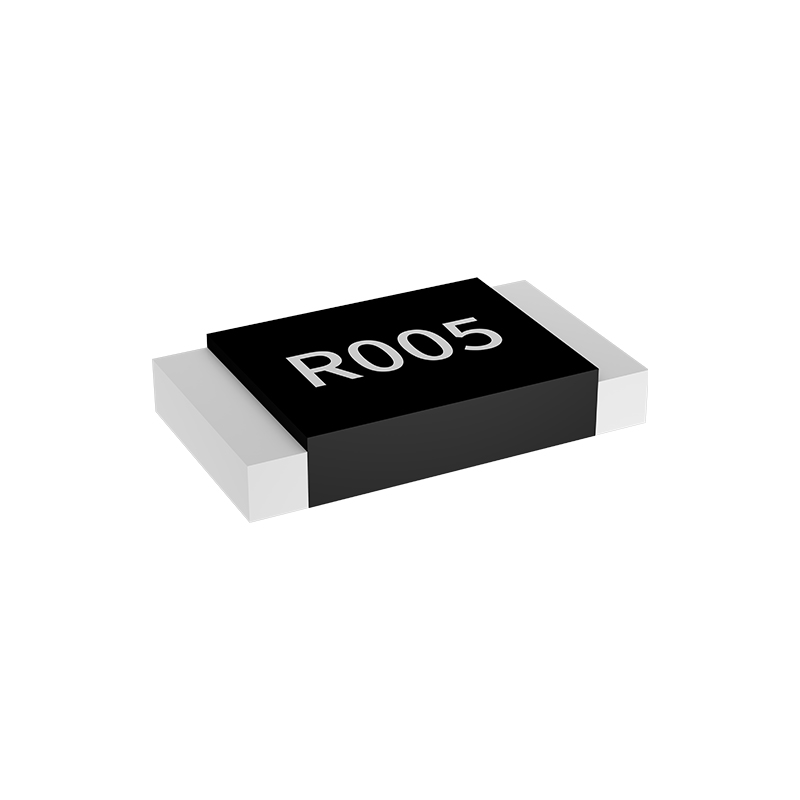
When designing current sensing circuits with shunt resistors, parasitic inductance often emerges as a silent disruptor, subtly undermining measurement fidelity. This inductance originates from the physical construction of the shunt—its leads, internal elements, and even the PCB traces connecting to it. At low frequencies or DC, a shunt behaves mostly like a pure resistance. But as the sensed current changes rapidly, the voltage drop across the parasitic inductance becomes significant, superimposing a transient error on the intended resistive voltage. This error can manifest as overshoot, ringing, or outright distortion in the measured signal, leading to inaccurate current readings and potentially tripping overcurrent protections erroneously. Grasping this effect is crucial because it sets the stage for implementing effective compensation techniques and selecting shunts with geometries that minimize inductance.
The impact becomes particularly severe in high-speed switching applications, such as motor drives or power converters, where current changes occur in nanoseconds. Consider a shunt resistor with a resistance of 1 mΩ and an often-overlooked parasitic inductance of just 1 nH. At a modest di/dt of 100 A/µs, the inductive voltage spike reaches 100 mV—equal to the DC voltage drop at 100 A. In reality, di/dt can be orders of magnitude higher, making the inductance-induced error dominant. This not only corrupts peak current measurements but also introduces phase shifts that confuse control algorithms relying on precise current feedback. Over time, thermal cycling and mechanical stress can alter the shunt’s construction, potentially increasing its inductance and causing a gradual drift in performance that is hard to diagnose without a clear understanding of the root cause.
To tame parasitic inductance, designers must think beyond the resistor’s nominal value and examine its physical layout. Coaxial or low-inductance shunt designs, such as those with kelvin connections and symmetrical current paths, help cancel magnetic fields. PCB layout is equally critical: keeping traces short, using wide planes, and positioning the sense amplifier close to the shunt minimizes loop area and thus inductance. In scenarios where perfect layout is impossible, a small RC filter can be added to attenuate high-frequency noise, but this comes at the cost of bandwidth. Ultimately, a deep appreciation for how parasitic inductance distorts signals enables engineers to make informed trade-offs, ensuring that the shunt does its job even in the face of punishing current transients.
Kelvin-Connected SMD Resistors: When Every Micro-Ohm Counts
Precision current sensing begins at the component level. In applications where even a single micro-ohm of stray resistance can skew feedback loops or degrade efficiency, Kelvin-connected surface-mount resistors offer a lifeline. Unlike standard two-terminal parts, these four-terminal devices physically separate the current path from the voltage sense path, eliminating the IR drop errors that would otherwise appear across solder joints and PCB traces. The result is a true four-wire measurement that gives you an accurate voltage drop directly across the resistive element, no matter how crowded the board gets.
Designers turn to these components when pushing power density limits—think multi-phase VRMs, motor drives, and battery management systems where Hall sensors or bulky shunts fall short. A six-pad or eight-pad Kelvin resistor package may look oversized for its resistance value, but that footprint enables low self-heating through wider current terminals while keeping sense leads independent. Many parts now achieve TCRs in the tens of ppm/°C with values down to fractions of a milliohm, all on standard FR4 boards. The hidden advantage is thermal EMF cancellation: symmetry in the sense traces means thermal gradients across the device create minimal offset, a subtlety that separates a clean current readout from a noisy guess.
Adopting a Kelvin layout in your next revision doesn't just improve measurement accuracy; it often simplifies routing and expands fault-tolerant design margins. Because the sense lines carry negligible current, you can route them directly to a differential amplifier's inputs without worrying about trace resistance. In high-volume production, that consistency translates to fewer board spins and less calibration in the factory. Small shifts in solder paste volume or pad finish become irrelevant, making the overall system more predictable. When every micro-ohm truly counts, a four-terminal SMD resistor isn’t a luxury—it’s the quiet enabler behind stable, efficient power delivery.
Power Rating and Thermal Management: Avoiding Drift in High-Current Paths
Managing heat in high-current paths isn't just about keeping things cool—it's the difference between predictable performance and a slow spiral into measurement drift. Every conductor, whether it's a PCB trace or a shunt resistor, carries a temperature coefficient that quietly reshapes its resistance under load. As current climbs, so does dissipation, and the resulting self-heating creates a feedback loop where resistance shifts, altering the voltage drop you thought you knew. This isn't a sudden failure; it's a subtle degradation that can push readings off spec before you even notice.
The real challenge lies in the board layout itself. Tightly packed power stages, copper pours that act more like heaters than heatsinks, and thermal gradients that sneak across the PCB can turn a well-designed circuit into a drift-prone mess. Even with components rated for the current, their actual behavior is dictated by the thermal impedance of the surrounding board. A shunt resistor might be specced for 5W, but if it's sandwiched between two heat-generating MOSFETs without adequate copper relief, its temperature can soar past the datasheet's assumptions, dragging accuracy down with it.
Breaking this cycle starts with treating thermal management as a layout discipline, not an afterthought. Spreading current paths across multiple layers, thickening copper, and adding stitching vias can lower both electrical and thermal resistance. Strategic placement of sense points—away from hot spots and directly at the component terminals, using Kelvin connections—helps isolate the true voltage drop from the thermal noise. In some cases, a small amount of forced airflow or a dedicated thermal mass can stabilize temperatures long before any fan curve becomes audible. The goal is to keep the thermal equilibrium point stable, so the only thing drifting is your attention away from the spec sheet.
Cost-Effective Thick Film vs. Precision Thin Film: A Practical Comparison
When budget constraints dominate design decisions, thick film resistors emerge as the go-to workhorses. Their construction involves screen-printing resistive paste onto a ceramic substrate, then firing it at high temperatures—a straightforward process that keeps per-unit costs remarkably low. This affordability doesn't necessarily mean sacrificing all performance; thick film parts deliver dependable operation in general-purpose circuits, power supplies, and consumer electronics where extreme precision isn't the primary concern. However, it's worth noting their inherent trade-offs: higher noise, looser tolerances (typically ±1% to ±5%), and temperature coefficients that can drift more noticeably under varying conditions. For many engineers, the math is simple—thick film gets the job done without blowing the bill of materials.
Precision thin film technology, by contrast, occupies the opposite end of the spectrum. These resistors are created through vacuum deposition of a uniform metal alloy layer, followed by photolithographic patterning and precision trimming—a far more controlled (and expensive) fabrication sequence. The payoff comes in the specifications: tolerances as tight as ±0.01%, temperature coefficients down to single-digit ppm/°C, and significantly lower current noise. Such characteristics make them indispensable in medical instrumentation, precision measurement gear, and aerospace signal conditioning where even microvolt-level deviations can corrupt data. The choice between thick and thin film often boils down to a single question: can your circuit tolerate the cost of the quieter, more stable alternative, or does the application simply not demand that level of finesse?
A practical view reveals that many designs benefit from a hybrid approach rather than strict allegiance to one technology. Placing thin film resistors only in critical signal paths—like feedback networks of high-gain amplifiers or reference voltage dividers—while populating the rest of the board with cost-effective thick film parts, can optimize both performance and expense. This selective strategy sidesteps the false dilemma of treating the two as mutually exclusive. In the real world, boards rarely require nanoamp-leakage precision on every node; understanding where noise and drift actually impact system behavior allows engineers to allocate budget where it matters. Ultimately, the comparison isn't about declaring a winner—it's about matching resistor characteristics to circuit realities without overengineering or penny-pinching into failure.
Choosing the Right Tolerance: 0.1% vs. 1% in Real-World Circuits
In a perfect world, every resistor that rolls off the production line would land exactly on its marked value, but in practice, tolerance defines just how far reality can drift from the label. For most general-purpose circuits—think pull-ups, LED current limiters, or non-critical biasing networks—a 1% resistor is more than adequate and keeps your bill of materials lean. The extra precision of 0.1% parts typically only pays off when you’re dealing with precision voltage dividers, instrumentation amplifiers, or feedback networks where gain accuracy directly hinges on resistor ratios. Asking yourself "how much error can my circuit swallow before performance tanks?" is the first step to making that call.
It’s easy to get drawn in by the allure of a single, tighter tolerance part and assume your design will magically become more accurate, but tolerance stacking across multiple components often tells a different story. A 1% resistor’s actual spread is usually Gaussian around the nominal, so a well-chosen divider can still keep output error within bounds without resorting to premium parts. Where 0.1% shines is in applications like analog-to-digital converter references or precision current sources, where a fraction of a percent shift can mean the difference between a spec-compliant reading and a noisy, untrustworthy one. Pairing 0.1% with low temperature coefficients is often the real secret sauce for stable, repeatable behavior.
Beyond the datasheet numbers, practical considerations like availability and cost can quickly narrow your options. High-precision resistors aren’t just more expensive per unit; they can also have longer lead times and fewer second-source alternatives, which bites during prototyping or production ramps. A smart approach is to simulate your circuit’s sensitivity to resistor variation before locking in the BOM—often, a strategic combination of one 0.1% component and a calibration step in firmware can meet the same performance bar as an all-0.1% design without the logistical headache. In the end, the right tolerance is the one that makes your circuit work reliably in its real environment, not the one that looks best on a schematic printout.
FAQ
Common types include metal strip, metal foil, wirewound, and thick film resistors. Metal strip resistors offer very low resistance values and low inductance, making them great for high-current applications. Metal foil resistors provide extremely low temperature coefficients and high stability, ideal for precision circuits. Wirewound types can handle high power but may introduce unwanted inductance, while thick film resistors are a cost-effective choice for less demanding tasks.
Ordinary resistors lack the tight tolerance and low temperature coefficient needed for accurate current sensing. They might drift significantly with temperature changes, introducing errors you can't afford in precision designs. Additionally, they often have higher parasitic inductance or aren't optimized for low-resistance values, which can distort the measurement, especially at higher frequencies or currents.
A four-terminal resistor separates the current-carrying path from the voltage-sensing leads. This means you don't include the voltage drop across the PCB traces or solder joints in your measurement. By directly sensing the voltage right at the resistor element, you eliminate lead resistance errors, which is critical when dealing with milliohm-level resistances.
The temperature coefficient of resistance (TCR) tells you how much the resistance changes with temperature. In a current sensor, self-heating from the power dissipation can significantly alter the resistance if the TCR is high. For accurate designs, you want a very low TCR, typically below 50 ppm/°C, and in extreme cases, foil resistors offer even single-digit ppm/°C values to keep readings consistent over a wide temperature range.
You need to balance the burden voltage versus the signal-to-noise ratio. A larger resistance gives a larger voltage drop for better signal integrity, but it also wastes power and can affect circuit operation. Typically, you aim for a maximum voltage drop of 50–100 mV at full load. Then calculate R_sense = V_max / I_max. Also ensure the power rating P = I^2 * R is well within the resistor's capability, ideally with derating.
Metal foil resistors are constructed using a special photo-etched foil pattern on a ceramic substrate. This design allows them to achieve extremely low TCR (down to 0.2 ppm/°C), excellent long-term stability, and very low thermal EMF. They also respond quickly to thermal changes, which minimizes drift during transient loads, making them the top choice for metrology-grade or high-precision instrumentation.
Absolutely. Poor layout can introduce parasitic resistance in the current path and noise coupling into the sense lines. You should route Kelvin connections as a differential pair directly from the resistor pads to the amplifier, keep the high-current loop tight, and avoid ground loops. Even the placement of thermal sources near the resistor can create temperature gradients that induce measurement errors.
Start with a resistor that has a low TCR and a suitable power rating with ample margin—often double the expected dissipation. Use large copper pours or dedicated heat-sinking pads to spread heat away from the sensing element. Symmetrical thermal design around the resistor helps minimize thermal EMF effects. Additionally, if the board operates in a varying environment, consider shielding the resistor from airflow or external temperature swings.
Conclusion
When designing circuits that demand precise current measurement, the choice of sense resistor goes far beyond a simple ohmic value. For the most critical applications, precision metal foil resistors stand out thanks to their ultra-low temperature coefficient of resistance (TCR) and exceptional long-term stability. However, even with an ideal resistive element, real-world performance can be undermined by parasitic inductance in the shunt path—tiny stray inductances that distort fast-changing current waveforms and introduce measurement errors. This is where careful PCB layout and component selection become vital. In high-accuracy setups where every micro-ohm matters, Kelvin-connected SMD resistors provide a dedicated path for voltage sensing, effectively removing the influence of lead and trace resistance. Together, these practices form the foundation of a low-drift, high-fidelity current monitoring front end.
Managing heat is equally important: a resistor’s power rating must account for the RMS current and ambient temperature to prevent thermal drift that quietly erodes precision. Comparing cost-effective thick film with precision thin film reveals a clear trade-off—thick film often satisfies general needs, but thin film’s lower noise and tighter tolerance make it the better choice for sensitive analog blocks. And when it comes to tolerance, selecting 0.1% over a standard 1% part can mean the difference between a design that meets spec with margin and one that requires costly calibration. In the real world, these decisions cascade; a well-chosen current sensing resistor, considered holistically from material to tolerance, is what finally separates a working design from an accurate one.
Contact Us
Contact Person: Yuying Gao
Email: [email protected]
Tel/WhatsApp: +86 18926013721
Website: https://en.milliohm.net/