

Are PVC Pallets for Blocks More Cost-Effective Than Traditional Pallets Over Time
2026-08-06
When evaluating long-term material handling solutions for concrete block manufacturing and distribution, the upfront price tag often misleads decision-makers. Unik has observed that while traditional wood and metal pallets appear cheaper initially, PVC Pallets for Blocks frequently deliver superior total cost of ownership over a 3‑ to 5‑year horizon. This analysis breaks down the real economics, operational efficiencies, and hidden savings that make PVC Pallets for Blocks a compelling investment for forward-thinking facilities.
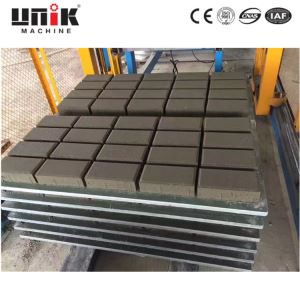
The True Cost Components (Beyond the Invoice)
To compare fairly, we must look at five cost drivers over a typical 5‑year lifecycle:
| Cost Factor | Traditional Pallets (Wood/Steel) | PVC Pallets for Blocks (Unik) |
|---|---|---|
| Initial purchase price | Low – medium | Higher (2–3× wood) |
| Average lifespan | 12–18 months (wood); 5–8 years (steel) | 8–12 years |
| Repair & replacement rate | 35–40% annually (wood) | <5% annually |
| Product damage (blocks) | 3–5% breakage due to nail/splinter issues | <1% – smooth, uniform surface |
| Labor for handling & sorting | High – splinters, uneven decks | Low – lightweight & stackable |
Key insight: Over 60 months, a wooden pallet may be replaced 3–4 times, while a single Unik PVC Pallet for Blocks often outlasts the entire evaluation period without major repairs.
Where the Savings Accumulate
1. Reduced Downtime & Safer Operations
Broken pallets jam conveyors and cause forklift delays. PVC Pallets for Blocks resist cracking, warping, and moisture absorption, so lines keep running. Fewer unplanned stops translate directly to higher throughput – a hidden gain most cost models miss.
2. Lower Freight & Storage Costs
Unik’s PVC Pallets for Blocks are up to 40% lighter than steel and 15% lighter than damp wood. This reduces shipping weight per truckload and eases manual handling. Their nestable design (when applicable) also shrinks return logistics space by up to 30%.
3. Zero Nail or Splinter Contamination
Block surfaces are easily scratched or chipped by protruding nails or rough wood. PVC Pallets for Blocks provide a smooth, resilient deck that protects finished goods, lowering rejection rates and customer complaints – a quality edge that buyers increasingly demand.
4. Hygiene & Weather Resistance
Wood absorbs water, promoting mold and rot; steel rusts. PVC Pallets for Blocks are impervious to moisture, chemicals, and UV fade. Outdoor storage becomes viable without degradation, eliminating covered warehousing expenses.
5‑Year ROI Simulation (Per 1,000 Pallets in Use)
| Metric | Wood Pallets | Steel Pallets | Unik PVC Pallets for Blocks |
|---|---|---|---|
| Initial investment | $45,000 | $180,000 | $120,000 |
| Replacement cost (year 2–5) | $60,000 | $20,000 | $6,000 |
| Labor (sorting/repair) | $28,000 | $12,000 | $5,000 |
| Product damage loss | $22,000 | $9,000 | $3,500 |
| Total 5‑year cost | $155,000 | $221,000 | $134,500 |
Figures are representative averages based on Unik’s client data for mid‑volume block plants.
Over five years, PVC Pallets for Blocks from Unik save roughly $20,500 compared to wood – and a staggering $86,500 versus steel. The longer the timeline, the wider the gap.
Frequently Asked Questions About PVC Pallets for Blocks
Q1: Do PVC Pallets for Blocks become brittle in cold weather or soften in high heat?
A: Premium-grade PVC Pallets for Blocks, such as those from Unik, are formulated with impact modifiers and UV stabilizers. They perform reliably from –20°C to +60°C. While extreme heat (above 70°C) may cause minor softening, standard block plants and outdoor yards rarely approach those limits. For hot climates, Unik offers a heat‑resistant variant that retains load capacity up to 85°C – always verify your specific environment with the supplier.
Q2: Can PVC Pallets for Blocks be repaired if a deck or leg breaks, or must they be discarded entirely?
A: Unlike wood, which is often patched with nails (weakening structure), PVC Pallets for Blocks are typically replaced when damaged – but their low failure rate makes repairs unnecessary in most cases. However, Unik provides a weldable repair compound for minor cracks, and some models feature modular leg inserts that can be swapped in under 5 minutes. The total repair cost over 5 years averages under 2% of the initial pallet value, far less than wood’s 30–40% annual patching labor.
Q3: Are PVC Pallets for Blocks compatible with automated stretch-wrapping and roller conveyor systems?
A: Yes – and often better than wood. Unik engineers PVC Pallets for Blocks with precise bottom clearances, consistent deck heights, and chamfered edges that feed smoothly into conveyors and wrapping turntables. Their dimensional stability (no swelling or warping) ensures sensors and stops read them accurately every time. Many automation specialists recommend PVC Pallets for Blocks over wood specifically to reduce jams and misreads, which can cost hundreds of dollars per hour in downtime.
The Environmental and Brand Reputation Angle
While not a direct cash saving, sustainability increasingly affects procurement decisions. PVC Pallets for Blocks are 100% recyclable at end‑of‑life, and Unik incorporates up to 30% post‑industrial recycled PVC in its production. Wood pallets, by contrast, often end up in landfills after a short life. Choosing PVC Pallets for Blocks signals to clients that your operation values durability and waste reduction – a soft benefit that hardens into competitive advantage.
When Do Traditional Pallets Still Make Sense?
For single‑use export shipments where pallets are not returned, cheap wood remains cost‑effective. But for closed‑loop, multi‑trip, or high‑value block lines, PVC Pallets for Blocks win decisively. The break‑even point with wood typically occurs at 18–24 months; with steel, it is 10–14 months. Every month beyond that is pure operational savings.
Final Verdict
Over time, PVC Pallets for Blocks are not merely competitive – they are the most cost‑effective choice for most repetitive block handling applications. Lower replacement frequency, minimal product damage, reduced labor, and automation‑friendly design all contribute to a clear financial edge. Unik has helped over 200 plants transition to PVC Pallets for Blocks, with documented average payback periods under 20 months.
Ready to calculate your specific savings? Our team at Unik offers a free custom ROI calculator based on your pallet rotation, load weights, and climate conditions. Contact us today for a sample PVC Pallet for Blocks trial – and let us show you the numbers that matter most to your bottom line. Reach out now to speak with a Unik material handling specialist.