

Can 70 Carbon Spring Steel Wire be galvanized to improve rust resistance
2026-11-26
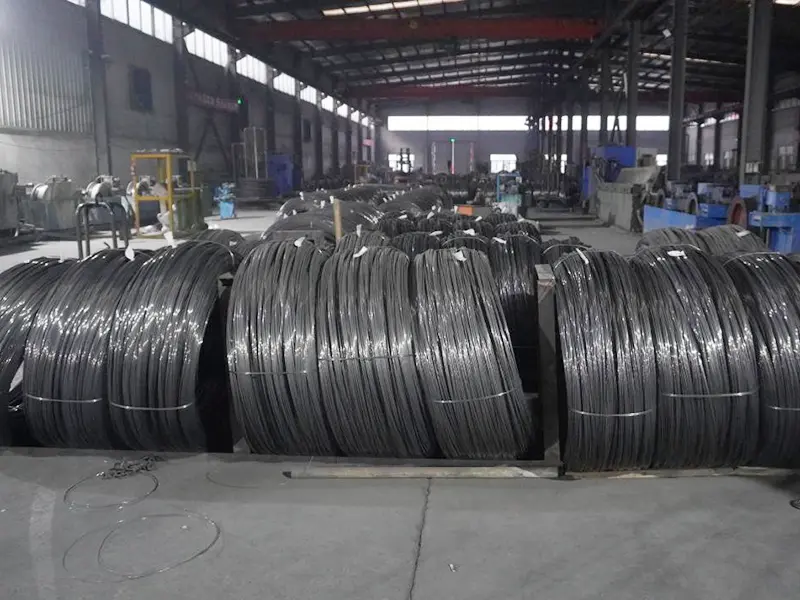
70 Carbon Spring Steel Wire supplied by Luguan is a widely used medium-high carbon material for compression springs, tension springs and various elastic clips. It delivers stable tensile strength and good formability, yet bare carbon steel is prone to rust in humid or outdoor environments. Galvanizing is a practical surface treatment option that creates a sacrificial zinc barrier, but manufacturers must control the process carefully to avoid compromising the spring’s mechanical performance.
Galvanizing Process Comparison Table
| Process Type | Coating Thickness | Corrosion Protection Level | Main Risk |
|---|---|---|---|
| Electro galvanizing | 5–15 μm | Moderate, for indoor dry conditions | Hydrogen embrittlement without baking |
| Hot-dip galvanizing | 40–80 μm | Excellent, suitable for outdoor use | Overheating may reduce spring hardness |
| Zinc phosphate coating | 2–5 μm | Light rust prevention, primer base | Not a standalone galvanized finish |
Galvanizing Quality Control Checklist
- Complete spring forming first before galvanizing if possible
- Remove surface drawing lubricant and oxide thoroughly
- Apply post-plating baking at 190–220°C within 4 hours for hydrogen removal
- Check coating uniformity and avoid excess zinc buildup at wire bends
- Conduct tensile and spring fatigue sampling tests after treatment
- Verify no coating peeling or cracks during coiling and bending
FAQ for 70 Carbon Spring Steel Wire
Q1: Will galvanizing affect the elasticity and fatigue life of 70 Carbon Spring Steel Wire? A1: Improper galvanizing will shorten fatigue life. Luguan controls the process to minimize impact. Electro-galvanizing introduces hydrogen, which can cause delayed brittle fracture under spring load. Hot-dip galvanizing may soften the matrix if the temperature hold time is too long. With proper de-hydrogen baking and temperature control, the finished spring can retain most of its original elastic performance while gaining rust protection.
Q2: Which galvanizing method is more recommended for 70 Carbon Spring Steel Wire used in spring production? A2: Electro galvanizing is the common choice for precision springs because the thin coating maintains tight dimensional tolerance. Hot-dip galvanizing offers stronger anti-rust performance but adds thicker zinc layers, which changes wire diameter and may interfere with spring fit. For general hardware springs working outdoors, hot-dip galvanizing is preferred; for precision instrument springs, controlled electro galvanizing with baking is the standard solution.
Q3: Is galvanizing the only anti-rust treatment option for 70 Carbon Spring Steel Wire? A3: No. Other options include phosphate plus black paint, epoxy coating and passivation. Galvanizing stands out because zinc provides sacrificial protection: even if the coating is scratched, the surrounding zinc will corrode first to protect the steel substrate. However, galvanized surfaces are not suitable for strong acidic or high-temperature environments. In such conditions, switching to stainless spring wire is a more reliable choice.
Additional Practical Notes
Galvanized coating is not permanent. The zinc layer will gradually consume over time, especially in salt spray environments. When designing springs, engineers should also consider coating thickness in the wire diameter calculation. Surface scratches during assembly will accelerate local corrosion, so careful handling is required.
If you need galvanized samples, salt spray test reports or bulk pricing for 70 Carbon Spring Steel Wire, share your spring type, working environment and tolerance requirements with our technical team. Luguan provides matched surface treatment solutions for spring factories and hardware manufacturers. Contact us today to get stable spring steel wire with qualified corrosion resistance.