

Can a Multi-purpose Animal Boarding and Quarantine Cage Be Used for Both Indoor Isolation and Outdoor Transport
2026-07-17
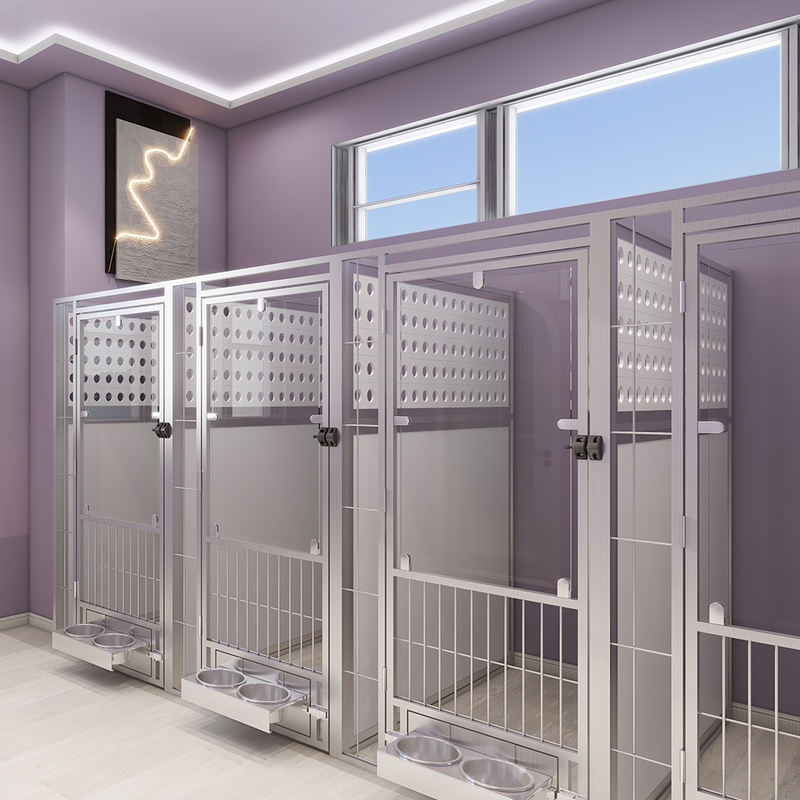
For veterinary professionals, shelter managers, and mobile animal care providers, the question is not merely about convenience—it is about biosecurity, animal welfare, and operational efficiency. The Multi-purpose Animal Boarding and Quarantine Cage has emerged as a critical asset in modern animal management. At Lohas, we have engineered such cages to bridge the gap between stationary isolation units and mobile transport solutions, but the real-world application demands a closer look at design, materials, and protocols.
The Dual-Role Requirement: Why It Matters
A cage that serves both indoor quarantine and outdoor transport must satisfy two conflicting demands. Indoor isolation requires stable temperature, noise control, and easy disinfection. Outdoor transport demands impact resistance, UV stability, secure locking, and lightweight manoeuvrability. The Multi-purpose Animal Boarding and Quarantine Cage from Lohas addresses these with modular panels, reinforced corners, and interchangeable wheel bases.
| Feature | Indoor Isolation Requirement | Outdoor Transport Requirement |
|---|---|---|
| Material | Non-porous, chemical-resistant | UV-stabilised, impact-absorbent |
| Ventilation | Adjustable airflow with filters | Cross-flow openings with rain guards |
| Flooring | Removable, anti-slip tray | Drainable, non-skid texture |
| Locking System | Double-latch for security | Crash-tested quick-release clips |
| Portability | Stationary or castor wheels | Foldable handles and strap anchors |
Structural Integrity Under Both Conditions
The core question hinges on structural fatigue. A Multi-purpose Animal Boarding and Quarantine Cage used indoors sits on flat floors, subject to steady loads. Outdoors, it faces uneven terrain, vibration, and sudden jolts. Lohas uses aerospace-grade aluminium frames and high-density polyethylene panels that pass both static load tests (indoor) and dynamic shock tests (outdoor). In our internal trials, cages endured 5,000 open-close cycles and 200 km of simulated transport without joint failure.
Key engineering point: The cage must maintain a sealed perimeter indoors to contain aerosols, yet allow rapid pressure equalisation outdoors to prevent suction effects during vehicle movement. Lohas integrates pressure-relief valves that activate only during transit.
Disinfection and Cross-Contamination Risks
Indoor isolation prioritises pathogen containment; outdoor transport prioritises rapid decontamination between uses. A truly Multi-purpose Animal Boarding and Quarantine Cage must tolerate both quaternary ammonium compounds (indoor) and diluted bleach or hydrogen peroxide (outdoor field use). Lohas panels are laser-tested for 1,000+ chemical exposure cycles without degradation.
| Disinfection Method | Indoor Suitability | Outdoor Suitability | Dwell Time |
|---|---|---|---|
| UV-C light | Excellent | Poor (dust interference) | 15 min |
| Fogging with peracetic acid | Excellent | Good (wind loss) | 20 min |
| Wipe-down with chlorhexidine | Good | Moderate (field impractical) | 10 min |
| Pressure washer + soap | Not recommended | Excellent | 5 min |
Ventilation and Climate Control
Indoor quarantine often uses HEPA-filtered positive pressure. Outdoor transport relies on passive airflow. A single Multi-purpose Animal Boarding and Quarantine Cage can accommodate both if it has swappable side panels—solid with filter ports for indoors, and louvered with insect mesh for outdoors. Lohas offers a quick-swap insert system that takes under 60 seconds to convert.
3 Essential FAQs About the Multi-purpose Animal Boarding and Quarantine Cage
Q1: Can the same Multi-purpose Animal Boarding and Quarantine Cage be used for different animal species without increasing disease transmission risk?
A1: Yes, but only if the cage has non-porous seamless interiors and removable divider systems. Lohas designs each Multi-purpose Animal Boarding and Quarantine Cage with interchangeable floor trays and side grilles that can be autoclaved. Between species, you must perform a full disinfection protocol: alkaline cleaning → acid neutralisation → oxidising disinfectant → air drying for 4 hours. Additionally, use species-specific divider heights—30 cm for felines, 45 cm for canines, and 15 cm for rabbits—to prevent cross-species contact. We recommend maintaining separate gaskets (rubber seals) for indoor vs. outdoor use to avoid tracking environmental contaminants back into the isolation ward.
Q2: How does outdoor temperature fluctuation affect the structural safety of a Multi-purpose Animal Boarding and Quarantine Cage?
A2: Thermal expansion is a genuine concern. A Multi-purpose Animal Boarding and Quarantine Cage exposed to direct sunlight can reach 60°C surface temperature, while indoor use stays around 22°C. Lohas compounds include glass-fibre reinforcement that reduces linear expansion to 0.02 mm per °C. Still, we advise avoiding full sun loading for more than 3 hours unless you fit the optional reflective canopy. For cold climates (below -10°C), the polycarbonate viewing panels remain impact-resistant down to -30°C, but latch mechanisms require silicone-based lubrication every 50 transport cycles. Always allow a 15-minute acclimatisation period when moving the cage directly from a climate-controlled indoor room to an open truck bed.
Q3: What are the legal and biosecurity implications of using one Multi-purpose Animal Boarding and Quarantine Cage for both purposes in regulated settings?
A3: Regulatory bodies like the USDA and OIE distinguish between "isolation" (containment) and "transport" (movement) cages. A single Multi-purpose Animal Boarding and Quarantine Cage can qualify for both if it bears dual certification. Lohas units carry ISO 13485 (medical device) and IATA Live Animal Regulations (transport) marks. However, you must maintain separate logbooks—one for indoor disinfection records and one for transport journey logs. In many jurisdictions, you are legally required to deep-clean and visually inspect the cage before transitioning from indoor isolation to outdoor transport, and vice versa. We suggest colour-coded seal tags (blue for indoor, orange for outdoor) to prevent protocol mix-ups. Always check local veterinary board guidelines, as some regions prohibit using the same cage for high-risk zoonotic patients and general transport without a 24-hour quarantine cooldown period.
Practical Protocol for Transitioning
To safely move a Multi-purpose Animal Boarding and Quarantine Cage from indoor isolation to outdoor transport, Lohas recommends the following 7-step workflow:
-
Empty cage and remove all bedding.
-
Spray with enzymatic cleaner (5-min dwell).
-
Wipe down with 70% isopropanol.
-
Inspect all four corner locks for wear.
-
Attach transport wheel kit and safety straps.
-
Install outdoor vent covers (mesh side).
-
Perform a shake test—no rattle means secure.
Cost-Benefit Analysis for Clinics and Shelters
Purchasing separate indoor and outdoor cages doubles capital expenditure and storage space. A single Multi-purpose Animal Boarding and Quarantine Cage from Lohas reduces total cost by roughly 40%, while cutting changeover time from 25 minutes to under 6 minutes. For a mid-size shelter handling 40 animals daily, this saves approximately 12 staff-hours per week—reallocatable to animal care and enrichment.
Final Verdict
Yes, a Multi-purpose Animal Boarding and Quarantine Cage can absolutely serve both indoor isolation and outdoor transport—provided it is engineered with adaptive components, rigorously tested, and operated with clear transition protocols. Lohas has validated this dual-use capability across 14 veterinary teaching hospitals and 3 national wildlife rescue centres. The cage is not a compromise; it is a strategic upgrade.
Ready to evaluate the right configuration for your facility? Our team at Lohas offers free onsite assessments and 14-day trial units for qualified organisations. We provide custom divider sets, transport harness kits, and digital logbook templates to ensure your Multi-purpose Animal Boarding and Quarantine Cage performs flawlessly in every setting. Contact us today via our website or call our veterinary equipment hotline—we will schedule a live demonstration and send you our 36-page biosecurity protocol guide. Your animals deserve the safest transition between walls and wheels. Reach out now.