
Can a Self-adhesive Waterproofing Membrane really cut leak risk and speed up my schedule?
2025-11-24
I used to think every waterproofing job lived or died on site conditions alone. Then I started specifying with partners like Haoyuan and paying closer attention to how a Self-adhesive Waterproofing Membrane behaves in the field. The difference was not subtle—cleaner laps, fewer torches, calmer inspections. I am not chasing buzzwords here; I am chasing fewer callbacks. When detailing piles, elevator pits, podium slabs, and tight retaining walls, a well-matched Self-adhesive Waterproofing Membrane helps me bridge awkward transitions and bond where primers or heat would slow me down.
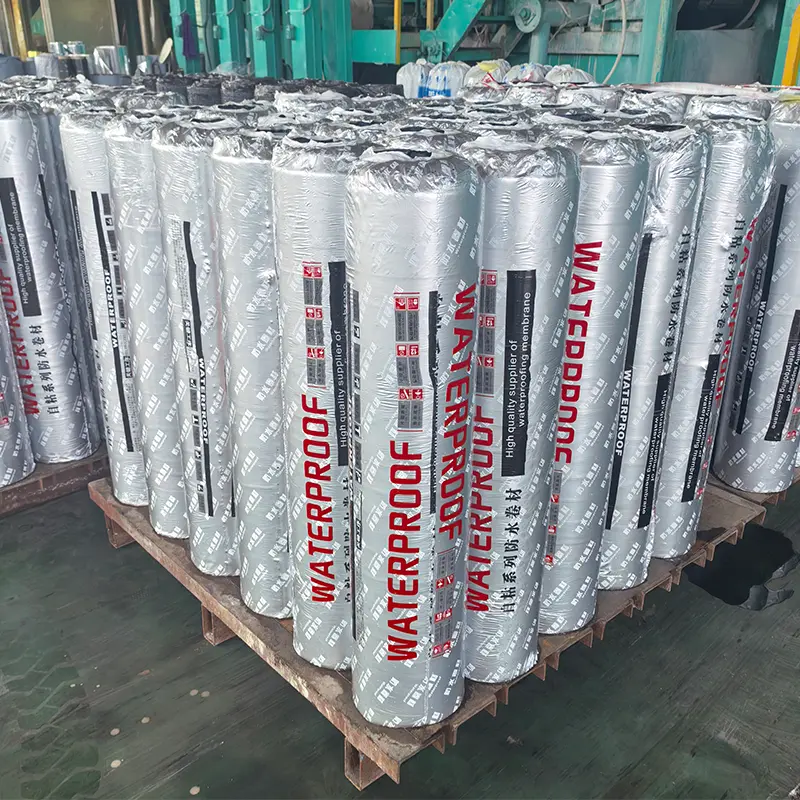
Where does a Self-adhesive Waterproofing Membrane save me the most time?
- Below-grade boxes with rebar congestion where torched seams are impractical
- Cold or damp mornings when I need reliable tack without chasing curing windows
- Tight lift shafts and podium edges where consistent lap pressure matters more than flame work
- Busy sites with overlapping trades where fast peel-and-stick reduces setup and permits
What types should I consider if my site conditions keep changing?
When I compare options, I group them by core sheet and bond method. A polymer sheet designed to be pre-applied and cast-in can grip fresh concrete and block lateral migration. A reinforced polyester sheet with asphalt tack offers familiar handling and robust puncture resistance. A wet-laid variant gives me one- or two-sided adhesion for tricky sequence work. I still prioritize how laps are formed, how quickly release films come off, and how the membrane behaves on green concrete. In each case I ask whether the chosen Self-adhesive Waterproofing Membrane will forgive real-world substrates, not just lab samples.
How do the main options compare when I look past the brochure?
| System type | Core sheet and feel | Bond mechanism | Lap formation | Best use cases | Notes on damp or cold |
|---|---|---|---|---|---|
| Pre-applied polymer sheet | EVA or HDPE homogeneous sheet with stable dimensional control | Adhesive face cast against fresh concrete to create a continuous bond | Self-adhesive overlaps with release film removed just before pressing | Basements, rafts, blind-side shoring, elevator pits | Strong choice when early-morning moisture or low temps challenge primers |
| Reinforced polyester sheet with asphalt tack | Polyester reinforcement embedded in asphaltic matrix for toughness | Pressure-activated tack on one or both sides for sequencing flexibility | Peel, align, roll with firm pressure; simple detailing around penetrations | Podium slabs, upstands, planters, general below-grade walls | Predictable adhesion with firm rolling; surface film keeps handling clean |
| Wet-laid polyester variant | Asphalt-based polyester designed for wet-laid processes and quick coverage | Self-adhesive layer engages while surface remains workable for positioning | Single- or double-sided options to match direction of work | Complex geometry, step details, rapid coverage on wide decks | Tolerant of light surface moisture with proper substrate prep |
Why do I care so much about lateral water migration on blind-side work?
A pre-applied sheet that bonds to the concrete face turns that potential highway into a dead end. If a fastener, tie-back, or crack shows up years later, the bonded interface keeps water from tracking between the membrane and the wall. That is exactly where a Self-adhesive Waterproofing Membrane designed for cast-in service earns its keep.
What installation habits make a Self-adhesive Waterproofing Membrane perform like it should?
- Dry to the touch and sound substrate checks come first, even when the surface looks “good enough”
- Dry-fit rolls to avoid tension at corners and penetrations
- Peel release film gradually so the sheet never grabs before alignment
- Roll every lap with consistent pressure using a heavy hand roller
- Stage accessories so inside and outside corners get reinforced before backfill
How do I handle cold mornings, damp slabs, and awkward laps without drama?
- I keep lap widths consistent and protect edges from dust before rolling
- I press terminations firmly into compatible sealant rather than over-rely on primers
- I pre-cut patches for pipe clusters so the membrane is never stretched thin
- I plan for staggered laps to avoid three-ply build-ups under tight rebar
When should I ask for geotextile reinforcement and what do I actually gain?
On backfilled walls or planter boxes that see abrasion, a composite layer adds tear resistance while keeping flexibility for tight radii. I use it when I expect point loading from aggregate or when the schedule demands early protection. If the project calls for a Self-adhesive Waterproofing Membrane in areas with repeated maintenance traffic, the composite option pays for itself in fewer repairs.
How do I translate this into a quick and credible quantity takeoff?
- I measure gross area, then add 8–12% for laps, offcuts, and detailing
- I count penetrations and corners, then match accessory rolls and patch pieces
- I include protection boards or drainage sheets where backfill or ballast is aggressive
- I round up on accessories because missing one corner kit costs me time and reputation
What quality checks do I insist on before anyone signs the pour card?
- Laps rolled and visually continuous with no loose film tails
- Terminations sealed, especially at day joints and starter bars
- Punctures patched with rounded corners and pressure-set
- Release films removed from every bonded lap, no exceptions
Why does safety and sustainability push me further toward peel-and-stick today?
No open flame near formwork, fewer VOC concerns when detailing indoors, and a cleaner workflow around rebar crews. A dependable Self-adhesive Waterproofing Membrane lets me keep the site quieter, safer, and faster while still meeting the durability targets owners expect.
Would you like a specification that fits your project instead of forcing your project to fit a spec?
If you want practical details, sample boards, or a quick review of drawings, tell me what you are building and where it gets messy. I will match a Self-adhesive Waterproofing Membrane to your sequence, not the other way around. For tailored support and pricing from partners like Haoyuan, please contact us with your drawings and quantities. Share your schedule and constraints, and we will help you lock down the right system and accessories so the first inspection is the last one you need.