

Can Holographic Offset Cold Foil Be Applied Inline on a Standard Offset Press
2026-10-22
Holographic offset cold foil has moved from a niche finishing option to a mainstream production choice for packaging, labels, and premium commercial print. The question most production managers ask first is simple: can this material run inline on the offset press they already own? The short answer is yes—with the right press configuration, consumables, and process control. At Hongye, we supply holographic offset cold foil to printers running inline cold foiling every day, and this guide explains how the process works, where it succeeds, and what to watch for.
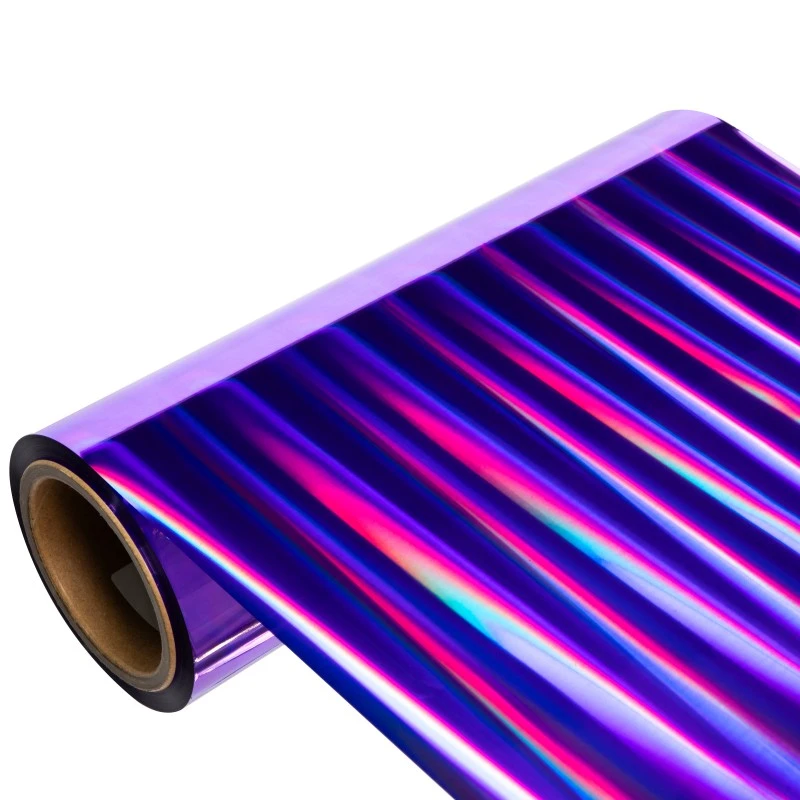
How Inline Cold Foiling Works
Inline cold foil application uses the offset press itself to apply adhesive, transfer foil, and cure the result—without a separate finishing pass.
-
Adhesive printing – A UV-curable cold foil adhesive is printed in the image areas using a standard offset unit.
-
Foil transfer – Holographic offset cold foil is nipped against the wet adhesive at a foil transfer unit, and the foil layer bonds only where adhesive was printed.
-
UV curing – The adhesive is cured through the foil, locking the holographic layer in place.
-
Foil stripping – The carrier film is peeled away, leaving a sharp holographic image.
-
Overprinting – The foiled sheet returns to the press for CMYK or spot color overprinting and finishing.
Press Requirements at a Glance
| Requirement | Specification | Why It Matters |
|---|---|---|
| Foil transfer unit | Dedicated or retrofittable cold foil unit | Enables inline foil application |
| UV curing | Interdeck or end-of-press UV | Cures adhesive through the foil |
| Registration tolerance | ±0.1–0.2 mm | Keeps holographic detail aligned |
| Adhesive | UV cold foil adhesive matched to foil | Controls transfer and edge sharpness |
| Substrate | Coated stock, board, or film | Affects adhesion and foil release |
| Press speed | Typically 8,000–12,000 sph | Balances output and transfer quality |
Key Advantages of Running Inline
-
Single pass production – Foiling, printing, and coating happen in one run, cutting lead times.
-
Consistent registration – Inline transfer holds tighter register than offline foiling.
-
Lower handling risk – Fewer sheet transfers mean less scratching and spoilage.
-
Design flexibility – Holographic offset cold foil accepts overprinting for multi-layer visual effects.
-
Waste reduction – Precise adhesive application limits foil consumption.
Practical Limitations to Plan For
Inline cold foiling is not a drop-in replacement for every job. Fine reverse-out details below 0.3 mm, very rough uncoated stocks, and heavy solid coverage can challenge transfer quality. Press speed, adhesive viscosity, and foil tension all interact, so Hongye recommends a controlled trial run before committing long production schedules.
Process Control Checklist
-
Verify adhesive coat weight with a drawdown test before each run.
-
Check foil tension at start, mid-run, and end of roll.
-
Monitor UV lamp output to confirm full adhesive cure.
-
Inspect transfer sharpness on the first 50 sheets and every 500 thereafter.
-
Store holographic offset cold foil in stable temperature and humidity.
Frequently Asked Questions
Can holographic offset cold foil be applied inline on a standard offset press?
Yes. With a cold foil transfer unit and UV curing capability, holographic offset cold foil can be applied inline on most modern sheetfed offset presses, including retrofitted models.
Does inline cold foiling slow down press speed?
Press speed typically drops to 8,000–12,000 sheets per hour depending on coverage and substrate, but eliminating a separate foiling pass usually delivers net time savings.
What substrates work best with holographic offset cold foil?
Coated art paper, folding board, and treated films deliver the sharpest transfer. Rough uncoated stocks require higher adhesive weights and careful testing.
Is Hongye holographic offset cold foil compatible with overprinting?
Yes. The cured foil surface accepts standard offset inks, allowing CMYK overprinting, spot colors, and protective coatings in the same run.
Conclusion
Inline application of holographic offset cold foil is a proven, production-ready process when press configuration, adhesives, and quality control are aligned. Printers who invest in the right setup gain shorter lead times, tighter registration, and distinctive holographic packaging that stands out on shelf. Hongye supports printers with foil specifications, trial guidance, and technical documentation to make the transition smooth.
Contact us today to request samples, discuss your press configuration, and learn how Hongye holographic offset cold foil can be integrated into your inline production line.