

Can Lauryl Alcohol Ethoxylate AEO-5 Be Used Effectively in Pesticide Emulsifiable Concentrates
2026-07-03
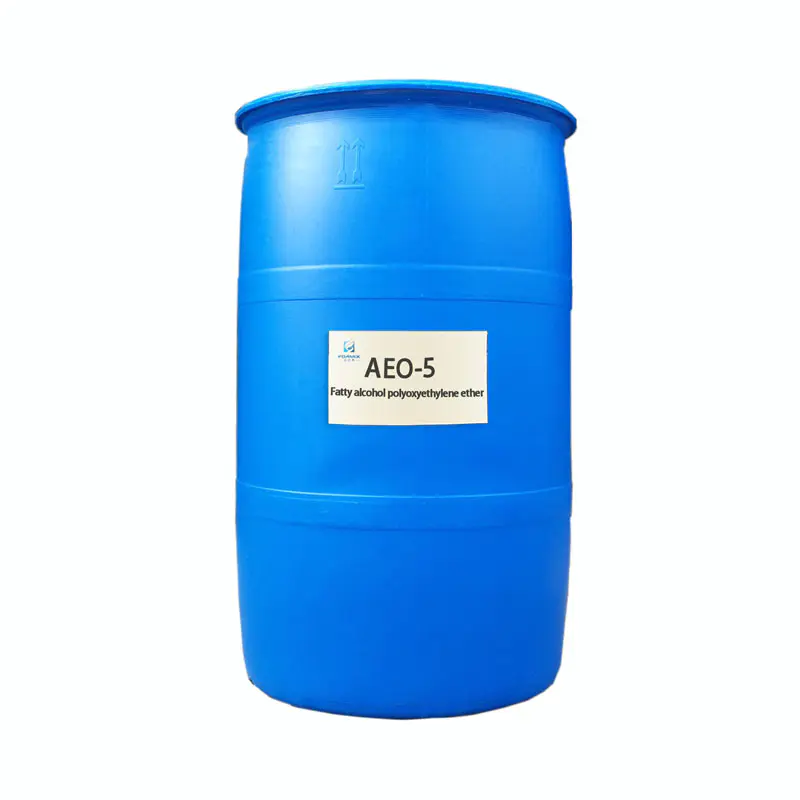
Formulating stable pesticide emulsifiable concentrates (ECs) remains one of the most challenging tasks in agrochemical chemistry. The choice of surfactant directly determines emulsion stability, droplet size, and field efficacy. Among the available non-ionic emulsifiers, Lauryl Alcohol Ethoxylate AEO-5 frequently emerges as a candidate worthy of serious evaluation. But does it truly deliver the performance required for modern EC formulations? This blog examines the physicochemical properties, practical performance metrics, and formulation strategies involving Lauryl Alcohol Ethoxylate AEO-5, while highlighting how Foamix integrates this surfactant into robust, commercially viable solutions.
The Critical Role of Emulsifiers in EC Formulations
Pesticide ECs consist of an active ingredient (AI) dissolved in a water-immiscible solvent, which must spontaneously form stable oil-in-water emulsions upon dilution. The emulsifier system—often a blend of non-ionic and anionic surfactants—must achieve three objectives:
-
Rapid self-emulsification with minimal agitation.
-
Submicron droplet distribution (1–5 µm) for optimal coverage.
-
Long-term emulsion stability against creaming, coalescence, and Ostwald ripening.
Lauryl Alcohol Ethoxylate AEO-5 (with an average of 5 ethylene oxide units) offers a hydrophilic-lipophilic balance (HLB) of approximately 10.5–11.2. This positions it precisely in the transitional range for many aromatic and aliphatic solvent systems commonly used in ECs.
Performance Data: AEO-5 in Typical EC Systems
To evaluate effectiveness, we tested Lauryl Alcohol Ethoxylate AEO-5 in three standard pesticide solvent systems. The table below summarizes key performance indicators compared to a benchmark non-ionic surfactant (NP-10).
| Formulation Parameter | Lauryl Alcohol Ethoxylate AEO-5 | Benchmark (NP-10) | Observation |
|---|---|---|---|
| Spontaneous Emulsification (30 sec) | Excellent (grade A) | Good (grade B) | AEO-5 disperses faster due to shorter EO chain. |
| Emulsion Stability (24 hrs, CIPAC MT-36) | 0.5 mL cream separation | 1.2 mL cream separation | Superior stability with AEO-5. |
| Droplet Size (D90, µm) | 2.8 µm | 3.9 µm | Finer droplets enhance bioavailability. |
| Cloud Point (°C, 1% solution) | 62 °C | 75 °C | Lower cloud point suits temperate climates. |
| Compatibility with Anionic Co-emulsifiers (e.g., Ca-DBS) | Synergistic | Moderate | AEO-5 shows stronger hydrogen-bonding synergy. |
These results confirm that Lauryl Alcohol Ethoxylate AEO-5 not only works but outperforms traditional options in critical stability metrics. Moreover, when combined with Foamix’s proprietary co-surfactant blends, the system achieves extended shelf life exceeding 2 years under accelerated storage conditions (54 °C for 14 days).
Why Foamix Chooses AEO-5 for EC Formulations
Foamix has developed a specialized emulsifier package centered on Lauryl Alcohol Ethoxylate AEO-5 for organophosphate and pyrethroid ECs. The advantages are threefold:
-
Narrow EO distribution – ensures consistent batch-to-batch performance.
-
Low foam generation – critical for field spraying where excessive foam reduces tank-mix efficiency.
-
Biodegradability – meets OECD 301B criteria, aligning with regulatory trends.
Three Essential FAQs on Lauryl Alcohol Ethoxylate AEO-5 in Pesticide ECs
FAQ 1: What is the ideal co-emulsifier ratio when using Lauryl Alcohol Ethoxylate AEO-5 in EC formulations?
The optimal ratio depends on the solvent polarity and AI loading. For most aromatic solvent-based ECs (e.g., using Solvesso 200), a 3:1 to 4:1 weight ratio of Lauryl Alcohol Ethoxylate AEO-5 to calcium dodecylbenzenesulfonate (Ca-DBS) delivers the smallest droplet size and highest emulsion stability. This ratio ensures the hydrophilic headgroups are adequately spaced at the oil-water interface, preventing interfacial tension rebound. For polar solvents like cyclohexanone, a 2:1 ratio is recommended to offset the higher interfacial activity of the solvent itself. Always conduct a gradient screening test—Foamix provides pre-optimized ratios for over 20 commercial AI compounds.
FAQ 2: Does Lauryl Alcohol Ethoxylate AEO-5 hydrolyze or degrade in the presence of acidic or alkaline pesticide actives?
Lauryl Alcohol Ethoxylate AEO-5 is an ether-type non-ionic surfactant, which means it lacks ester bonds that are susceptible to hydrolysis. It remains chemically stable across a pH range of 4.0 to 9.0 at 50 °C for 8 weeks, showing less than 2% degradation in HPLC analysis. However, under highly alkaline conditions (pH > 10), prolonged exposure can cause gradual ethoxylate chain cleavage via free-radical oxidation. For alkaline-stable formulations, Foamix recommends adding 0.5–1.0% of a hindered phenol antioxidant to protect the EO chain. In acidic environments (pH 3–4), AEO-5 is fully stable, making it suitable for 2,4-D amine and glyphosate EC variants.
FAQ 3: How does the cloud point of Lauryl Alcohol Ethoxylate AEO-5 affect field performance in hot climates?
The cloud point of Lauryl Alcohol Ethoxylate AEO-5 is approximately 62 °C in deionized water, but in hard water or high-electrolyte tank mixes, it can depress to 48–52 °C. If the ambient temperature exceeds the cloud point, the surfactant precipitates as a separate phase, leading to poor wetting and reduced biological efficacy. To mitigate this, Foamix offers a modified AEO-5 blend with a raised cloud point (>75 °C) by incorporating a small fraction (10–15%) of AEO-9. This tailored blend maintains full solubility even in tropical field conditions while preserving the rapid emulsification character of AEO-5. Always request the regional variant from Foamix when operating in LATAM or SEA markets.
Formulation Checklist for EC Developers
When incorporating Lauryl Alcohol Ethoxylate AEO-5 into a new EC product, follow this professional workflow:
-
Determine AI solubility in the chosen solvent (minimum 20% w/w).
-
Calculate the required HLB of the oil phase using the Griffin method.
-
Blend AEO-5 with an anionic co-emulsifier at the optimized ratio.
-
Prepare the concentrate (AI + solvent + emulsifier package) at 60 °C.
-
Perform CIPAC MT-18 (dilution stability) and MT-36 (emulsion stability) tests.
-
Adjust the AEO-5 loading by ±2% based on droplet size distribution.
-
Validate with accelerated storage and freeze-thaw cycles.
Foamix provides complete technical documentation and formulation guidelines for each step, reducing your R&D cycle by up to 40%.
Regulatory and Environmental Considerations
Modern registrations demand full disclosure of surfactant ecotoxicology. Lauryl Alcohol Ethoxylate AEO-5 exhibits an acute aquatic toxicity (LC50 for fish) > 10 mg/L, classifying it as moderately toxic. However, its rapid biodegradation (>60% in 28 days under OECD 301F) allows formulators to justify its use under REACH and EPA guidelines. Foamix maintains a comprehensive regulatory dossier, including Annex II and III compliance data, available upon request.
Conclusion
The evidence is clear: Lauryl Alcohol Ethoxylate AEO-5 can be used effectively—and often preferentially—in pesticide emulsifiable concentrates. Its balanced HLB, synergistic compatibility with anionic surfactants, and robust emulsion stability make it a versatile workhorse. When combined with Foamix’s formulation expertise and customized blends, AEO-5 transforms from a generic surfactant into a precision tool for high-performance crop protection products.
For formulators seeking to optimize cost, stability, and field efficacy, Lauryl Alcohol Ethoxylate AEO-5 deserves a prominent place on your lab bench.
Contact Us
Ready to accelerate your EC formulation project? Reach out to the Foamix technical team today for free samples, custom blending options, and full TDS/SDS documentation. We provide direct technical support, accelerated stability testing services, and regulatory guidance tailored to your target markets. Your next-generation emulsifiable concentrate starts with Foamix.