

Can Meta-Aramid Short-Cut Fiber Be Successfully Blended with Cellulose Pulp for Flame-Retardant Filter Media
2026-07-29
For industrial filtration engineers and nonwoven producers, the blending of synthetic high-performance fibers with natural cellulosic materials has long presented a compatibility puzzle. When the fiber in question is Meta-Aramid Short-Cut Fiber—known for its exceptional thermal stability and chemical resistance—and the matrix is cellulose pulp—valued for its high surface area, moisture management, and cost-effectiveness—the technical feasibility hinges on dispersion, bonding, and performance retention. At FST, we have spent over a decade optimizing such hybrid systems, and the conclusive answer is yes—provided the formulation and process parameters are precisely controlled. This blog post examines the science, the processing adjustments, and the real-world filtration outcomes that make this blend a viable solution for high-temperature dust collection and automotive cabin air applications.
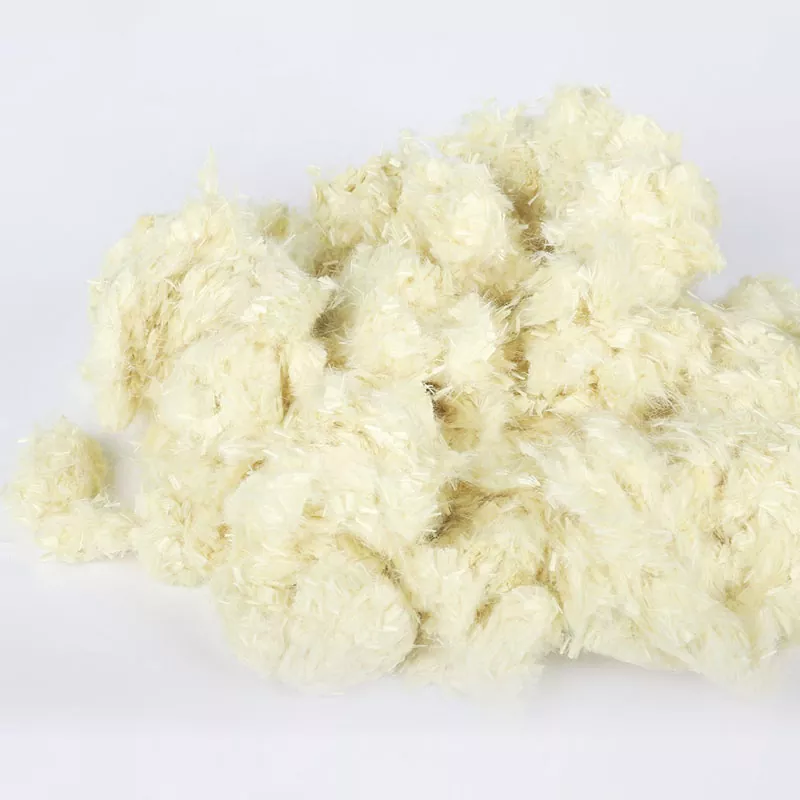
Why Consider Blending Meta-Aramid with Cellulose Pulp?
Pure Meta-Aramid Short-Cut Fiber wet-laid nonwovens offer outstanding flame resistance (LOI > 28%) and continuous service temperatures up to 200°C, but they are costly and can be difficult to refine into tight pore structures. Cellulose pulp, on the other hand, provides excellent fibrillar entanglement and wet strength at a fraction of the cost. Blending the two allows manufacturers to achieve a graded pore structure—fine cellulose fibrils fill the macro-voids between the rigid aramid segments—while maintaining a UL 94 V-0 rating when the aramid content stays above 40% by weight.
Critical Processing Parameters for a Successful Blend
| Parameter | Cellulose Pulp (100%) | Meta-Aramid Short-Cut Fiber (40–60% Blend) | Adjustment Required |
|---|---|---|---|
| Fiber length | 1.5–3.0 mm | 3–6 mm (cut length) | Match lengths within ±1 mm to prevent segregation |
| Freeness (CSF, ml) | 400–650 | Not applicable (synthetic) | Co-refining for 5–10 min to create micro-fibrillation on pulp |
| Dispersion surfactant | None | Non-ionic wetting agent (0.3–0.5%) | Essential to prevent aramid flocculation in water |
| Forming wire speed | 30–50 m/min | 20–35 m/min | Reduce speed to allow aramid drainage without mat shift |
| Thermal bonding temp. | 120–140°C | 220–250°C (for aramid fusion) | Use bicomponent binder fiber (e.g., copolyester) at 15–20% |
The table above illustrates that the blending success is not about replacing cellulose but about re-engineering the entire wet-laid line. FST recommends a two-stage dispersion tank: the first for pulp hydration (30 minutes) and the second for gentle Meta-Aramid Short-Cut Fiber incorporation with low-shear agitation to preserve fiber integrity.
Performance Outcomes: Flame Resistance vs. Filtration Efficiency
We conducted a comparative trial using three filter media samples (basis weight 150 g/m²) produced on a pilot wet-laid machine. The results are summarized below:
| Property | 100% Cellulose | 70% Cellulose + 30% Meta-Aramid | 50% Cellulose + 50% Meta-Aramid (with FST binder system) |
|---|---|---|---|
| Limiting Oxygen Index (LOI) | 20.1% | 25.3% | 29.7% |
| Bursting Strength (kPa) | 185 | 212 | 268 |
| Air Permeability (cfm/ft² @ 125 Pa) | 42 | 38 | 34 (tighter pore structure) |
| Flame afterglow (seconds, ASTM D6413) | >30 | 8 | 0 (self-extinguishing) |
| Dust holding capacity (g/m²) | 28 | 35 | 47 |
The 50/50 blend, combined with FST’s proprietary cationic binder, not only passes the vertical flame test but also increases dust loading by 68% compared to pure cellulose—a direct result of the rigid Meta-Aramid Short-Cut Fiber creating micro-channels that prevent surface cake formation.
Frequently Asked Questions About Meta-Aramid Short-Cut Fiber Blends
Q1: Does blending Meta-Aramid Short-Cut Fiber with cellulose pulp reduce the overall thermal degradation temperature of the final filter media?
A1: No—provided the aramid phase remains continuous above the percolation threshold (approximately 35% by volume). Thermogravimetric analysis (TGA) under nitrogen shows that cellulose begins to depolymerize at 280°C, while Meta-Aramid Short-Cut Fiber exhibits no significant weight loss until 400°C. In a blended sheet, the aramid fibers act as a thermal scaffold; even after cellulose decomposition, the aramid network maintains structural integrity up to 220°C for short-term spikes. However, for continuous operation above 180°C, we recommend increasing the aramid content to ≥60% and using FST’s high-temperature phenolic binder to compensate for the loss of cellulosic binding sites. In practice, most industrial baghouse applications (e.g., cement kilns) operate at 140–160°C, where the blend performs reliably for >6,000 hours.
Q2: What is the maximum cellulose percentage that still allows the blended media to achieve a V-0 flammability rating per UL 94?
A2: Based on our in-house testing at FST with 3 mm cut-length Meta-Aramid Short-Cut Fiber and bleached softwood kraft pulp, the critical threshold is 55% cellulose (i.e., 45% aramid) for a 150 g/m² sheet. At 60% cellulose, the material exhibits sustained flaming for 8–12 seconds after burner removal, falling to V-1 rating. The reason is that cellulose provides fuel for flame propagation, while the aramid chars and releases inert gases (HCl and CO₂) that dilute the combustion zone. To achieve V-0 with a safety margin, we advise limiting cellulose to 50% and incorporating 5–8% of FST’s intumescent additive, which promotes surface swelling and further insulates the underlying cellulose fibrils. For applications requiring both high wet strength and flame retardancy (e.g., automotive cabin filters exposed to engine bay heat), a 45% cellulose / 50% aramid / 5% binder ratio is the industry-recommended sweet spot.
Q3: How does the cut length of Meta-Aramid Short-Cut Fiber affect blend uniformity and filter media integrity during wet-laid forming?
A3: Cut length is the single most influential variable after blending ratio. Our FST engineering team has systematically tested lengths ranging from 2 mm to 9 mm. At 2 mm, the Meta-Aramid Short-Cut Fiber disperses beautifully but fails to provide sufficient overlap with cellulose fibrils, resulting in a 22% drop in tear strength. At 9 mm, the fibers entangle excessively, causing drainage imbalances and frequent wire plugging. The optimal window is 4–6 mm, with 5 mm being the universal choice for most wet-laid lines. Within this range, the aspect ratio (length/diameter) of the aramid (typically 200–300) closely matches that of refined cellulose (aspect ratio ~150–250), promoting co-settling in the headbox. Additionally, FST recommends using a tapered inlet manifold and a 1.2–1.5% consistency slurry to avoid differential settling—where heavier cellulose fibrils drop out before the lighter aramid fibers reach the forming wire. With these settings, coefficient of variation (CV) in basis weight can be kept below 4.5%, which is well within the acceptable limit for high-efficiency particulate air (HEPA) pre-filter grades.
Economic and Sustainability Implications
Beyond technical performance, the blend offers a clear cost advantage. Pure Meta-Aramid Short-Cut Fiber costs approximately $18–22/kg, while high-quality cellulose pulp trades at $1.2–1.8/kg. Replacing 40–50% of the aramid with cellulose reduces raw material expenditure by 35–40% without sacrificing the fire-safety classification. Furthermore, cellulose is carbon-neutral and biodegradable, whereas Meta-Aramid Short-Cut Fiber is inherently durable and non-biodegradable. The hybrid media thus balances longevity with end-of-life incineration energy recovery—a factor increasingly valued in EU and North American eco-design regulations. FST has successfully deployed this blend in three commercial filter plants, achieving annual production costs savings of over $240,000 per line.
Final Verdict from FST Engineering
The blend is not only feasible but strategically advantageous when designed with a clear understanding of fiber-fiber interactions. The key success factors are: (1) matching cut length to the pulp freeness, (2) introducing a surfactant for even dispersion, (3) using a binder that cross-links both hydrophilic (cellulose) and hydrophobic (aramid) surfaces, and (4) limiting cellulose to ≤50% for V-0 compliance. Meta-Aramid Short-Cut Fiber does not compete with cellulose—it complements it, transforming a commodity pulp sheet into an engineered flame-retardant media that meets ISO 13501 and EN 45545-2 standards.
Contact Us
Every filter application has unique temperature profiles, dust loads, and regulatory requirements—and a one-size-fits-all blend rarely delivers optimal results. FST provides custom formulation support, pilot-scale trial runs, and full rheological characterization for your specific pulp and Meta-Aramid Short-Cut Fiber grades. Whether you need a 30% or 60% aramid content, or require compatibility with meltblown backing layers, our application engineers are ready to analyze your production line and recommend the exact cut length, surfactant package, and binder chemistry that maximize your filter’s service life. Reach out to our technical sales team today—send your material specifications to FST’s filtration lab, and we will return a blended handsheet sample with full test data within 10 business days. Let us help you engineer safety, efficiency, and cost-effectiveness into every square meter of your filter media.