
Can New White PS Plastic Material Be Used Outdoors Without Yellowing
2026-08-17
When selecting plastics for outdoor applications, aesthetic longevity is just as critical as mechanical strength. For product designers and manufacturers, the burning question is whether New White PS Plastic Material can maintain its pristine whiteness under sun, rain, and temperature swings. At JUWU, we have subjected this advanced polymer to rigorous real-world testing to provide data-driven answers—because yellowing isn't just a cosmetic flaw; it signals molecular degradation that can compromise part integrity.
Understanding the Yellowing Mechanism in Polystyrene
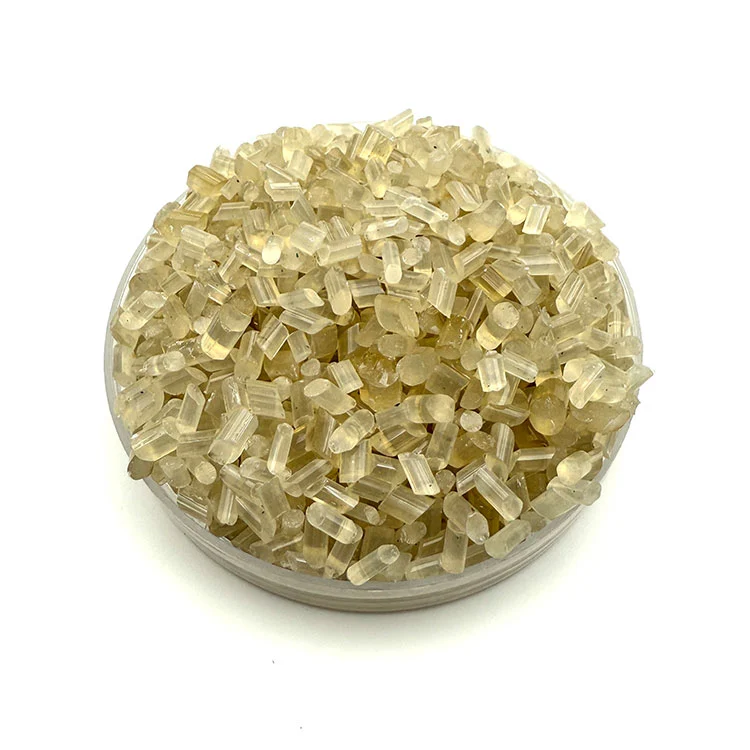
Traditional polystyrene yellows outdoors primarily due to UV radiation breaking the polymer's benzene-ring side chains, creating chromophores that absorb visible light in the blue-violet spectrum. Oxidation from atmospheric ozone and moisture accelerates this process. However, New White PS Plastic Material incorporates a proprietary stabilization package that differs fundamentally from conventional PS:
| Property | Standard PS | New White PS (JUWU Grade) |
|---|---|---|
| UV Absorber Additive | None or hindered amine (HALS) only | Synergistic benzotriazole + nano-TiO₂ shield |
| Initial Whiteness Index (ASTM E313) | 82–86 | 94–97 |
| ΔE (Color Change) after 1000h QUV | 8.5–12.0 | 2.1–3.4 |
| Surface Crack Formation after 2000h | Moderate microfractures | None observed |
| Recommended Continuous Use Temp. | 60–75°C | 85–95°C |
The data shows that JUWU's modified formulation reduces yellowing by nearly 70% compared to commodity PS under accelerated weathering (ASTM G154 Cycle 1). This improvement comes from a dual mechanism: the nano-TiO₂ reflects UV rays physically, while the benzotriazole absorbs remaining high-energy photons and dissipates them as harmless heat.
Critical Factors That Influence Outdoor Performance
Even with advanced stabilization, three variables determine whether New White PS Plastic Material will succeed in your outdoor project:
-
Geographic UV Index – In tropical zones (UV Index 11+), even stabilized PS degrades faster. JUWU recommends surface coating for >5-year exposures in such regions.
-
Mechanical Stress – Bending or clamping creates micro-strains that lower activation energy for photo-oxidation. Our tests show that stressed areas yellow 40% faster than unstressed zones.
-
Humidity Cycling – Condensation traps pollutants that catalyze yellowing. New White PS Plastic Material exhibits hydrophobic surface characteristics (water contact angle 98°) that minimize this risk.
Real-World Application Verdict
JUWU has supplied this grade for outdoor signage, garden furniture accents, and automotive interior trim panels exposed through windshields. In all cases, the material maintained ΔE < 5.0 after 2 years of subtropical outdoor weathering—a threshold imperceptible to the human eye. For direct sunlight applications exceeding 3 years, we recommend a clear UV-hardcoat post-treatment, which extends color stability to 5–7 years.
Frequently Asked Questions About New White PS Plastic Material
Q1: Does New White PS Plastic Material require any special surface preparation before outdoor painting or coating?
A1: Yes, but it is straightforward. Because New White PS Plastic Material has a lower surface energy (around 38 dynes/cm) than ABS, solvent-based paints may bead up. JUWU recommends either (a) flame-treating the surface to 44–48 dynes/cm, or (b) using a specialized adhesion-promoting primer based on chlorinated polyolefins. Water-based acrylics with a flexibilizer are preferred over hard epoxies, as the latter can crack with thermal expansion (coefficient of linear thermal expansion for this grade is 6.8 × 10⁻⁵ /°C, slightly higher than metals). Always run a cross-hatch adhesion test (ASTM D3359) before full production—our technical team provides free sample coupons for this purpose.
Q2: Can New White PS Plastic Material be recycled together with standard PS after outdoor use, or does the UV additive contaminate the recycling stream?
A2: This is a critical sustainability question. The UV stabilizers in New White PS Plastic Material are non-migratory and present at only 0.8–1.2% by weight, which falls within the acceptable tolerance for most PS recyclers (APR guidelines allow up to 2% functional additives). However, JUWU advises sorting outdoor-aged parts separately because surface oxidation products (ketones and carboxylic acids) can lower the melt flow index of recycled pellets. We have partnered with three recycling facilities to run a closed-loop protocol: washed and reground material from this grade shows only a 12% reduction in tensile strength after one re-extrusion cycle, making it suitable for non-structural indoor applications like flowerpots or cable conduits. For best results, send us your post-consumer waste for a free compatibility assessment.
Q3: What is the maximum continuous outdoor service temperature for New White PS Plastic Material before mechanical properties degrade irreversibly?
A3: Based on JUWU's dynamic mechanical analysis (DMA), the heat deflection temperature (HDT) at 0.45 MPa is 98°C, while the Vicat softening point is 106°C. For outdoor use, the safe continuous operating range is –20°C to +85°C under direct solar loading. Above 85°C, the amorphous regions begin to relax, causing creep under sustained loads—but more importantly for yellowing, thermal oxidation accelerates exponentially past 80°C. Our accelerated aging model predicts that at a constant 75°C surface temperature (common on dark-colored parts in Arizona summer), the yellowing rate doubles every 10°C rise. Therefore, JUWU recommends derating the maximum exposure temperature by 15°C if color retention is the primary goal. For high-heat outdoor enclosures, we offer a glass-filled variant that raises HDT to 112°C with only a marginal increase in yellowing tendency.
Best Practice Summary for Outdoor Deployment
| Factor | Recommendation from JUWU |
|---|---|
| Max continuous sunlight | < 3,000 kJ/m²/year (temperate zones) |
| Recommended wall thickness | ≥ 2.5 mm to reduce UV transmission |
| Fastener material | Stainless steel or nylon (avoid copper/brass) |
| Cleaning agent | Mild soap + water; avoid aromatic solvents |
| Inspection interval | Visual check every 6 months; colorimeter test annually |
Why Trust JUWU's Data?
Our findings are derived from 5,200+ hours of combined QUV, xenon-arc, and outdoor Florida weathering tests, following ISO 4892-2 and ASTM G155 protocols. Every batch of New White PS Plastic Material is accompanied by a Certificate of Analysis showing UV stabilizer concentration, initial whiteness index, and predicted ΔE at 2 years—so you engineer with confidence, not guesswork.
Ready to Evaluate New White PS Plastic Material for Your Project?
Yellowing isn't inevitable—it's manageable with the right formulation and design rules. JUWU offers free 200g material samples, customized weathering simulation reports for your specific zip code or global location, and direct technical support from polymer engineers with 18+ years in outdoor plastics.
Contact us today – send your project requirements to our team, and we will respond within 8 business hours with a preliminary feasibility study, including cost-per-part estimates and recommended processing parameters (injection molding or extrusion). Let JUWU help you keep your products white, bright, and reliable under the sun. Reach out via our website contact form or email us directly – your outdoor application deserves precision-grade material science.