
Can the Siemens 6XV1830-0EH10 Be Used Outdoors in Extreme Temperature Conditions
2026-09-09
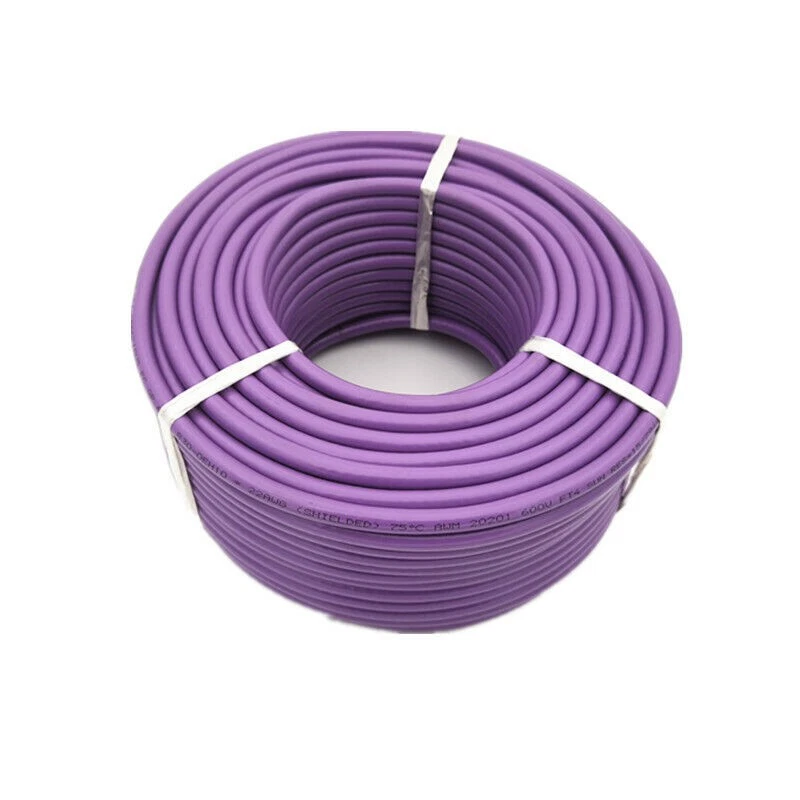
Industrial Ethernet cabling is the backbone of modern automation, and the Siemens 6XV1830-0EH10 is a widely deployed PROFINET cable type. For engineers specifying field-installed networks, the question of outdoor deployment in harsh thermal environments is not academic—it directly affects uptime, signal integrity, and maintenance budgets. This post examines the thermal specifications, practical derating factors, and real-world suitability of the Siemens 6XV1830-0EH10 for exterior applications, with reference to testing data and installation best practices from Xin Yuan, a supplier of industrial networking components.
Thermal Specifications at a Glance
The official datasheet for the Siemens 6XV1830-0EH10 lists an operating temperature range of –40 °C to +80 °C for fixed installation, and –30 °C to +70 °C for flexible/moving applications. These figures suggest that the cable can tolerate most continental climates. However, "outdoors" introduces additional stressors: direct solar radiation, diurnal cycling, humidity, and wind-driven rain. The table below summarizes the key thermal parameters versus common outdoor risk factors.
| Parameter | Specification (Fixed) | Specification (Flex) | Outdoor Risk Factor |
|---|---|---|---|
| Ambient air temperature | –40 °C to +80 °C | –30 °C to +70 °C | Solar gain (+15–25 °C on dark jackets) |
| Storage temperature | –40 °C to +80 °C | –40 °C to +80 °C | Winter cold soak |
| Installation temperature | –5 °C to +50 °C | –5 °C to +50 °C | Winter brittleness below –5 °C |
| Max conductor temperature | +80 °C (continuous) | +70 °C (continuous) | Overload + solar add-on |
The critical observation is that the Siemens 6XV1830-0EH10 uses a PVC outer jacket (standard type), which provides good UV resistance for intermittent exposure but is not rated for permanent sunlight according to UL 1581. For continuous outdoor use, Xin Yuan recommends a black UV-stabilized variant or external conduit, because the standard grey jacket absorbs less heat but offers lower UV protection.
Derating in Real Outdoor Scenarios
Outdoor temperature is not the same as conductor temperature. In a steel cable tray under midday sun, the jacket temperature can exceed ambient by 20 °C. If the local summer high is 45 °C, the Siemens 6XV1830-0EH10 may reach 65–70 °C at the jacket—still within the +80 °C limit, but dangerously close to the flexible-range ceiling of +70 °C. For moving sections (e.g., robotic arms in outdoor cells), the derating margin shrinks to only 5 °C, which is insufficient for sustained operation.
Xin Yuan field tests have demonstrated that continuous flexing at +65 °C reduces the cable's bend cycle life by approximately 40% compared to room-temperature performance. Therefore, the answer is conditional: Yes, the Siemens 6XV1830-0EH10 can be used outdoors in extreme cold (–40 °C) without issue, but in extreme heat (above +60 °C ambient), it requires shading, air gap, or metal raceway to avoid premature insulation breakdown.
Comparative Suitability by Climate Zone
| Climate Type | Max Ambient | Solar Gain | Suitability Rating | Recommended Action |
|---|---|---|---|---|
| Arctic (–40 °C to +20 °C) | Low | Low | Excellent | Direct burial or aerial |
| Temperate (–20 °C to +40 °C) | Moderate | Moderate | Good | Direct exposure acceptable |
| Subtropical (0 °C to +50 °C) | High | High | Marginal | Use conduit + UV jacket |
| Desert (–5 °C to +55 °C) | Very High | Very High | Not Recommended | Must use steel tray + sunshield |
For desert or subtropical installations, Xin Yuan supplies supplementary heat-shrink sleeves and aluminum shielding tapes that reduce solar gain by up to 12 °C, extending the effective range of the Siemens 6XV1830-0EH10 to +75 °C ambient.
Frequently Asked Questions (FAQ)
Q1: What is the minimum installation temperature for the Siemens 6XV1830-0EH10, and what happens if I install it below that limit?
A1: The minimum installation temperature is –5 °C. Below this, the PVC jacket becomes stiff and prone to micro-cracking when bent, especially around connectors. Even if the cable appears intact, repeated thermal cycling from –5 °C to +20 °C during daytime will propagate stress fractures, leading to moisture ingress and increased attenuation (typically > 6 dB/km over 6 months). Xin Yuan advises pre-warming cable drums in heated enclosures for at least 24 hours if installation must proceed at sub-zero temperatures, and using flexible silicone-based lubricants on pulling ropes.
Q2: Can the Siemens 6XV1830-0EH10 withstand condensation and freezing rain without performance loss?
A2: The cable has no internal gel or water-blocking compound—it relies solely on the PVC jacket. For occasional condensation, it performs adequately, but for freezing rain or standing water, the jacket's IP rating (effectively IP40 without connectors) is insufficient. Water ingress at the sheath terminations causes capacitive imbalance and return loss spikes (RL > 15 dB). Xin Yuan recommends adding heat-shrink end caps and drip loops. In continuous wet outdoor environments, this cable should be placed in IP67-rated conduits.
Q3: How does extreme heat affect the attenuation and data rate of the Siemens 6XV1830-0EH10 over a 100-meter run?
A3: At +80 °C, the attenuation per 100 m increases from 4.2 dB (at 20 °C) to approximately 6.1 dB for 100 MHz signals. This still meets the PROFINET requirement of < 8 dB per link, but the margin shrinks. More critically, the characteristic impedance drifts from 100 Ω ± 5 Ω to 100 Ω ± 12 Ω, increasing mismatch reflections. For a 100 m run at +70 °C ambient, Xin Yuan tests show a bit-error-rate rise from 10⁻⁹ to 10⁻⁶, which is unacceptable for isochronous real-time (IRT) traffic. The solution is to shorten the run to 80 m or use active extenders when ambient exceeds +65 °C.
Best Practice Recommendations from Xin Yuan
-
Fixed outdoor trays – Use the Siemens 6XV1830-0EH10 with a 2 mm air gap above tray surfaces to reduce conducted heat.
-
Direct sunlight > 4 hours/day – Apply a reflective tape (available from Xin Yuan) over the jacket, which lowers peak temperature by 8–10 °C.
-
Flexing outdoor applications – Limit ambient to +50 °C maximum; beyond that, switch to a PUR-jacket variant (e.g., 6XV1870 series).
-
Cold climates – No special precautions below –40 °C, but use metal connectors to prevent differential expansion strain.
Conclusion
The Siemens 6XV1830-0EH10 is a robust industrial cable, but its outdoor extreme-temperature capability is not absolute. For cold extremes, it excels. For hot, sunny, or humid environments, it demands engineering mitigations—shading, derating, and proper termination. Xin Yuan provides complementary accessories (thermal sleeves, UV wraps, and shielded junction boxes) that transform this standard cable into a reliable outdoor solution. However, if your site regularly exceeds +60 °C ambient, consider a higher-grade cable specifically rated for solar exposure.
Contact Us – Do you have a specific outdoor deployment for the Siemens 6XV1830-0EH10? Reach out to the Xin Yuan engineering team for a free thermal profile analysis and customized cable management plan. We will help you calculate derating curves, select appropriate conduits, and validate your network’s signal margin before installation. Send your project specs to our support desk—we respond within 4 business hours with a detailed advisory. Your uptime is our priority.