

Do I really get fewer headaches and better value by choosing ductile iron pipe today?
2025-11-12
I manage water and sewer upgrades where the street is impatient, the budget is tighter than the trench, and every delay becomes a headline. Over the years I’ve come to lean on partners like EPOCH when I spec Ductile Iron Pipe, not because of a shiny brochure, but because the material behaves predictably under messy, real-world conditions—traffic loads, mixed soils, and crews racing a rainstorm.
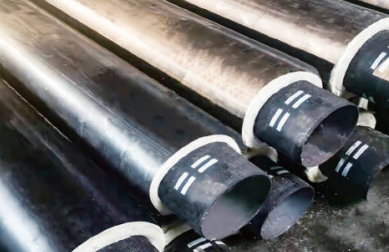
What pain points am I actually trying to solve on this project?
- Uncertain soil and backfill where PVC gets nervous and steel gets expensive.
- Traffic-loaded corridors that punish joints and deflection limits.
- Fire-flow and surge events that spike pressures beyond paper assumptions.
- Service-life expectations where “50 years” on a slide deck must survive valve turns, taps, and future tie-ins.
- Schedule risk from change orders when subsurface conditions refuse to cooperate.
Which pipe class and joint type make sense without over-engineering?
I start with design pressure plus surge, then match trench conditions and laying deflection to a practical joint. If the corridor has bends, utilities, and tight pits, I avoid fragile alignment requirements and pick a joint my crew can actually stab clean in a muddy trench.
| Typical Case | Pipe Class | Joint Type | Lining | Exterior Protection | Notes |
|---|---|---|---|---|---|
| Urban water main with heavy traffic | Pressure Class 350 | Push-on or restrained push-on | Cement-mortar lining | Zinc + bituminous topcoat | Good for rapid install and minor settlement |
| High surge near pump or elevated tank | Pressure Class 350–400 | Restrained push-on or mechanical | Cement-mortar lining | Polyethylene encasement or zinc | Check thrust blocks or use fully restrained segments |
| Corrosive soils or stray current corridor | Pressure Class 300–350 | Restrained where needed | Cement-mortar lining | Poly wrapping plus test-station leads | Consider soil testing and targeted CP |
| Trenchless pull or tight radius deflection | Per design calc | Restrained joint system | As specified | Abrasion protection as needed | Confirm joint pull strength and bend limits |
How do I control corrosion without paying for armor I don’t need?
- Screen the soil with basic resistivity and chlorides to see if I need polyethylene encasement, zinc coating, or targeted cathodic protection.
- Wrap smart with properly taped seams and clean bedding; a sloppy wrap is false economy.
- Use zinc plus bitumen where soils vary block by block; it’s a balanced baseline that plays well with later CP if the corridor changes.
- Protect appurtenances like valves and fittings, not just straight runs, because that’s where crews dig first and corrosion often starts.
Where does ductile iron beat PVC steel and HDPE in the real world?
- Impact and point load tolerance when backfill quality is… aspirational.
- High temperature and surge without babying the system on day-one startups.
- Field adjustability with cut-in tees, taps, and restrained joints that forgive a few inches of survey surprise.
- Service life under traffic where stiffness matters for ovality and gasket sealing over decades.
What installation mistakes have I learned to avoid?
- Dragging bells across aggregate that slices gaskets before the first pressure test.
- Skipping spigot chamfer checks after field cuts, then blaming the joint for nicks we created.
- Under-cleaning cement-mortar linings at tie-ins and sending grit downstream to new meters.
- Over-relying on thrust blocks where soils can slump; restrained segments often control risk better.
- Forgetting that poly wrap needs tight seams, not gift-wrap enthusiasm.
How do I check total cost instead of chasing the lowest unit price?
- Trench width and crew speed drive labor more than catalog weight.
- Leak testing repeats burn nights and neighbors’ patience; a robust joint can save an entire week.
- Future taps and tie-ins favor a material that takes field changes without special fittings inventories.
- Road restoration risks matter when a failure forces a second paving mobilization.
When would I not choose ductile iron on a bid?
If I’m pulling a long, meandering HDD in a corridor with tight radius demands and zero appurtenances for hundreds of meters, I may reach for continuous pipe. If a private site has ultra-clean backfill, low surge, and strict weight handling limits, other materials can be competitive. I still check the lifecycle math.
What quick pre-order checklist keeps my submittals clean?
- Confirmed diameter, pressure class, and joint type for each segment.
- Specified lining and exterior protection with clear soil assumptions.
- Restrained length calculations at tees, bends, and end caps.
- Thrust block details or a note that restraint replaces them.
- Hydraulic surge check near pumps and towers.
- Testing plan that the crew can execute with available equipment.
How do I phrase spec language that suppliers actually respect?
I keep it precise and build traceability. For example, I call for ductile iron to applicable AWWA and lining/coating standards, identify joint systems by performance (pressure, deflection, pull-out strength), and require shop drawings that map restraint locations to stationing. That way submittals are readable and the foreman is never guessing at dusk in a wet trench.
Why do I mention EPOCH when I talk about ductile iron pipe choices?
Because when I say I need a restrained joint for a cramped pit on Thursday and a corrosion tweak for a hot spot by Monday, I need a team that understands my constraints and responds without drama. That’s been my experience with EPOCH on projects where Ductile Iron Pipe had to deliver quietly under real pressure—literal and political.
Do you want me to review your layout and send a practical options list?
If you’re weighing joint types, pressure classes, or corrosion strategies for a live corridor, I’m happy to sanity-check your plan and share what’s worked for me block by block. Send a sketch, a profile, or even a photo roll, and we’ll turn it into a clean submittal path. For a fast response and a grounded quote, contact us today—leave your inquiry with pipe size, length, joints, and any soil or surge notes. Let’s cut risk before the first bucket hits the street.