

How are Laser Crystals Grown and Fabricated for Precision Optics
2025-12-04
The heart of any high-performance solid-state laser is its Laser Crystal. The quality, purity, and precision of this core component directly dictate the laser's output power, stability, and beam quality. At Coupletech, we master the entire journey from raw materials to finished optics, employing advanced crystal growth and meticulous fabrication techniques specifically for demanding precision optics applications. Our process ensures that every Coupletech crystal delivers unmatched reliability for your most critical systems.
The journey begins with the Czochralski (CZ) Method, the industry standard for growing high-quality, large-volume crystals like Nd:YAG. We carefully control the atmosphere, temperature gradients, and pull rates to produce boules with exceptional homogeneity and minimal internal stress. For crystals like Ti:Sapphire, we utilize the Heat Exchanger Method (HEM), which provides superior thermal stability and reduces defects, crucial for ultrafast laser applications.
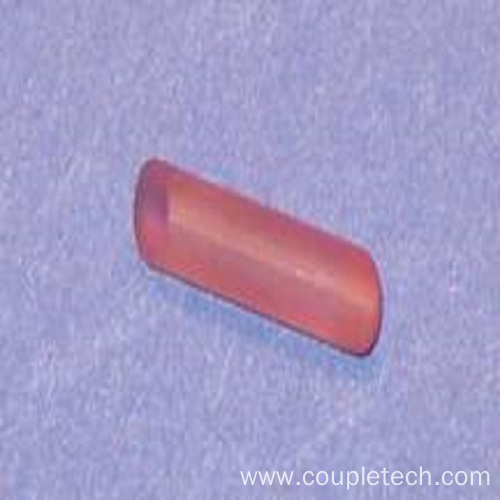
Following growth, the boule undergoes precise Fabrication and Finishing:
-
Orientation & Cutting: Using X-ray diffraction, the boule is accurately oriented to the desired crystallographic axis before being sliced with diamond-coated saws.
-
Grinding & Lapping: This shapes the crystal to near-net dimensions and achieves a fine surface finish, removing subsurface damage from cutting.
-
Polishing: We employ specialized polishing compounds and techniques to produce optical surfaces with laser-grade surface finish (typically < 5Å RMS) and extreme flatness.
-
Coating: High-performance dielectric coatings (HR/AR) are applied via ion beam sputtering, tailored to your specific wavelength and power requirements.
Coupletech Standard Laser Crystal Parameters:
| Parameter | Nd:YAG Specification | Ti:Sapphire Specification |
|---|---|---|
| Dopant Concentration | Nd³⁺: 0.5 - 1.1 at.% | Ti³⁺: 0.05 - 0.25 wt.% |
| Diameter | Up to 100 mm | Up to 30 mm |
| Length | Up to 150 mm | Custom (e.g., 10-20mm) |
| Surface Flatness | < λ/10 @ 632.8 nm | < λ/10 @ 632.8 nm |
| Surface Quality | 10-5 Scratch-Dig | 10-5 Scratch-Dig |
| Wavefront Distortion | < λ/8 per inch @ 632.8 nm | < λ/8 per inch @ 632.8 nm |
Laser Crystal FAQ
Q: What is the most critical factor in laser crystal growth for high-power applications?
A: The most critical factor is achieving exceptional dopant ion homogeneity and extremely low defect density. Inhomogeneity causes localized heating and thermal lensing, which degrades beam quality and can fracture the crystal at high power. Coupletech's controlled growth processes are optimized to minimize these imperfections.
Q: How does polishing quality affect laser crystal performance?
A: Sub-standard polishing leads to scattering losses, reduced damage threshold, and poor beam profile. Even minor surface irregularities or subsurface damage can absorb energy, becoming thermal hotspots. Our proprietary polishing ensures a damage-ready surface that maximizes transmission and power handling.
Q: Why are custom dielectric coatings so important for a fabricated laser crystal?
A: The coatings manage intracavity photon flux. Precisely engineered coatings minimize losses, manage thermal effects, and define the lasing wavelength. Off-the-shelf coatings often compromise performance. Coupletech designs and deposits coatings matched to your crystal's properties and operational regime for peak efficiency and longevity.
Ready to integrate precision-engineered cores into your laser systems? Contact us today to discuss your project specifications. Let the experts at Coupletech provide you with the definitive Laser Crystal solution for superior performance and reliability.