

How Are PVC Veneered Doors Manufactured to Meet Contemporary Architectural Standards?
2025-12-16
PVC veneered doors have become a widely specified interior door solution across residential, commercial, and hospitality projects due to their controlled manufacturing process, surface consistency, and compatibility with modern construction systems.
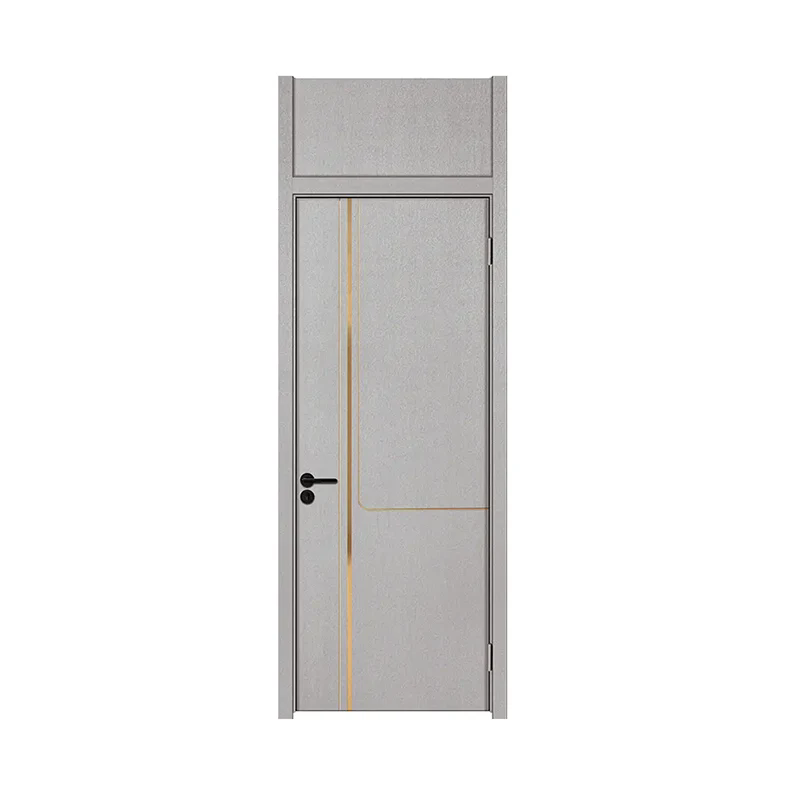
How Is a PVC Veneered Door Structured From Core to Surface?
A PVC veneered door is a composite interior door manufactured by bonding a decorative PVC film to a stable door substrate under controlled pressure and temperature. The structure is engineered to balance surface durability, dimensional stability, and visual uniformity.
At the core level, PVC veneered doors typically use engineered wood substrates such as MDF, HDF, or laminated solid wood cores. These materials are selected for their flatness, machinability, and resistance to warping under normal interior conditions. The PVC film applied to the surface is thermally fused or vacuum-pressed, allowing the material to conform precisely to the door panel geometry, including grooves, raised profiles, or minimalist flat designs.
The PVC layer itself is not a simple decorative skin. It is manufactured with multiple layers, usually including a printed décor layer, a wear-resistant top coat, and stabilizing layers designed to control expansion and contraction. This layered composition allows the door surface to maintain color consistency and texture definition across large production batches.
From a production standpoint, the manufacturing workflow generally includes substrate preparation, surface sanding, adhesive application, membrane pressing, edge sealing, and final curing. Each step contributes to the door’s final performance, particularly in terms of adhesion strength and surface integrity.
Key Technical Parameters of a PVC Veneered Door
| Parameter | Specification Range |
|---|---|
| Door Thickness | 35–45 mm |
| Surface Material | PVC decorative film |
| Core Options | MDF, HDF, laminated solid wood |
| Surface Finish | Matte, satin, woodgrain, smooth |
| Moisture Resistance | Suitable for standard interior humidity |
| Edge Treatment | Fully wrapped or sealed edges |
| Standard Sizes | Customizable per project |
| Application | Interior residential and commercial use |
This integrated structure enables PVC veneered doors to meet consistency requirements often demanded in large-scale developments where visual uniformity across multiple units is critical.
How Do PVC Veneered Doors Perform in Daily Interior Environments?
Performance evaluation of PVC veneered doors focuses on surface durability, environmental stability, and ease of maintenance. These criteria are especially relevant in high-traffic interior settings such as apartments, offices, hotels, and educational facilities.
PVC surfaces are designed to resist common forms of wear associated with daily use, including light abrasion, incidental impacts, and routine cleaning. The non-porous nature of PVC film reduces the likelihood of moisture absorption on the surface layer, which helps preserve appearance in environments where humidity fluctuates within normal indoor ranges.
In terms of dimensional behavior, the engineered core combined with the stabilizing PVC layer helps limit expansion or contraction caused by temperature changes. This characteristic supports consistent door alignment and reduces the risk of surface cracking or delamination when installed correctly.
From a maintenance perspective, PVC veneered doors do not require specialized treatments. Cleaning is typically limited to non-abrasive cloths and mild cleaning agents, making them suitable for projects where long-term maintenance costs are a consideration.
Acoustic and thermal contributions are largely dependent on the chosen core material and door thickness. When paired with appropriate frames and seals, PVC veneered doors can integrate effectively into broader interior partition systems without compromising functional requirements.
How Are PVC Veneered Doors Specified for Different Project Requirements?
Specification of PVC veneered doors varies according to project type, regulatory environment, and design intent. For residential developments, emphasis is often placed on visual consistency, color matching with interior finishes, and cost predictability. Commercial projects may prioritize repeatability, surface durability, and compatibility with standardized hardware systems.
Design flexibility is achieved through a wide selection of PVC film patterns, including woodgrain simulations, neutral solid colors, and contemporary textures. This allows designers to align door aesthetics with flooring, wall panels, or cabinetry without relying on natural veneer materials that may vary from batch to batch.
From a procurement standpoint, PVC veneered doors are commonly specified with clear tolerances for thickness, edge treatment, and surface adhesion. These specifications help ensure consistency across large production runs and simplify quality control during installation.
Logistics and installation considerations also influence specification decisions. PVC veneered doors are generally lighter than solid wood doors, which can reduce handling complexity on-site. Pre-machining for hinges, locks, and frames further supports efficient installation schedules.
Common Questions About PVC Veneered Doors
Q: Are PVC veneered doors suitable for areas with moderate humidity such as kitchens or corridors?
A: PVC veneered doors are designed for interior environments with controlled humidity levels. When installed away from direct water exposure and combined with proper ventilation, they perform reliably in kitchens, corridors, and similar spaces.
Q: How long does the surface finish of a PVC veneered door typically last under normal use?
A: Under standard interior conditions and routine maintenance, the PVC surface maintains its appearance for many years, with resistance to fading, peeling, and surface wear depending on usage intensity and cleaning practices.
How Are PVC Veneered Doors Integrated Into Long-Term Interior Design Strategies?
In long-term interior planning, PVC veneered doors are often selected for their balance between aesthetic control and production scalability. Developers and contractors value the ability to replicate identical finishes across multiple phases of a project, while designers appreciate the predictability of surface appearance.
Manufacturers continue to refine PVC film technologies, focusing on improved texture realism and enhanced surface stability. This ongoing refinement supports broader adoption in projects where consistent visual language and functional reliability are required.
From a supply chain perspective, PVC veneered doors align well with standardized manufacturing processes, enabling stable lead times and predictable output quality. This reliability is particularly relevant for international projects where material consistency across shipments is a key concern.
When evaluating suppliers, attention is typically given to production capacity, quality control systems, and the ability to customize specifications without compromising delivery schedules. These factors play a decisive role in determining whether a PVC veneered door system can support the operational demands of large-scale interior developments.
Yilian provides PVC veneered door solutions engineered to meet diverse project specifications, combining controlled manufacturing processes with adaptable design options. For detailed technical data, customization capabilities, or project consultation, contact us to discuss specific requirements and explore how PVC veneered doors can be integrated into upcoming interior applications.