

How Are WPC Door Frames Manufactured and Used?
2026-06-16
Article Summary
WPC (Wood Plastic Composite) door frames have become a widely adopted solution in modern construction due to their durability, moisture resistance, and dimensional stability. This article explains how WPC door frames are manufactured, their structural advantages, application scenarios, and key selection considerations. It also addresses common buyer concerns such as installation challenges, cost efficiency, environmental resistance, and long-term maintenance performance. The goal is to provide a complete technical and practical understanding for contractors, builders, and end-users evaluating WPC door frame systems.
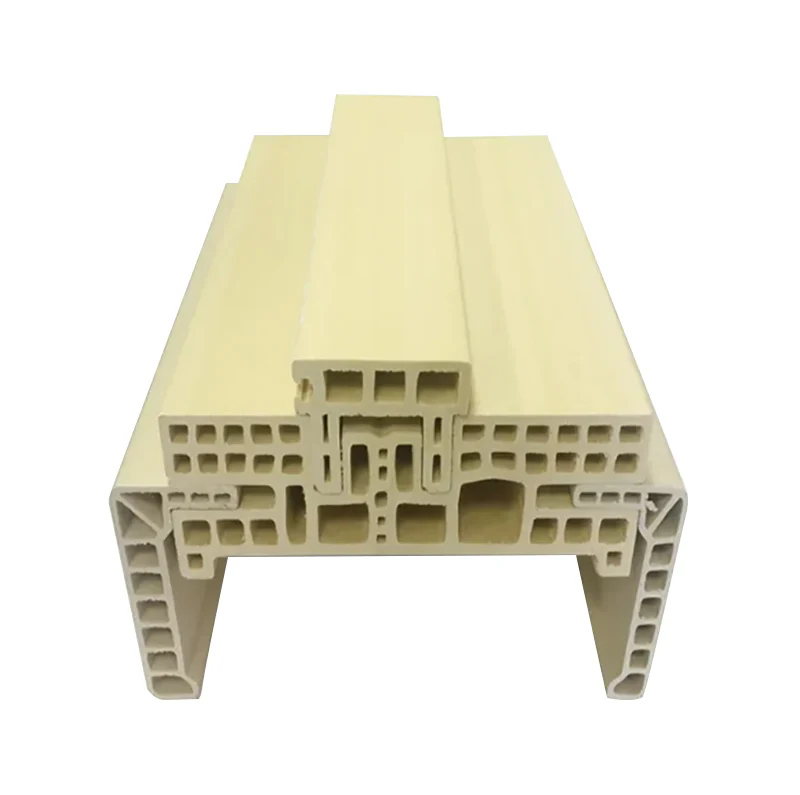
Table of Contents
Outline
This article is structured to guide readers from fundamental concepts to practical decision-making. It begins with material definition, moves into manufacturing logic, explores performance advantages, compares alternative materials, and concludes with selection guidance and FAQs.
1. Overview of WPC Door Frames
WPC door frames are engineered structural components made from a combination of wood fiber and thermoplastic polymers. This hybrid composition creates a material that retains the aesthetic appeal of wood while eliminating many of its weaknesses such as warping, cracking, and moisture absorption.
In contemporary building systems, WPC door frames are widely used in residential, commercial, and institutional environments. Their growing popularity is driven by their stable performance in humid climates and their ability to maintain shape integrity over long service periods.
2. Manufacturing Process Explained
The production of WPC door frames involves several controlled stages designed to ensure material uniformity, strength, and surface quality. Unlike traditional timber processing, WPC manufacturing integrates polymer science and extrusion technology.
Key production stages include:
- Raw material blending: Wood flour, polyethylene or PVC, and performance additives are precisely measured and mixed.
- Compounding: The mixture is heated and processed into uniform pellets to stabilize material composition.
- Extrusion molding: The pellets are fed into an extrusion line where they are shaped into door frame profiles under high temperature and pressure.
- Cooling and calibration: The extruded profiles are cooled and calibrated to maintain dimensional accuracy.
- Surface treatment: Optional laminating or embossing is applied to enhance texture and appearance.
- Cutting and inspection: Final products are cut to standard lengths and inspected for quality consistency.
This controlled manufacturing process ensures that each WPC door frame maintains structural uniformity and long-term reliability.
3. Key Advantages in Modern Construction
The adoption of WPC door frames is largely driven by their multi-dimensional performance advantages. These benefits address common problems associated with wood and metal alternatives.
Primary advantages include:
- Moisture resistance: Ideal for bathrooms, kitchens, and humid environments.
- Dimensional stability: Resistant to expansion and contraction caused by temperature fluctuations.
- Termite and pest resistance: Composite structure prevents biological degradation.
- Low maintenance: Does not require painting, polishing, or frequent repair.
- Eco-efficient material use: Utilizes recycled wood fibers and plastic components.
- Long service life: Maintains structural integrity over extended periods.
These characteristics make WPC door frames particularly suitable for regions with challenging environmental conditions.
4. Common Application Scenarios
WPC door frames are versatile and can be integrated into a wide range of architectural environments. Their adaptability makes them a preferred choice across multiple sectors.
- Residential apartment complexes
- Hotel and hospitality interiors
- Office buildings and commercial spaces
- Healthcare facilities requiring hygienic materials
- Educational institutions with high-traffic usage
In each of these environments, WPC door frames provide a balance of durability and visual consistency while reducing maintenance costs.
5. WPC vs Traditional Door Frame Materials
Understanding how WPC compares with wood and metal frames helps clarify its value in modern construction decisions.
| Feature | WPC Door Frames | Wood Frames | Metal Frames |
|---|---|---|---|
| Moisture Resistance | High | Low | Medium |
| Durability | High | Medium | High |
| Maintenance Requirement | Low | High | Medium |
| Termite Resistance | Yes | No | Yes |
| Cost Efficiency | Balanced | Variable | Higher initial cost |
The comparison highlights that WPC door frames provide a balanced performance profile, especially for environments where moisture and maintenance are critical concerns.
6. How to Select the Right WPC Door Frame
Selecting the appropriate WPC door frame requires attention to structural requirements, environmental conditions, and installation standards.
Key selection factors include:
- Material density: Higher density offers improved impact resistance.
- Surface finish: Choose finishes compatible with interior design requirements.
- Profile accuracy: Ensures proper door alignment and installation efficiency.
- Environmental suitability: Match product specifications with humidity and temperature conditions.
- Supplier consistency: Ensure stable manufacturing quality across batches.
Professional suppliers such as Yilian focus on maintaining consistent extrusion quality and dimensional precision, which directly impacts installation performance and long-term durability.
7. Frequently Asked Questions
Q1: Are WPC door frames suitable for outdoor use?
A1: They can be used in semi-outdoor environments, but direct long-term exposure to extreme UV conditions should be evaluated based on surface treatment.
Q2: Do WPC door frames require painting or finishing?
A2: In most cases, no. They come pre-finished, although customization options are available depending on design requirements.
Q3: How long do WPC door frames typically last?
A3: With proper installation, they can last for many years while maintaining structural integrity and appearance.
Q4: Are WPC door frames environmentally friendly?
A4: They utilize recycled materials in their composition, reducing reliance on natural timber resources.
Conclusion
WPC door frames represent a significant advancement in architectural material engineering, offering a balance between durability, environmental resistance, and cost efficiency. Their adaptability across residential and commercial applications makes them a practical solution for modern construction needs.
By selecting a reliable manufacturer such as Yilian, buyers can ensure consistent product quality and long-term structural performance tailored to diverse project requirements.
For detailed product consultation, specifications, or bulk procurement support, contact us to receive professional assistance and tailored solutions for your project needs.