

How Do Ceramic Abrasive Filaments Improve Precision Surface Finishing?
2026-03-06
Article Summary
Ceramic abrasive filaments are advanced industrial brush materials designed to deliver consistent deburring, polishing, edge rounding, and surface finishing results. Compared with traditional abrasive tools, ceramic abrasive filaments provide higher cutting efficiency, longer service life, and better dimensional stability during automated finishing processes. This article explores how ceramic abrasive filaments work, the problems they solve in manufacturing environments, and how to choose the right filament type for different applications. It also explains performance factors, application scenarios, and technical considerations that help manufacturers achieve more reliable finishing results.
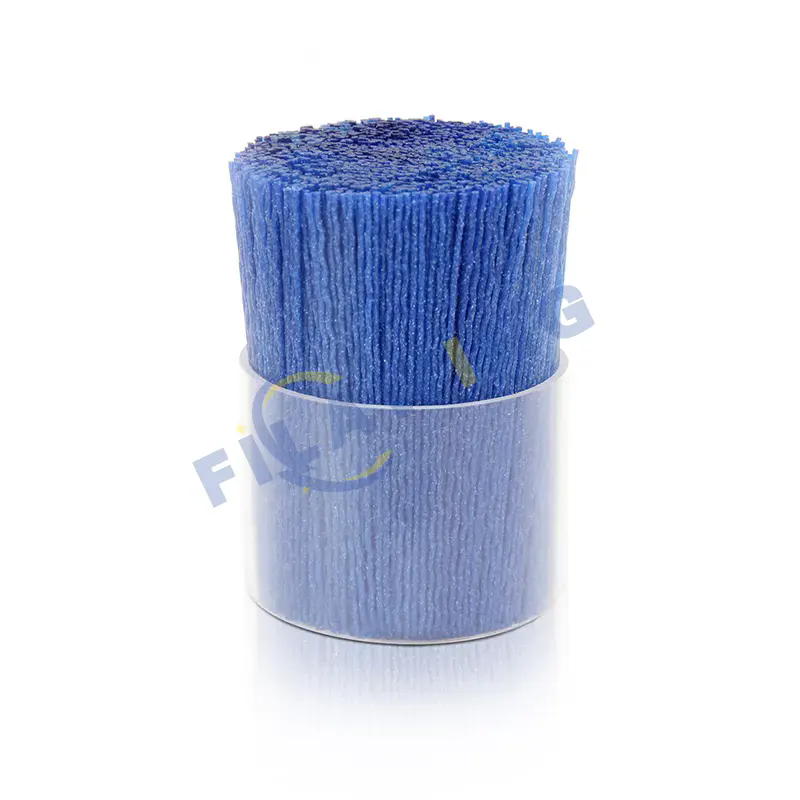
Table of Contents
- Ceramic Abrasive Filaments Overview
- Common Manufacturing Pain Points
- How Ceramic Abrasive Filaments Work
- Key Features and Advantages
- How to Choose the Right Filaments
- Technical Parameter Comparison
- Industrial Application Scenarios
- Maintenance and Performance Optimization
- Frequently Asked Questions
- Conclusion and Contact
Ceramic Abrasive Filaments Overview
Ceramic abrasive filaments are engineered brush fibers embedded with ceramic abrasive particles. These particles are uniformly distributed throughout the filament material, allowing the brush to maintain cutting performance even as the filament gradually wears during use. This design ensures continuous exposure of fresh abrasive grains, which leads to consistent finishing results over long production cycles.
Unlike conventional metal brushes or coated abrasives, ceramic abrasive filaments provide controlled material removal while maintaining flexibility. This makes them highly suitable for automated deburring systems, robotic finishing lines, and precision component processing.
WINGS provides advanced ceramic abrasive filament solutions designed to meet the requirements of modern manufacturing industries, including automotive, aerospace, electronics, and precision machining sectors.
Common Manufacturing Pain Points
Manufacturers often encounter several challenges when performing deburring or surface finishing tasks. These issues can reduce product quality, increase operational costs, and slow down production efficiency.
- Inconsistent surface finish across batches
- Short lifespan of traditional abrasive tools
- Difficulty removing burrs from complex geometries
- Surface damage caused by overly aggressive tools
- Frequent tool replacement leading to downtime
- High labor cost in manual finishing processes
Ceramic abrasive filaments address these problems by providing controlled abrasive action combined with flexible brush movement. This allows manufacturers to maintain consistent surface quality even when processing complex parts.
How Ceramic Abrasive Filaments Work
Ceramic abrasive filaments operate through a combination of flexibility and abrasive cutting. Each filament contains embedded ceramic particles that gradually remove burrs, sharp edges, and surface irregularities when the brush rotates or oscillates against the workpiece.
During operation, the filaments flex and adapt to the contours of the part being processed. This flexibility allows the abrasive grains to contact hard-to-reach areas without damaging the underlying surface structure.
As the filament tip wears, new abrasive particles are continuously exposed. This self-renewing abrasive effect maintains stable cutting performance throughout the tool's lifespan.
Key Features and Advantages
Ceramic abrasive filaments offer several advantages that make them superior to traditional finishing tools in many industrial applications.
- Consistent material removal performance
- Long operational lifespan
- High heat resistance
- Excellent dimensional stability
- Suitable for automated and robotic finishing systems
- Reduced risk of surface damage
Because of these features, ceramic abrasive filaments are widely used in automated deburring brushes, polishing wheels, and industrial finishing equipment.
How to Choose the Right Ceramic Abrasive Filaments
Selecting the appropriate ceramic abrasive filaments requires evaluating several technical factors. Proper selection ensures optimal finishing performance and cost efficiency.
- Workpiece material hardness
- Required surface roughness
- Burr size and geometry
- Operating speed and brush configuration
- Production volume and cycle time
Manufacturers should also consider the compatibility between filament diameter, abrasive grain size, and brush design. WINGS provides technical support to help customers determine the most suitable ceramic abrasive filament configuration for their finishing processes.
Ceramic Abrasive Filament Comparison Table
| Filament Type | Typical Grain Size | Best For | Key Benefit |
|---|---|---|---|
| Fine Ceramic Abrasive Filament | 600–1000 grit | Precision polishing | Smooth surface finish |
| Medium Ceramic Abrasive Filament | 320–600 grit | General deburring | Balanced cutting performance |
| Coarse Ceramic Abrasive Filament | 80–320 grit | Heavy burr removal | High material removal rate |
| High Density Filament | Varies | Automated finishing systems | Improved durability |
Industrial Application Scenarios
Ceramic abrasive filaments are widely used across many manufacturing industries due to their ability to deliver precise finishing results while maintaining production efficiency.
- Automotive component deburring
- Aerospace precision finishing
- Metal machining edge rounding
- Electronic component surface preparation
- Medical device polishing
- Robotic finishing systems
These filaments are especially effective for processing complex geometries and delicate surfaces where traditional rigid tools may cause damage.
Maintenance and Performance Optimization
To maximize the lifespan and efficiency of ceramic abrasive filament brushes, proper maintenance and operational practices are essential.
- Use appropriate rotational speed
- Avoid excessive pressure on the workpiece
- Maintain consistent brush alignment
- Regularly inspect filament wear
- Clean debris accumulation from brushes
These practices ensure that the abrasive filaments maintain stable cutting performance and reduce the risk of premature tool failure.
Frequently Asked Questions
What materials can ceramic abrasive filaments process?
They are suitable for metals such as steel, aluminum, brass, titanium alloys, and various engineering plastics.
Are ceramic abrasive filaments suitable for automated systems?
Yes. Their consistent performance and durability make them ideal for robotic finishing and automated deburring machines.
How long do ceramic abrasive filament brushes last?
Service life depends on operating conditions, but they typically last significantly longer than traditional abrasive brushes.
Can they be used for precision finishing?
Yes. Fine grit ceramic filaments are capable of producing smooth and controlled surface finishes on precision components.
Conclusion and Contact
Ceramic abrasive filaments provide an effective solution for manufacturers seeking consistent deburring, polishing, and surface finishing results. Their self-renewing abrasive structure, flexibility, and durability make them a reliable choice for modern automated production environments.
WINGS continues to develop high-performance ceramic abrasive filament products designed to meet the evolving needs of industrial finishing applications. If you are looking to improve surface finishing efficiency, enhance product quality, or upgrade your automated deburring process, contact us today to learn how WINGS ceramic abrasive filaments can support your manufacturing goals.