

How Do Minimalist Pavilions Solve Modern Space Challenges?
2026-04-13
Article Abstract
Minimalist pavilions represent a modern architectural response to increasing demands for flexible, sustainable, and visually clean outdoor structures. This article explores how minimalist pavilion design addresses space limitations, cost efficiency, environmental integration, and functional adaptability. It also explains practical selection criteria, common use cases, and implementation strategies for residential, commercial, and public environments. The content is designed to help readers make informed decisions when planning modular outdoor structures, with insights from industry practices and real-world applications by Duoping.
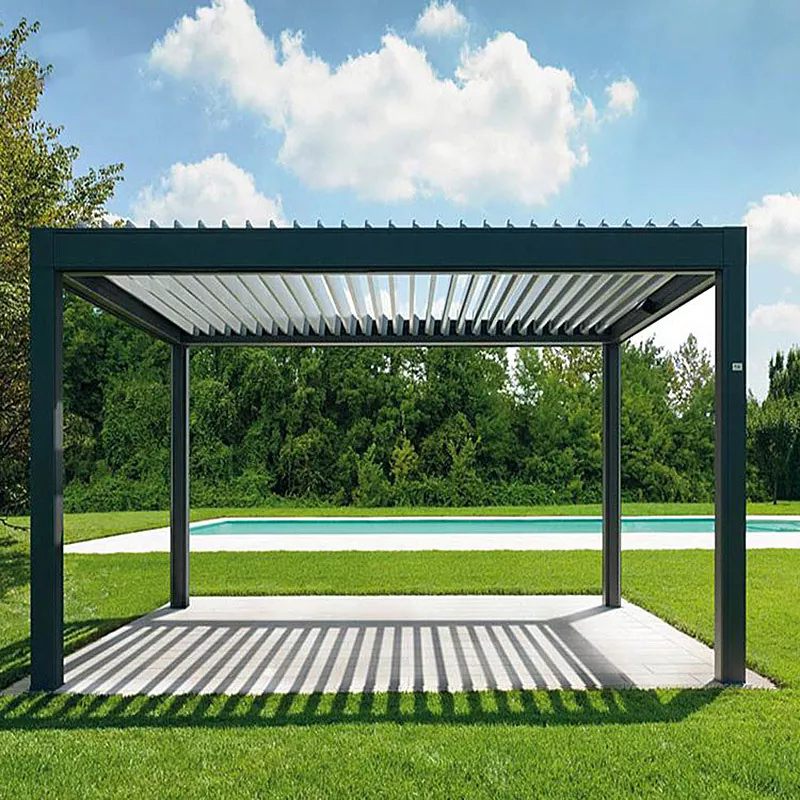
Table of Contents
- 1. Understanding Minimalist Pavilions
- 2. Key Benefits of Minimalist Pavilion Design
- 3. Common Applications Across Industries
- 4. Materials and Structural Considerations
- 5. How to Choose the Right Pavilion
- 6. Comparative Analysis Table
- 7. Installation and Maintenance Insights
- 8. Frequently Asked Questions
- 9. Contact and Consultation
1. Understanding Minimalist Pavilions
Minimalist pavilions are lightweight architectural structures designed with simplicity, efficiency, and spatial clarity in mind. Unlike traditional heavy-built shelters, they emphasize open space, modular frames, and clean geometry. Their purpose is not only aesthetic but also functional—providing shaded, semi-enclosed environments that can be rapidly deployed and adapted.
In modern urban and suburban planning, these pavilions are increasingly used to bridge indoor comfort with outdoor openness, making them a preferred solution for both private and commercial projects.
2. Key Benefits of Minimalist Pavilion Design
Minimalist pavilions offer multiple advantages that directly address modern user pain points:
- Space Optimization: Ideal for limited areas without overwhelming the environment.
- Cost Efficiency: Reduced material usage lowers overall investment.
- Quick Installation: Modular design enables faster assembly.
- Design Flexibility: Adaptable to gardens, rooftops, resorts, and commercial zones.
- Environmental Harmony: Blends naturally with surrounding landscapes.
Duoping has implemented these principles into its pavilion solutions to ensure that customers receive both functional and aesthetic value in one integrated system.
3. Common Applications Across Industries
Minimalist pavilions are widely adopted across different sectors due to their adaptability:
- Residential Spaces: Garden seating areas, backyard lounges, and private relaxation zones.
- Hospitality Industry: Resort cabanas, outdoor dining spaces, and poolside shelters.
- Commercial Use: Exhibition booths, outdoor marketing areas, and event stations.
- Public Infrastructure: Parks, transport waiting zones, and community gathering points.
Their versatility allows businesses and homeowners to maximize usability without compromising design integrity.
4. Materials and Structural Considerations
Material selection is critical in determining durability, aesthetics, and maintenance requirements. Common materials include:
- Aluminum Alloy: Lightweight, corrosion-resistant, and ideal for modular frames.
- Steel Reinforcement: Provides structural strength for larger installations.
- Polycarbonate Panels: Offer UV protection and controlled light transmission.
- Fabric Membranes: Used for flexible, decorative shading systems.
Duoping integrates advanced material engineering to ensure each pavilion achieves optimal balance between durability and minimalism.
5. How to Choose the Right Pavilion
Selecting the right minimalist pavilion involves evaluating several key criteria:
- Available installation space and environmental constraints
- Expected usage frequency and load requirements
- Climate conditions such as wind, rain, and UV exposure
- Design compatibility with surrounding architecture
- Budget allocation and lifecycle maintenance costs
Working with experienced providers like Duoping ensures that each of these factors is carefully assessed before production and installation.
6. Comparative Analysis Table
| Feature | Minimalist Pavilion | Traditional Pavilion |
|---|---|---|
| Design Complexity | Low to Moderate | High |
| Installation Time | Fast | Slow |
| Cost Efficiency | High | Moderate to Low |
| Maintenance | Low | High |
| Adaptability | Very High | Limited |
7. Installation and Maintenance Insights
Installation of minimalist pavilions is typically modular, reducing both labor time and on-site disruption. The process usually includes site preparation, frame assembly, panel installation, and final inspection.
Maintenance Best Practices:
- Regular inspection of joints and fasteners
- Cleaning of surface materials to prevent dust accumulation
- Seasonal checks for weather-related wear
- Protective coating reapplication where necessary
Duoping provides guidance and technical support to ensure long-term structural performance and reliability.
8. Frequently Asked Questions
Q1: Are minimalist pavilions suitable for all climates?
Yes, when properly engineered with appropriate materials, they can withstand diverse environmental conditions.
Q2: Can minimalist pavilions be customized?
Absolutely. Designs can be tailored in terms of size, color, roofing, and functional accessories.
Q3: How long does installation usually take?
Most modular systems can be installed within days depending on complexity and site conditions.
Q4: What makes Duoping solutions different?
Duoping focuses on modular engineering precision, material optimization, and user-centric adaptability for long-term value.
9. Contact and Consultation
If you are planning to integrate a minimalist pavilion into your residential, commercial, or public project, professional consultation can significantly improve outcome efficiency and design alignment.
Duoping provides customized design support, manufacturing expertise, and global delivery solutions tailored to diverse architectural needs.
Ready to transform your space?
For tailored solutions, technical specifications, or project quotations, please contact us today and let Duoping help you build efficient, elegant, and future-ready pavilion spaces.