

How Do Precision Mold Inserts Extend Overall Service Life?
2026-10-09
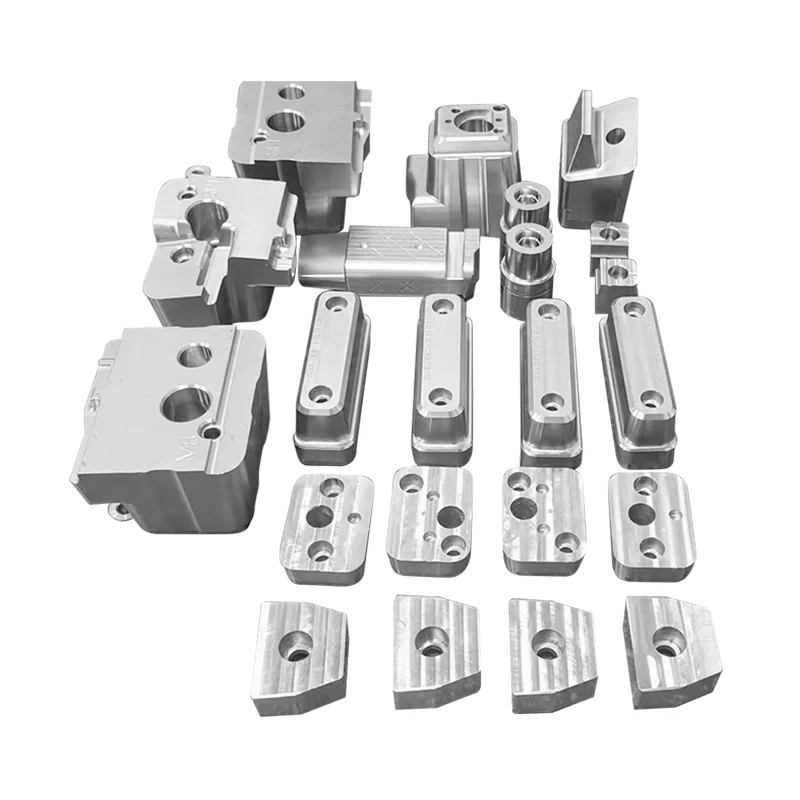
A mold maintenance manager tracks the service life of 120 injection molds. The average life is 180,000 cycles. One mold, used for a glass-filled nylon part, lasted only 45,000 cycles before the gate area showed severe washout and the part dimensions drifted out of tolerance. The manager replaced the entire mold base. The new mold lasted 50,000 cycles and failed again. The manager then changed the strategy: instead of replacing the entire mold, he replaced only the gate insert with a precision-ground set of Precise Mold Components And Inserts made from hardened tool steel. The mold has now run 320,000 cycles with only two insert replacements. The mold base is still in service after 12 years. This guide explains why precision inserts extend the life of the entire mold.
1. Why Do Different Mold Components Wear at Different Rates?
A mold is not a uniform block of steel. Different areas experience different loads and wear mechanisms. The gate area experiences high shear stress and abrasive wear from the flowing melt. The core pins experience sliding wear as the mold opens and closes. The cavity surface experiences erosion from the melt and corrosion from the resin. The mold base experiences mainly compressive stress and thermal cycling. The table below shows the typical wear rates for different mold components.
| Component | Primary wear mechanism | Typical life (cycles) | Replacement strategy |
| Gate insert | Abrasive wear, erosion | 40,000 – 80,000 | Replace insert |
| Core pin | Sliding wear, galling | 80,000 – 150,000 | Replace pin |
| Cavity surface | Erosion, corrosion | 150,000 – 300,000 | Refinish or replace insert |
| Mold base | Compressive stress, thermal fatigue | 500,000 – 1,000,000 | Refurbish |
The gate insert wears 5 to 10 times faster than the mold base. If the gate is not replaceable, the entire mold must be replaced when the gate fails. If the gate is a precision insert, only the insert is replaced. This saves the cost of the mold base and the labor of re-machining the entire mold. In our factory, we design molds with replaceable inserts at all high-wear locations. Moldburger Mold Industry Co., Ltd. has been manufacturing Precise Mold Components And Inserts for over 15 years.
2. What Materials Are Used for Precision Mold Inserts?
The material of the insert determines its wear resistance, toughness, and heat resistance. The most common materials are hardened tool steel (H13, S136, 1.2343), powder metallurgy steel (ASP, CPM), cemented carbide, and copper alloys for thermal management. Hardened tool steel is the standard for general purpose inserts. Powder metallurgy steel has higher wear resistance and is used for abrasive resins. Cemented carbide has the highest wear resistance but is brittle and expensive. Copper alloys are used for inserts that require rapid cooling. The table below compares the properties of these materials.
| Material | Hardness (HRC) | Wear resistance | Thermal conductivity (W/mK) | Typical application |
| H13 (1.2344) | 48 – 52 | Good | 25 | General purpose inserts |
| S136 (1.2083) | 50 – 54 | Very good | 20 | Corrosive resins |
| ASP 23 | 60 – 64 | Excellent | 18 | Abrasive resins (glass-filled) |
| Cemented carbide (WC-Co) | 70 – 80 HRA | Superior | 80 | High-wear gates |
| Copper-beryllium | 38 – 42 | Moderate | 120 | Fast-cooling cores |
In our factory, we select the insert material based on the resin, the filler content, and the required cooling rate. For glass-filled nylon, we recommend ASP 23 or cemented carbide for the gate insert. For clear polycarbonate, we recommend S136 for corrosion resistance. For thick parts that require rapid cooling, we recommend copper-beryllium inserts. Moldburger Mold Industry Co., Ltd. provides material selection guidance for all of our insert products.
3. How Does Fit Tolerance Affect Insert Performance and Mold Life?
The fit between the insert and the mold base is critical. If the fit is too loose, the insert can move under injection pressure, which causes flash and wear on the mold base. If the fit is too tight, the insert is difficult to install and remove, and the mold base may crack during installation. The recommended fit for a precision insert is an H7/h6 or H7/g6 interference fit. The table below shows the recommended fits for different insert sizes and materials.
| Insert size (mm) | Recommended fit | Clearance/interference (mm) | Installation method |
| < 20 | H7/h6 | 0 – 0.015 | Press or tap |
| 20 – 50 | H7/g6 | 0.005 – 0.025 | Press |
| 50 – 100 | H7/f7 | 0.010 – 0.040 | Press or shrink fit |
| > 100 | H7/e8 | 0.020 – 0.060 | Shrink fit |
The fit must be maintained over the life of the mold. If the mold base wears, the insert becomes loose, and the fit is lost. This is why the mold base should be inspected each time the insert is replaced. If the bore is worn beyond the H7 tolerance, the mold base should be repaired by welding or by installing a new bushing. In our factory, we provide a bore gauge and a fitting guide with every Precise Mold Components And Inserts order. Moldburger Mold Industry Co., Ltd. also offers a mold base repair service.
4. How Should the Insert Replacement Strategy Be Planned?
The replacement strategy should be based on the wear rate of each insert and the cost of downtime. For a mold that runs continuously, the inserts should be replaced during scheduled maintenance windows. The replacement interval can be predicted from the wear rate data. The table below shows a typical replacement schedule for a glass-filled nylon mold running 24/7.
| Insert location | Predicted life (cycles) | Replacement interval (days) | Recommended spare parts |
| Gate insert | 60,000 | 15 – 20 | 2 sets |
| Core pins | 120,000 | 30 – 40 | 1 set |
| Cavity inserts | 200,000 | 50 – 60 | 1 set |
| Mold base | 600,000 | 150 – 180 | None (refurbish) |
Maintenance tip: Keep a wear log for each insert. Record the number of cycles, the part dimension at the end of the run, and the visual condition of the insert. This data allows you to predict the remaining life and to order replacements before the insert fails. A sudden insert failure can cause flash, dimensional drift, and even mold damage. Planned replacement is always cheaper than emergency repair.
Frequently Asked Questions About Precision Mold Inserts and Service Life
Summary for Mold Maintenance Managers
Precise Mold Components And Inserts extend the overall service life of a mold by localizing the wear to replaceable components. The gate insert, core pins, and cavity inserts can be replaced at a fraction of the cost of the mold base. The insert material, fit tolerance, and replacement strategy determine the effectiveness of this approach. By selecting the right material, maintaining the correct fit, and planning replacements based on wear data, maintenance managers can achieve mold lives of 500,000 to 1,000,000 cycles or more. Moldburger Mold Industry Co., Ltd. has been manufacturing Precise Mold Components And Inserts for over 15 years and supplies to molders worldwide.
Moldburger Mold Industry Co., Ltd. manufactures Precise Mold Components And Inserts in hardened tool steel, powder metallurgy steel, cemented carbide, and copper alloys. We provide material certificates, dimensional inspection reports, and fit recommendations for all of our products.