
How Do the Mechanical Properties of PAI Rods Enhance Component Durability
2026-01-21
When engineering components for demanding applications, durability isn't just a feature—it’s a fundamental requirement. The exceptional mechanical properties of PAI Rods are central to achieving this longevity, making them a superior choice over many traditional materials. At IDEAL, we leverage these inherent properties to provide components that withstand extreme operational challenges, ensuring reliability where it matters most.
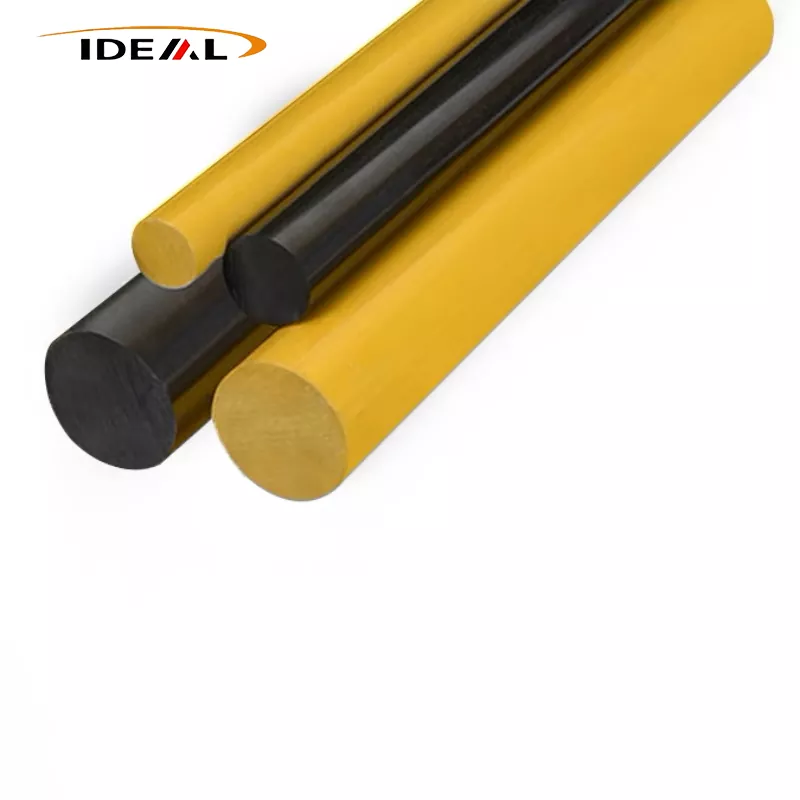
The durability enhancement provided by PAI Rods stems from a unique combination of key mechanical traits:
-
Exceptional Strength and Stiffness: They retain high mechanical strength and rigidity even at elevated temperatures, preventing deformation under load.
-
Outstanding Wear and Abrasion Resistance: This property minimizes material loss and maintains dimensional stability in high-friction environments.
-
Inherent Dimensional Stability: PAI Rods exhibit low creep and low coefficient of thermal expansion, ensuring parts stay precisely engineered over time.
-
Excellent Fatigue Resistance: Components can endure continuous cyclic stresses without cracking or failing prematurely.
The following table quantifies how these properties directly combat common failure modes:
| Mechanical Property | Failure Mode It Prevents | Result for Component Durability |
|---|---|---|
| High Flexural Strength | Cracking or fracture under bending stress | Withstands unexpected mechanical shock and high loads. |
| High Wear Resistance | Gradual erosion and loss of critical tolerances | Extends service life in bearings, seals, and wear pads. |
| Low Coefficient of Friction | Seizure, galling, and excessive heat generation | Ensures smooth operation in moving parts without lubrication. |
| High Thermal Stability | Softening, deformation, or loss of properties at high heat | Performs reliably in continuous high-temperature environments. |
PAI Rods FAQ
What makes PAI Rods suitable for high-temperature applications?
PAI Rods possess a high glass transition temperature (Tg) of approximately 275°C (527°F). This intrinsic property allows them to retain a significant percentage of their room-temperature mechanical strength and stiffness even when continuously exposed to temperatures above 250°C, unlike many other polymers which would soften or degrade.
Can PAI Rods be used in applications requiring precise tolerances?
Absolutely. The combination of excellent dimensional stability, low creep, and superior machinability of PAI Rods allows for the production of components with very tight, precise tolerances. These tolerances are maintained over the long term even under stress and thermal cycling, which is critical for complex assemblies.
How does the wear resistance of PAI compare to metals like steel?
While metals may have high hardness, PAI Rods offer a unique advantage with their self-lubricating properties and excellent resistance to abrasive wear. In many bearing or seal applications, PAI components cause less wear on mating surfaces and can operate with less or no external lubrication, reducing maintenance and preventing contamination.
The proven mechanical profile of PAI Rods translates directly into real-world component resilience, reducing downtime, maintenance costs, and replacement frequency. For engineers and OEMs seeking a material that delivers uncompromising durability under pressure, heat, and friction, the data makes a compelling case.
Contact us at IDEAL today. Our technical experts are ready to discuss how our precision-engineered PAI Rods can solve your specific durability challenges and enhance the performance of your critical applications.