

How Does a GMT Pallet Improve Industrial Logistics?
2026-02-09
Abstract
A GMT Pallet has become a preferred solution for modern logistics, warehousing, and manufacturing environments where durability, sustainability, and cost efficiency are critical concerns. Traditional wooden and plastic pallets often face challenges such as moisture absorption, short service life, hygiene risks, and inconsistent load performance. This article provides a structured and in-depth explanation of how a GMT Pallet addresses these common pain points. It explores material characteristics, performance advantages, application scenarios, and selection considerations, offering decision-makers a practical reference for improving operational efficiency and supply chain reliability.
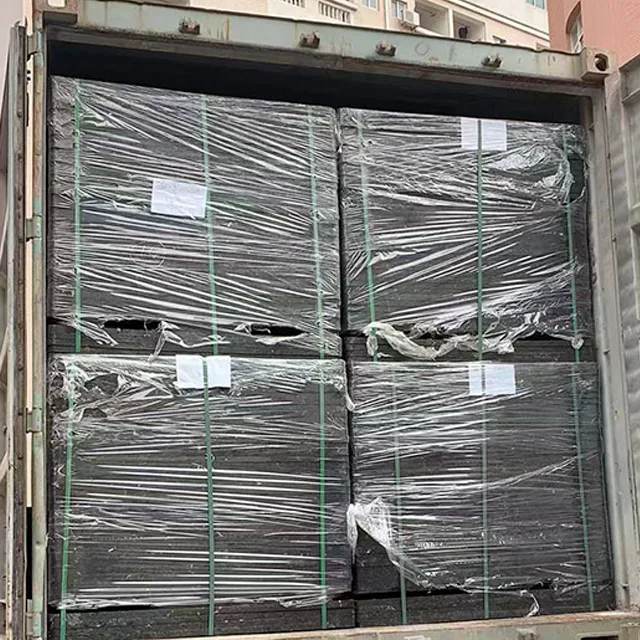
Table of Contents
- Article Outline
- What Is a GMT Pallet?
- Key Challenges in Traditional Pallet Systems
- How a GMT Pallet Solves These Challenges
- Typical Applications of GMT Pallets
- GMT Pallet vs Other Pallet Types
- How to Choose the Right GMT Pallet
- Frequently Asked Questions
- Conclusion and Business Support
Article Outline
- Introduction to GMT Pallet materials and structure
- Industry pain points caused by conventional pallets
- Performance advantages of GMT Pallet solutions
- Real-world industrial and logistics applications
- Comparison with wood, plastic, and metal pallets
- Practical guidance for pallet selection
- Common questions and clear answers
What Is a GMT Pallet?
A GMT Pallet is manufactured using Glass Mat Thermoplastic material, a composite made from continuous glass fiber mats combined with thermoplastic resin. This structure creates a pallet that balances strength, flexibility, and dimensional stability. Unlike conventional pallets, GMT Pallets are formed through compression molding, resulting in consistent weight distribution and uniform mechanical properties.
The material composition allows GMT Pallets to resist moisture, chemicals, and temperature fluctuations. As a result, they are widely used in sectors that demand repeatable performance, clean handling, and long service life.
Key Challenges in Traditional Pallet Systems
- Short lifespan: Wooden pallets are prone to cracking, splintering, and deformation after repeated use.
- Moisture sensitivity: Absorption of water leads to mold growth and structural weakening.
- Inconsistent load capacity: Variations in raw materials reduce reliability during stacking and transport.
- High maintenance costs: Frequent repairs, replacements, and inspections increase operating expenses.
- Hygiene concerns: Porous surfaces can harbor contaminants, making compliance difficult in regulated industries.
How a GMT Pallet Solves These Challenges
A GMT Pallet is engineered to eliminate many of the weaknesses found in traditional pallet options. Its composite structure delivers consistent strength while remaining lightweight enough for efficient handling.
- Enhanced durability: High impact resistance reduces breakage during repeated loading cycles.
- Moisture and chemical resistance: Non-porous material prevents absorption and contamination.
- Stable load performance: Uniform molding ensures predictable behavior under heavy loads.
- Lower total cost of ownership: Extended service life minimizes replacement frequency.
- Recyclable material: Supports sustainability initiatives without compromising performance.
Typical Applications of GMT Pallets
GMT Pallets are adopted across multiple industries where performance consistency and safety are essential.
- Automotive manufacturing and parts logistics
- Warehousing and distribution centers
- Food and beverage secondary packaging transport
- Pharmaceutical and medical supply chains
- Export shipping requiring stable and compliant pallet systems
GMT Pallet vs Other Pallet Types
| Pallet Type | Durability | Moisture Resistance | Maintenance Requirement |
|---|---|---|---|
| Wood Pallet | Medium | Low | High |
| Plastic Pallet | Medium | High | Medium |
| Metal Pallet | High | High | Medium |
| GMT Pallet | High | High | Low |
How to Choose the Right GMT Pallet
Selecting a suitable GMT Pallet depends on operational requirements rather than a one-size-fits-all approach.
- Define static and dynamic load requirements
- Evaluate handling methods such as forklifts or conveyors
- Consider environmental exposure, including humidity and temperature
- Assess stacking and racking conditions
- Review long-term usage cycles and replacement planning
Frequently Asked Questions
Is a GMT Pallet suitable for heavy-duty applications?
Yes. GMT Pallets are designed to support high static and dynamic loads while maintaining dimensional stability.
Can GMT Pallets be reused and recycled?
GMT Pallets offer long reuse cycles and can be recycled at the end of their service life, reducing material waste.
Are GMT Pallets compatible with automated systems?
Their consistent dimensions and structural integrity make them well-suited for automated warehousing and conveyor systems.
Conclusion and Business Support
A GMT Pallet provides a balanced solution for businesses seeking durability, operational efficiency, and long-term value. By addressing common pallet-related challenges such as breakage, hygiene risks, and inconsistent performance, it supports smoother logistics operations and improved cost control.
ZCJK offers reliable GMT Pallet solutions tailored to diverse industrial needs. For organizations evaluating pallet upgrades or customized specifications, ZCJK encourages decision-makers to contact us to discuss practical solutions that align with operational goals.