

How Does a Non-metallic Pipe Compensator Improve Pipeline Performance?
2026-02-10
Summary: Non-metallic pipe compensators play a critical role in reducing mechanical stress, vibration, and noise in pipelines. This article explores their structure, functionality, applications, and maintenance, providing practical guidance for engineers and facility managers seeking to enhance pipeline durability and efficiency.
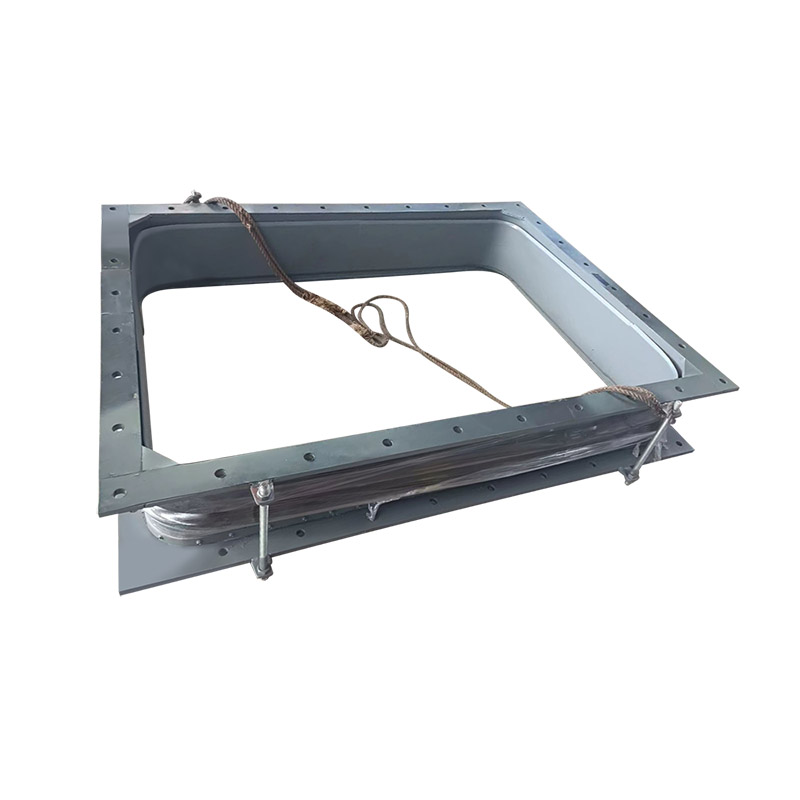
Table of Contents
- Overview of Non-metallic Pipe Compensators
- Structure and Components
- How It Works
- Applications Across Industries
- Advantages Over Metallic Compensators
- Installation Considerations
- Maintenance and Longevity
- FAQs
- Conclusion
Overview of Non-metallic Pipe Compensators
Non-metallic pipe compensators, also known as expansion joints, are flexible elements installed in pipelines to absorb thermal expansion, mechanical vibration, and axial or lateral displacement. Made primarily from reinforced rubber or composite polymers, these compensators offer superior noise reduction and prevent structural damage compared to rigid metal joints.
By allowing pipelines to flex without transferring excessive stress to valves, pumps, or supports, they enhance system safety and extend service life.
Structure and Components
A typical non-metallic pipe compensator consists of:
- Bellows: The primary elastic element responsible for absorbing dimensional changes.
- End Connections: Flanges, brackets, or pipes that connect the compensator to the pipeline.
- Reinforcement Layers: Fabric or fiber layers that improve strength and pressure resistance.
- Protective Coatings: Optional coatings for chemical or UV resistance.
| Component | Function |
|---|---|
| Bellows | Absorbs expansion, contraction, and vibration. |
| End Connections | Secure attachment to pipeline, ensuring leak-free performance. |
| Reinforcement Layer | Enhances durability and pressure resistance. |
| Protective Coating | Provides chemical, UV, and abrasion protection. |
How It Works
Non-metallic compensators function through their elastic bellows, which expand and contract in response to thermal changes or mechanical vibrations. Key functionalities include:
- Thermal Compensation: Offsets expansion or contraction caused by temperature fluctuations.
- Vibration Absorption: Reduces mechanical stress from pumps, compressors, and flow turbulence.
- Noise Reduction: Dampens noise generated by fluid movement.
- Displacement Compensation: Handles axial, lateral, and angular movements without pipeline deformation.
Applications Across Industries
Non-metallic pipe compensators are widely applied in:
- Chemical and petrochemical pipelines
- Power generation and heating systems
- HVAC and water treatment plants
- Metallurgical and nuclear facilities
- Marine and offshore pipelines
Advantages Over Metallic Compensators
- Superior flexibility and vibration absorption
- Lightweight and easier to install
- Enhanced noise reduction
- Resistance to corrosion and chemical attack
- Lower maintenance costs and longer service life
Installation Considerations
Proper installation ensures optimal performance and longevity:
- Ensure pipeline alignment and anchor points are correct.
- Avoid overextension or compression beyond the compensator's rated limits.
- Provide adequate support for adjacent pipelines to prevent stress concentration.
- Check for chemical compatibility with the medium being transported.
- Inspect flanges and bolts to ensure a secure seal without leakage.
Maintenance and Longevity
Routine inspection and maintenance extend the compensator’s lifespan:
- Visual inspection for cracks, wear, or deformation.
- Check for leaks at end connections and flanges.
- Monitor vibration and temperature conditions regularly.
- Replace the compensator if any permanent deformation or material degradation is detected.
FAQs
Q1: What materials are used for non-metallic pipe compensators?
A1: Typically reinforced rubber, EPDM, nitrile, or composite polymers with fabric layers for strength.
Q2: How long does a non-metallic compensator last?
A2: With proper maintenance, service life can range from 5 to 15 years depending on operating conditions.
Q3: Can non-metallic compensators handle high-pressure pipelines?
A3: Yes, provided the compensator is selected according to pressure ratings and reinforced appropriately.
Conclusion
Non-metallic pipe compensators are essential for modern pipelines, offering flexibility, noise reduction, and extended durability. Their lightweight and corrosion-resistant design makes them suitable across chemical, power, and industrial applications. For reliable supply and technical support on high-quality non-metallic pipe compensators, Fushuo provides comprehensive solutions. Contact us today to discuss your project requirements.