

How Does Hot Rolled Steel Plate Deliver Strength, Cost Efficiency, and Reliability in Industrial Applications?
2026-04-27
Abstract
Hot Rolled Steel Plate is one of the most widely used materials across construction, manufacturing, and heavy industry. Buyers often struggle with selecting the right specifications, understanding cost-performance trade-offs, and ensuring long-term durability. This article provides a comprehensive, structured guide to help decision-makers understand how hot rolled steel plate works, where it excels, and how to select the right product for specific applications. With practical insights, comparison tables, and actionable advice, this guide is designed to solve real procurement and engineering challenges.
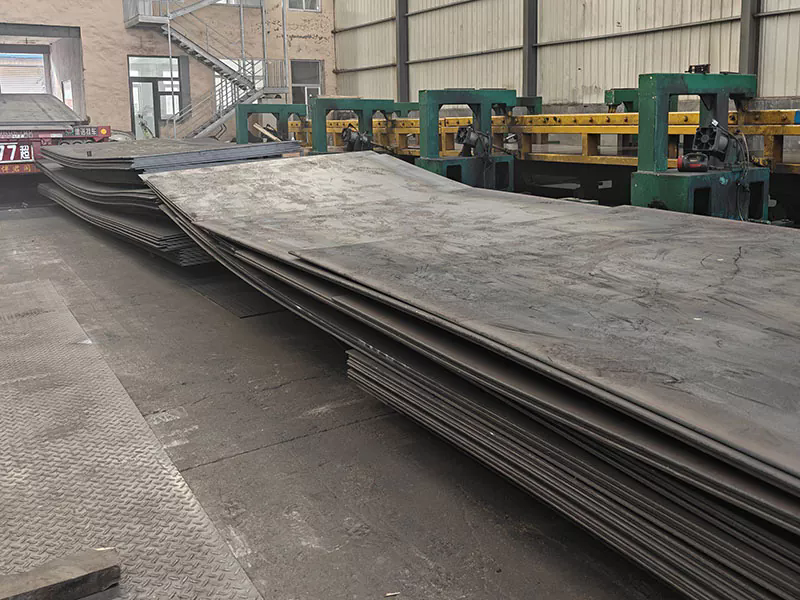
Table of Contents
- What Is Hot Rolled Steel Plate?
- How Is Hot Rolled Steel Plate Manufactured?
- Key Benefits and Advantages
- Common Industrial Applications
- How to Choose the Right Plate
- Hot Rolled vs Cold Rolled Steel
- Quality Standards and Certifications
- Common Customer Pain Points and Solutions
- FAQ
What Is Hot Rolled Steel Plate?
Hot Rolled Steel Plate is a flat steel product produced through a high-temperature rolling process, typically above the material’s recrystallization temperature (over 1700°F). This process allows the steel to be easily shaped and formed into large plates with varying thicknesses.
Unlike cold rolled steel, hot rolled steel is known for its rough surface texture and slightly rounded edges, but it offers superior workability and cost efficiency. These characteristics make it ideal for structural and heavy-duty applications.
How Is Hot Rolled Steel Plate Manufactured?
Understanding the production process helps buyers assess quality and performance.
- Step 1: Heating — Steel slabs are heated in a furnace to extremely high temperatures.
- Step 2: Rolling — The heated slabs are passed through rollers to achieve desired thickness.
- Step 3: Cooling — Plates are cooled at room temperature, which normalizes the structure.
- Step 4: Cutting & Finishing — Plates are trimmed and processed based on size requirements.
This process ensures flexibility in production and allows manufacturers like Sanhe to deliver customized dimensions efficiently.
Key Benefits and Advantages
| Benefit | Description | Customer Value |
|---|---|---|
| Cost Efficiency | Lower production cost compared to cold rolled steel | Reduces project budget |
| High Strength | Excellent structural integrity | Suitable for heavy-duty use |
| Formability | Easier to shape and weld | Improves manufacturing flexibility |
| Wide Size Range | Available in various thicknesses and dimensions | Meets diverse application needs |
These advantages make hot rolled steel plate a preferred choice across multiple industries.
Common Industrial Applications
Hot Rolled Steel Plate is used in a wide variety of sectors:
- Construction (bridges, buildings, infrastructure)
- Shipbuilding and marine engineering
- Heavy machinery manufacturing
- Oil and gas pipelines
- Automotive frames and components
Its adaptability ensures that companies can rely on one material for multiple use cases, simplifying procurement and logistics.
How to Choose the Right Plate
Selecting the correct hot rolled steel plate involves evaluating several critical parameters:
- Thickness: Match load-bearing requirements
- Grade: Choose based on strength and chemical composition
- Surface Finish: Consider corrosion resistance needs
- Dimensions: Ensure compatibility with project design
Working with experienced suppliers like Sanhe ensures that these factors are properly aligned with your application.
Hot Rolled vs Cold Rolled Steel
| Feature | Hot Rolled Steel | Cold Rolled Steel |
|---|---|---|
| Surface Finish | Rough | Smooth |
| Cost | Lower | Higher |
| Strength | High | Higher precision strength |
| Applications | Structural | Precision parts |
For most large-scale industrial applications, hot rolled steel plate offers the best balance between cost and performance.
Quality Standards and Certifications
Quality assurance is essential when sourcing steel plates. Common standards include:
- ASTM (American Society for Testing and Materials)
- EN (European Standards)
- JIS (Japanese Industrial Standards)
Reliable manufacturers like Sanhe adhere strictly to these standards, ensuring consistent product quality and traceability.
Common Customer Pain Points and Solutions
| Pain Point | Solution |
|---|---|
| Inconsistent Quality | Choose certified suppliers with strict QC processes |
| Incorrect Specifications | Consult technical experts before ordering |
| High Costs | Optimize grade and thickness selection |
| Delivery Delays | Partner with reliable manufacturers with stable supply chains |
Addressing these challenges early can significantly improve project outcomes and reduce risks.
FAQ
Q1: Is hot rolled steel plate suitable for outdoor use?
Yes, but additional coatings or treatments may be required for corrosion resistance.
Q2: Can hot rolled steel plate be welded easily?
Yes, it has excellent weldability, making it ideal for structural applications.
Q3: How do I determine the right thickness?
Thickness depends on load requirements and safety factors. Engineering consultation is recommended.
Q4: What industries benefit the most?
Construction, energy, transportation, and heavy equipment manufacturing are the primary users.
Conclusion
Hot Rolled Steel Plate remains a cornerstone material in modern industry due to its strength, versatility, and cost-effectiveness. By understanding its properties and selecting the right specifications, businesses can significantly enhance performance while controlling costs.
If you are looking for reliable supply, consistent quality, and expert support, Sanhe is ready to assist. Explore more about this product here: Hot Rolled Steel Plate Product Page.
For tailored solutions and competitive pricing, contact us today and let our team help you find the perfect steel solution for your project.