
How Does Polyimide High Temperature Adhesive Tape Compare to Traditional Heat Resistant Tapes in Performance
2026-03-25
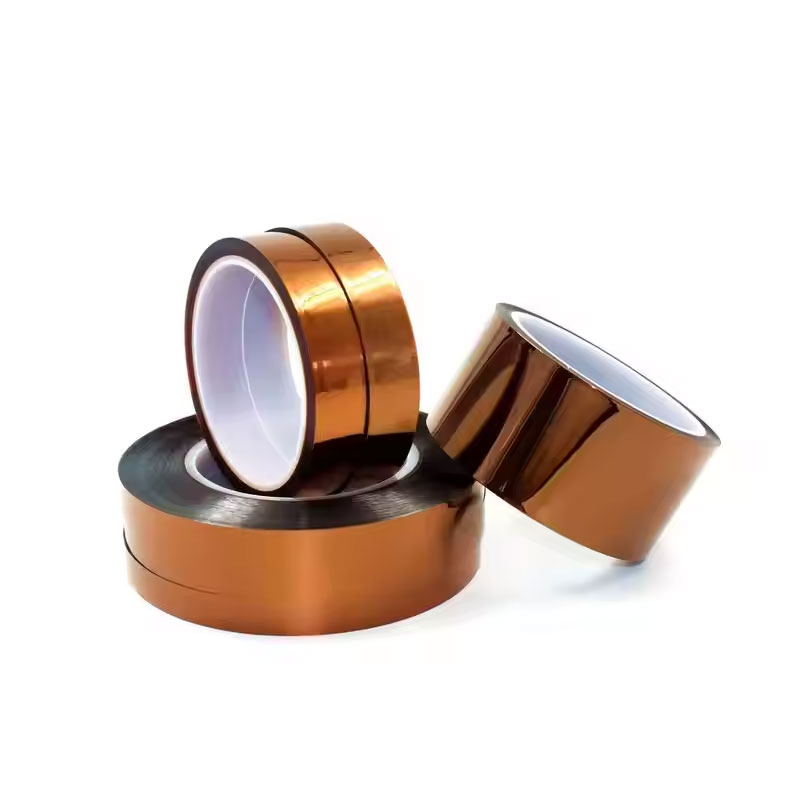
When engineers and manufacturers demand reliability in high-heat environments, Polyimide High Temperature Adhesive Tape consistently emerges as the benchmark solution. At Sui Ying, we have spent years analyzing how this advanced material outperforms conventional heat resistant alternatives across critical parameters such as thermal stability, dielectric strength, and residue-free removal.
Performance Comparison at a Glance
To understand the distinction clearly, the following table outlines the core differences between Polyimide High Temperature Adhesive Tape and traditional heat resistant tapes such as polyester, fiberglass, or cloth-based varieties.
| Performance Criteria | Polyimide High Temperature Adhesive Tape | Traditional Heat Resistant Tapes |
|---|---|---|
| Continuous Operating Temperature | 260°C to 300°C | Typically 120°C to 180°C |
| Short-Term Peak Temperature | Up to 400°C | Up to 200°C |
| Dielectric Strength | 5,000 – 7,500 volts | 2,000 – 4,000 volts |
| Residue After Removal | Minimal to none | Often leaves adhesive residue |
| Chemical Resistance | Excellent against solvents and fluxes | Moderate to low |
| Thickness Options | 0.025mm to 0.1mm (thin profile) | Generally thicker, less conformable |
| Primary Applications | PCB masking, coil insulation, battery packs | General bundling, low-heat masking |
Why Material Science Matters
Traditional heat resistant tapes often rely on polyester or cloth backings coated with silicone or rubber adhesives. While these tapes perform adequately in moderate environments, they begin to degrade when exposed to repeated thermal cycling or aggressive chemicals.
In contrast, Polyimide High Temperature Adhesive Tape utilizes a polyimide film backing—commonly known by its industry designation—paired with high-performance silicone adhesives. This combination delivers three distinct advantages:
-
Thermal Endurance: The tape maintains structural integrity even after extended exposure to lead-free soldering temperatures.
-
Dielectric Reliability: Its superior insulation properties make it indispensable for protecting sensitive electronic components.
-
Clean Removal: Unlike traditional tapes that leave stubborn residues requiring secondary cleaning, polyimide variants peel away cleanly, reducing post-process labor.
Applications Where Performance Matters Most
| Industry | Application | Why Polyimide High Temperature Adhesive Tape Excels |
|---|---|---|
| Electronics Manufacturing | PCB solder masking | Withstands wave soldering without lifting or leaving residue |
| Automotive | EV battery insulation | Maintains dielectric strength under high-temperature cycling |
| Aerospace | Wire harnessing | Meets stringent flame retardancy and outgassing standards |
| Renewable Energy | Solar panel junction boxes | Provides long-term UV and thermal stability |
Polyimide High Temperature Adhesive Tape FAQ
What is the maximum temperature that Polyimide High Temperature Adhesive Tape can withstand without losing adhesion?
The continuous operating temperature range for Polyimide High Temperature Adhesive Tape is typically 260°C to 300°C, depending on the specific grade and adhesive formulation. For short-term exposure, such as during lead-free soldering cycles, it can withstand peaks up to 400°C without delamination or significant loss of adhesive strength. The polyimide backing itself remains dimensionally stable, while the silicone adhesive maintains bonding integrity before fully curing during initial heat exposure. This makes it distinctly superior to traditional polyester tapes, which begin to soften and degrade above 150°C.
Does Polyimide High Temperature Adhesive Tape leave residue after removal, and how does this compare to traditional tapes?
When applied and removed correctly, Polyimide High Temperature Adhesive Tape leaves minimal to no adhesive residue. This characteristic is one of its most valued properties in electronics and precision manufacturing. The silicone adhesive system is engineered to release cleanly from substrates such as FR-4 boards, metals, and ceramics even after exposure to high temperatures. By contrast, traditional rubber or acrylic-based heat resistant tapes often undergo chemical changes during thermal cycling, resulting in stubborn residue that requires solvents, scraping, or additional cleaning steps—adding time and cost to production workflows.
Can Polyimide High Temperature Adhesive Tape be used for both electrical insulation and mechanical masking simultaneously?
Yes, Polyimide High Temperature Adhesive Tape is uniquely suited for dual-purpose applications. It provides both robust electrical insulation (with dielectric strength often exceeding 5,000 volts) and precise mechanical masking. This dual functionality is particularly valuable in applications such as transformer coil winding, where the tape insulates layers while securing winding ends; and in PCB assembly, where it masks gold fingers or connectors during conformal coating or soldering. Traditional heat resistant tapes rarely offer such combined performance, typically excelling in either insulation or masking but not both to the same advanced degree.
Partnering for Precision Performance
Selecting the right tape is not merely about temperature ratings—it is about process reliability, yield improvement, and total cost of ownership. At Sui Ying, we specialize in providing Polyimide High Temperature Adhesive Tape solutions tailored to demanding manufacturing environments. Our technical team works alongside engineers to validate application requirements and recommend the optimal thickness, width, and adhesive variant for each unique use case.
Contact us today to discuss your high-temperature application challenges or request sample rolls for testing. Let Sui Ying help you achieve cleaner processes, stronger reliability, and superior results.