Abstract
Pultruded grating has become a critical structural material across industrial environments where corrosion resistance, load-bearing strength, and long-term durability are essential. This article explains how pultruded grating works, why it is increasingly replacing traditional steel systems, and how it delivers measurable improvements in safety, lifecycle cost efficiency, and operational performance. It also provides practical guidance on selection, installation, and maintenance to help engineers, contractors, and facility managers make informed decisions.
1. Overview of Pultruded Grating
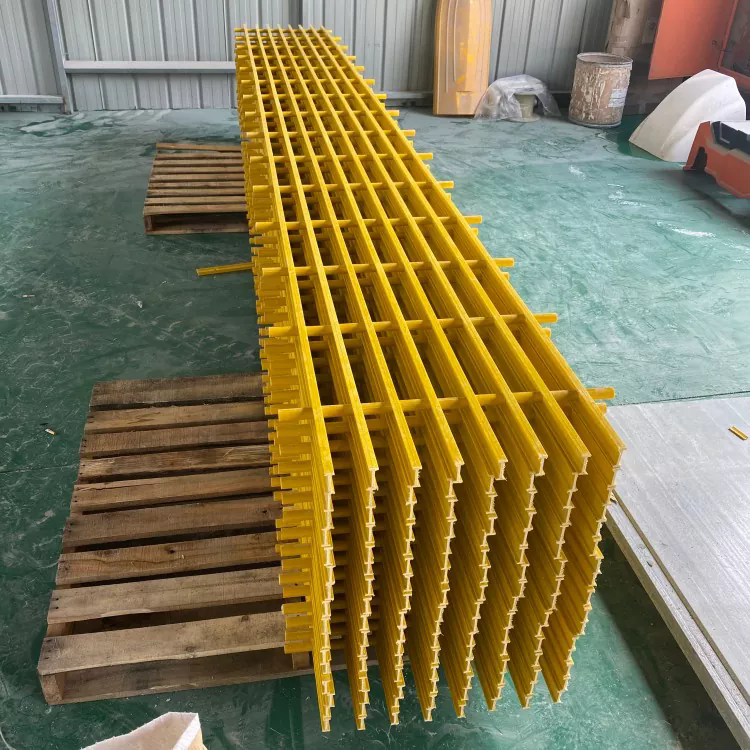
Pultruded grating is a type of fiber-reinforced polymer (FRP) structural grid produced through a continuous pultrusion process. Unlike molded grating, which is isotropic in structure, pultruded grating is engineered with continuous glass fibers aligned in the load-bearing direction, resulting in exceptional tensile strength and rigidity.
It is widely used in environments where metal grating fails due to corrosion, heavy maintenance requirements, or electrical conductivity risks. Industries such as chemical processing, offshore oil and gas, wastewater treatment, and power generation rely heavily on this material.
2. Manufacturing Process and Material Structure
The pultrusion process involves pulling continuous fiberglass rovings through a resin bath and then through a heated die to form a consistent cross-sectional profile. This process ensures uniform mechanical properties and high fiber volume fraction.
-
Reinforcement: Continuous glass fiber rovings provide tensile strength.
-
Resin Matrix: Typically polyester, vinyl ester, or epoxy for chemical resistance.
-
Surface Layer: Anti-slip grit or concave surface improves safety.
The structural integrity of pultruded grating is directional, meaning load performance is optimized along the span direction, making it ideal for long-span industrial platforms.
3. Key Benefits in Industrial Applications
Pultruded grating offers multiple advantages that directly address common industrial challenges such as corrosion, high maintenance cost, and workplace safety risks.
-
Corrosion Resistance: Performs exceptionally in chemical and marine environments.
-
High Strength-to-Weight Ratio: Stronger than steel in certain directional loads while significantly lighter.
-
Electrical Insulation: Non-conductive, improving safety in electrical zones.
-
Low Maintenance: No need for painting, galvanizing, or anti-rust treatments.
-
Slip Resistance: Engineered surface textures reduce workplace accidents.
These benefits translate into reduced downtime, lower lifecycle costs, and improved operational safety standards.
4. Common Application Scenarios
Pultruded grating is highly versatile and can be deployed in both heavy industrial and commercial infrastructure projects.
-
Chemical plant walkways and platforms
-
Offshore oil rig decks
-
Water treatment facilities
-
Power station cable trenches
-
Food processing plant flooring
-
Coastal and marine structures
Its adaptability makes it a preferred solution for environments exposed to moisture, chemicals, or high corrosion risk.
5. Pultruded Grating vs Traditional Grating
|
Feature
|
Pultruded Grating
|
Steel Grating
|
|
Corrosion Resistance
|
Excellent
|
Poor without coating
|
|
Weight
|
Lightweight
|
Heavy
|
|
Maintenance
|
Minimal
|
Frequent painting required
|
|
Electrical Safety
|
Non-conductive
|
Conductive
|
|
Installation Cost
|
Lower labor cost
|
Higher due to weight
|
From a lifecycle perspective, pultruded grating often proves more cost-effective despite higher initial material costs.
6. Installation Guidelines
Proper installation is essential to maximize structural performance and safety. Pultruded grating systems are typically installed using mechanical fasteners or specially designed clips.
-
Ensure supporting structure alignment before installation
-
Use corrosion-resistant fasteners (stainless steel or FRP)
-
Maintain proper expansion gaps for thermal movement
-
Avoid over-tightening to prevent stress concentration
Due to its lightweight nature, installation can often be completed without heavy lifting equipment, reducing project complexity.
7. Maintenance and Service Life
One of the key advantages of pultruded grating is its minimal maintenance requirement. Unlike metal systems that require frequent surface treatments, FRP grating maintains performance under harsh conditions with little intervention.
-
Routine visual inspections for structural integrity
-
Cleaning with non-abrasive detergents
-
Periodic checking of fasteners and supports
Under normal operating conditions, service life can exceed 20 years depending on environmental exposure and resin selection.
8. How to Choose the Right Specification
Selecting the appropriate pultruded grating requires evaluation of load conditions, chemical exposure, and installation environment.
-
Load Requirement: Light, medium, or heavy-duty classification
-
Resin Type: Polyester for general use, vinyl ester for chemical resistance
-
Mesh Size: Determines drainage and safety requirements
-
Surface Finish: Gritted or concave for slip resistance
Engineering consultation is often recommended for large-scale industrial projects.
9. Manufacturer Expertise
Jiangsu Ousheng Fiberglass Reinforced Plastic Manufacturing Co., Ltd is a professional manufacturer specializing in FRP structural systems, including pultruded grating solutions for global industrial applications. With advanced production technology and strict quality control systems, the company ensures consistent product performance across diverse environments.
Their engineering team focuses on delivering customized solutions that meet complex structural, chemical, and mechanical requirements. This includes tailored grating dimensions, resin systems, and load-bearing designs for specific project needs.
10. Frequently Asked Questions
Q1: Is pultruded grating suitable for outdoor environments?
Yes, it is highly resistant to UV exposure, moisture, and corrosion, making it ideal for outdoor use.
Q2: Can it replace steel grating completely?
In many corrosive or electrically sensitive environments, it is a superior alternative.
Q3: What is the typical lifespan?
With proper selection and installation, it can last over 20 years.
Q4: Is it customizable?
Yes, dimensions, resin types, and surface finishes can all be customized.
11. Conclusion
Pultruded grating represents a modern engineering solution designed to overcome the limitations of traditional metal flooring systems. Its combination of corrosion resistance, lightweight structure, and high mechanical performance makes it suitable for demanding industrial environments where safety and efficiency are critical.
For projects requiring reliable FRP structural systems, Jiangsu Ousheng Fiberglass Reinforced Plastic Manufacturing Co., Ltd delivers engineered solutions tailored to industrial demands.
For detailed specifications, technical consultation, or project quotations, contact us today to explore how pultruded grating can enhance your operational performance and safety systems.