

How Does Steel Structure Support Customized Vessel Design and Reliable Engineering?
2026-09-07
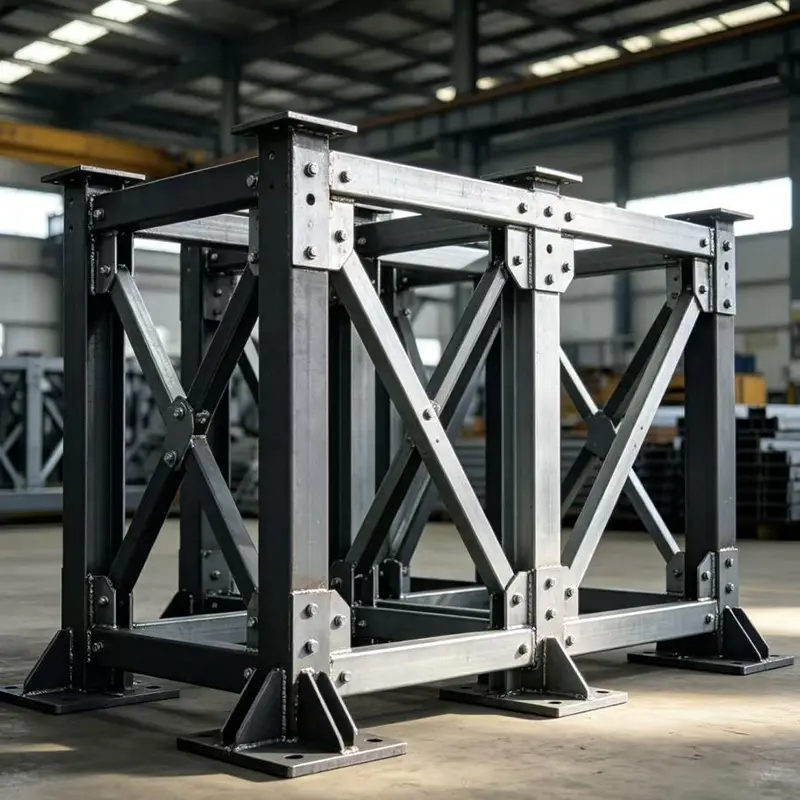
Steel Structure has become an important solution for modern construction, industrial facilities, infrastructure, and marine engineering because it combines high strength, structural flexibility, fabrication efficiency, and design adaptability. A well-engineered Steel Structure can be manufactured in different shapes and configurations, including beams, columns, plates, frames, trusses, channels, and customized assemblies. In marine applications, steel is particularly valuable because hulls, decks, frames, bulkheads, supports, and other components must withstand heavy loads, vibration, changing environmental conditions, and long-term operational demands.
For projects that require non-standard dimensions or specialized applications, customization is equally important. Guojian Steel (Tianjin) Co., Ltd. focuses on providing practical steel solutions designed around project requirements, with the ability to support customized vessel types. This makes Steel Structure not simply a material choice, but an engineered solution that can be adapted to different construction and marine applications.
Why Is Steel Structure Important for Modern Engineering?
The primary role of a Steel Structure is to transfer and distribute loads safely while maintaining structural stability. Compared with conventional construction approaches, steel offers a high strength-to-weight ratio and considerable flexibility in fabrication. Properly designed steel frameworks can support large spans, heavy equipment, platforms, warehouses, industrial buildings, bridges, and marine structures.
In shipbuilding, structural integrity is especially critical. Hull structures must distribute loads throughout the vessel while resisting deformation, fatigue, and buckling. Professional structural analysis therefore considers hull form, loading conditions, stress concentration, fatigue life, and operational profiles.
The key functions of Steel Structure include:
-
Load bearing: Supports equipment, cargo, decks, roofs, and operational loads.
-
Structural stability: Helps maintain the overall geometry and integrity of a project.
-
Load distribution: Transfers concentrated and dynamic loads to appropriate supporting components.
-
Design flexibility: Allows engineers to create different configurations for different applications.
-
Fabrication efficiency: Components can be cut, formed, welded, assembled, and inspected before installation.
-
Customization: Dimensions, connections, profiles, and structural arrangements can be adapted to project requirements.
What Are the Main Applications of Steel Structure?
Steel Structure is widely used in industrial, commercial, infrastructure, and marine environments. Typical applications include warehouses, workshops, bridges, platforms, port facilities, offshore structures, shipyards, and vessel components.
In marine engineering, structural steel may be used for hull blocks, decks, support frames, tanks, platforms, equipment foundations, and other fabricated assemblies. Marine fabrication companies commonly produce customized steel components and assemblies for different vessel and offshore requirements.
| Application | Typical Steel Structure Function | Main Benefit |
|---|---|---|
| Industrial Buildings | Frames, columns, beams and supports | High load capacity |
| Warehouses | Long-span frames and roof systems | Flexible interior space |
| Bridges | Girders, trusses and support structures | Strength and long-span capability |
| Port Facilities | Platforms, ramps and support frames | Heavy-duty performance |
| Offshore Structures | Modules, frames and platforms | Structural stability |
| Ships & Vessels | Hulls, decks, frames and reinforcements | Customized marine construction |
How Does Steel Structure Support Customized Vessel Types?
One of the most important advantages of Steel Structure for marine projects is support for customized vessel design and vessel types.
Different vessels have different operating purposes. A tugboat needs a structure suited to towing and maneuvering forces, while a cargo vessel requires arrangements that accommodate cargo capacity and loading conditions. Barges, workboats, patrol vessels, offshore support vessels, ferries, dredgers, and specialized engineering vessels can also require significantly different structural configurations.
Therefore, a standardized steel solution may not always provide the best result. A customized Steel Structure can instead be developed according to vessel length, beam, draft, payload, operating environment, equipment arrangement, deck configuration, and intended service.
This customization may involve:
-
Customized hull structures based on vessel dimensions and operating requirements.
-
Customized deck structures for cargo, machinery, cranes, or specialized equipment.
-
Customized frames and reinforcement for areas exposed to higher loads.
-
Customized support structures for engines, tanks, pipelines, and marine equipment.
-
Customized openings and connections according to the vessel's internal arrangement.
-
Customized structural assemblies for specialized vessel functions.
The ability to work with different vessel configurations provides greater design freedom and helps customers develop steel solutions around their actual operational requirements rather than forcing a project into a standard specification. Custom ship design and structural engineering are widely used to address specific vessel purposes and client requirements.
What Makes a High-Quality Steel Structure Effective?
A successful Steel Structure depends on more than simply selecting strong steel. Engineering design, material selection, dimensional accuracy, welding quality, connection design, fabrication procedures, inspection, surface treatment, and installation all influence final performance.
For marine applications, corrosion protection is also essential because steel structures may be continuously exposed to seawater, humidity, salt, temperature changes, and mechanical stresses. Proper maintenance and protective systems can help extend service life and preserve structural integrity.
A reliable manufacturing process generally includes:
Design → Material Selection → Cutting → Forming → Welding → Assembly → Inspection → Surface Treatment → Delivery
Each stage contributes to the final quality of the Steel Structure. Accurate fabrication is particularly important for customized vessels because structural components need to fit together correctly during assembly and installation.
Steel Structure vs. Conventional Construction
Steel is often selected when projects require strength, flexibility, large spans, or customized fabrication.
| Factor | Steel Structure | Conventional Concrete Structure |
|---|---|---|
| Strength-to-weight ratio | High | Generally lower |
| Large-span capability | Excellent | Often requires larger sections |
| Fabrication | Highly adaptable | More dependent on on-site work |
| Customization | High | Possible but often more formwork-intensive |
| Installation | Can be rapid with prefabrication | Often more site-dependent |
| Marine fabrication | Widely applicable | Less suitable for many exposed steel fabrication applications |
| Modification | Relatively flexible | More difficult in some applications |
The appropriate choice still depends on project requirements, structural calculations, environmental conditions, budget, applicable standards, and service life expectations. Steel Structure should always be engineered for its specific application rather than selected solely because of material strength.
Why Choose Guojian Steel (Tianjin) Co., Ltd. for Steel Structure Solutions?
For buyers seeking dependable Steel Structure solutions, the ability to understand individual project requirements is just as important as manufacturing capability. Guojian Steel (Tianjin) Co., Ltd. positions its solutions around practical engineering needs and customized fabrication.
A particularly valuable advantage is the ability to support customized vessel types. Instead of limiting customers to one standardized vessel configuration, customized structural solutions can be considered for different marine applications and project specifications.
For international buyers, this flexibility can be especially useful when a project involves:
-
Non-standard vessel dimensions
-
Specialized deck arrangements
-
Different cargo or equipment requirements
-
Customized hull structures
-
Offshore support applications
-
Workboats and service vessels
-
Barges and specialized marine platforms
-
Structural modifications or project-specific assemblies
By combining structural performance with customization, Steel Structure can become a more versatile solution for customers looking for both engineering reliability and application-specific design.
What Should Buyers Consider Before Ordering Steel Structure?
Before selecting a supplier, buyers should evaluate several factors rather than focusing only on the material price.
Key considerations include:
-
Required steel grade and material specifications
-
Structural dimensions and tolerances
-
Welding and fabrication capabilities
-
Quality inspection procedures
-
Corrosion protection requirements
-
Load-bearing and fatigue requirements
-
Project delivery schedule
-
Customization capabilities
-
Experience with marine or industrial applications
-
Ability to manufacture according to drawings and technical specifications
For customized vessel projects, communication at the design stage is particularly important. Providing vessel dimensions, application, loading requirements, equipment arrangement, operating environment, and technical drawings can help the manufacturer develop a more suitable solution.
Conclusion
A well-designed Steel Structure provides a combination of strength, flexibility, fabrication efficiency, and customization that makes it suitable for a wide range of engineering applications. From industrial buildings and bridges to shipbuilding and offshore structures, steel can be fabricated into complex assemblies according to specific project requirements.
For marine applications, the ability to support customized vessel types is an especially important advantage. Different vessels demand different structural arrangements, and a flexible steel fabrication solution can help accommodate variations in hull configuration, deck layout, reinforcement, equipment support, and operational purpose.
Guojian Steel (Tianjin) Co., Ltd. can be considered by customers seeking Steel Structure solutions with an emphasis on project-specific requirements and customized vessel applications. Whether you are developing a specialized marine project or sourcing structural steel for industrial use, choosing a supplier capable of understanding your technical requirements can make a significant difference in project efficiency and final performance.
Looking for a customized Steel Structure solution for your next project or vessel? Contact Guojian Steel (Tianjin) Co., Ltd. today. Contact us to discuss your vessel type, technical specifications, structural requirements, and customization needs, and explore a steel solution designed around your project.