

How does the design of medical thin wall tubing influence kink resistance and flexibility in critical care
2026-04-01
In the high-stakes environment of critical care, the performance of Medical Thin Wall Tubing can determine the success or failure of life-sustaining procedures. From intravenous access to complex cardiovascular interventions, clinicians depend on tubing that navigates tortuous anatomy without compromising flow. At Micro-tube, we recognize that the interplay between kink resistance and flexibility is not merely a design challenge—it is a clinical imperative. The way a tube is engineered directly dictates how reliably it performs under pressure, especially when every millimeter of movement matters.
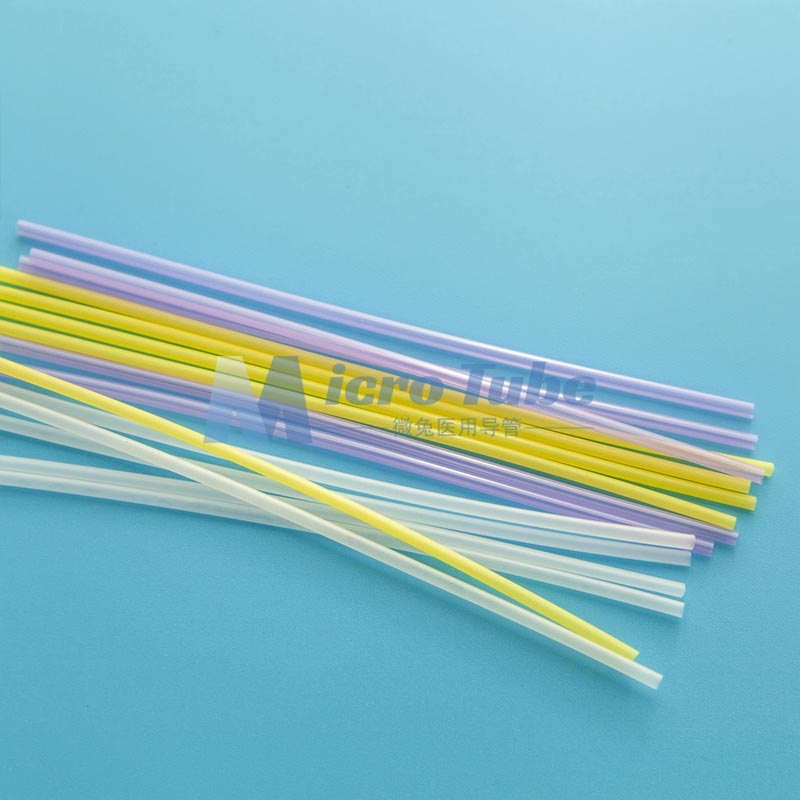
The Engineering Balance: Kink Resistance vs. Flexibility
Achieving the optimal balance between structural integrity and pliability requires precision in material selection, wall thickness, and reinforcement techniques. Below is a breakdown of how key design elements influence performance in critical care settings.
| Design Parameter | Impact on Kink Resistance | Impact on Flexibility |
|---|---|---|
| Wall Thickness | Uniform, thin walls reduce stress concentration points that lead to kinking. | Reduced wall thickness lowers bending force, enhancing maneuverability. |
| Material Durometer | Softer materials may collapse under negative pressure; balanced hardness maintains lumen patency. | Lower durometer materials offer greater flexibility for navigating tortuous vessels. |
| Reinforcement (Coils/Braids) | Embedded coils or braids act as structural armor, preventing collapse during tight bends. | Carefully spaced reinforcement preserves axial flexibility while providing radial support. |
| Lubricious Coatings | Reduces friction against anatomical structures, indirectly preventing acute angulation that causes kinking. | Enhances glideability, allowing the tubing to conform to complex pathways with minimal resistance. |
Material Science and Structural Integrity
The selection of polymers plays a foundational role. Materials such as polyurethane, nylon, and fluoropolymers each offer distinct profiles. Micro-tube leverages multi-layer extrusion technologies to combine a soft, flexible outer layer with a kink-resistant inner liner. This construction ensures that Medical Thin Wall Tubing maintains its internal diameter even under extreme bending, a critical requirement for continuous fluid delivery or guidewire passage in procedures like transradial catheterization or neurovascular intervention.
Performance in Critical Care Scenarios
In intensive care units, where devices such as central venous catheters and drainage systems remain in situ for extended periods, tubing must withstand patient movement, positional changes, and aspiration forces. A tube that kinks not only interrupts therapy but also increases the risk of thrombosis, infection, and unplanned device replacement. By optimizing design parameters, manufacturers reduce these risks, directly contributing to improved patient safety and workflow efficiency.
Medical Thin Wall Tubing FAQ
What is the primary cause of kinking in thin wall tubing used for critical care applications?
Kinking typically occurs when the wall thickness is insufficient relative to the bending radius and material hardness. Inadequate reinforcement or inconsistent extrusion can create weak points where the tube collapses under mechanical stress or negative pressure. High-quality Medical Thin Wall Tubing from Micro-tube addresses this through controlled wall uniformity and, where necessary, integrated coil or braid reinforcement to maintain patency regardless of patient movement or procedural manipulation.
How does flexibility in thin wall tubing affect clinical outcomes in minimally invasive procedures?
Flexibility directly determines how easily a device can navigate complex, tortuous anatomy such as coronary arteries or the biliary tree without causing tissue trauma. Excessively rigid tubing may perforate vessels or fail to reach targeted sites, while poorly designed flexible tubing may lack the pushability required for precise placement. Micro-tube balances these properties by engineering tubing with variable durometer sections and optimized wall geometries, ensuring that clinicians achieve both deliverability and structural reliability.
What quality control measures ensure consistent kink resistance and flexibility in medical thin wall tubing?
Consistency begins with precision extrusion and extends through rigorous testing protocols. Manufacturers must perform 100% dimensional inspection, tensile testing, and simulated-use kink testing under conditions that replicate clinical environments. At Micro-tube, every batch of Medical Thin Wall Tubing undergoes validated testing for burst pressure, bend radius, and column strength. This commitment ensures that each length of tubing meets exact specifications, eliminating variability that could compromise device performance in critical care settings.
Conclusion
The design of Medical Thin Wall Tubing is a sophisticated science where material choice, structural reinforcement, and precision manufacturing converge to deliver devices that perform reliably when it matters most. In critical care, where the margin for error is zero, the ability to resist kinking while maintaining exceptional flexibility is not a luxury—it is a necessity. Manufacturers like Micro-tube continue to push the boundaries of extrusion technology to support next-generation medical devices that prioritize both safety and clinical efficacy.
If you are developing a critical care device that demands the highest standards in Medical Thin Wall Tubing, precision, and reliability, we invite you to partner with Micro-tube. Contact us today to discuss your project specifications and discover how our engineering expertise can bring your next-generation medical device to life.