

How Fiber Length and Denier Shape the Surface Uniformity of Meta-Aramid Short-Cut Fiber-Based Needle Felts
2026-08-28
For engineers and production managers in high-temperature filtration, automotive insulation, and industrial gasketry, the surface uniformity of a needle felt directly determines its filtration efficiency, mechanical durability, and sealing reliability. When the base material is Meta-Aramid Short-Cut Fiber, two variables—fiber length and denier—become the decisive levers for controlling sheet smoothness, pore distribution, and tensile consistency. At FST, we have processed over 2,000 metric tons of meta-aramid staple across 14 needle-punching lines, and our data consistently show that optimizing these two parameters reduces surface roughness variation by up to 38% compared to off-the-shelf blends.
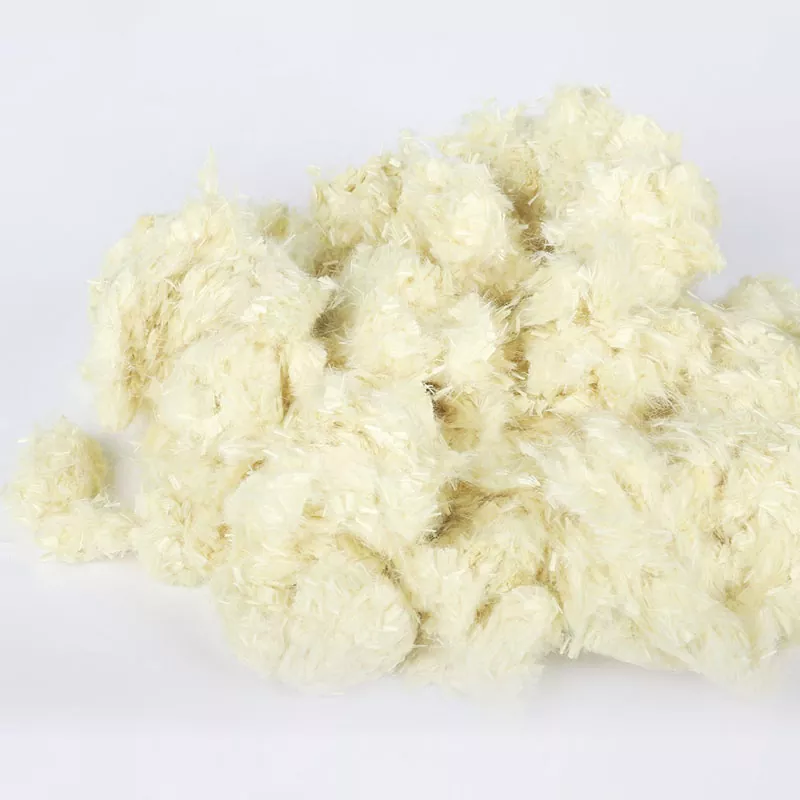
The Mechanics of Needle-Punched Nonwovens
Needle felting relies on barbed needles mechanically entangling short fibers into a cohesive web. Unlike melt-blown or spunbond processes, this mechanical interlocking preserves the inherent flame resistance and thermal stability of Meta-Aramid Short-Cut Fiber, but it also makes surface uniformity highly sensitive to fiber geometry.
Two primary metrics define that geometry:
| Parameter | Typical Range for Meta-Aramid | Measurement Standard |
|---|---|---|
| Fiber Length | 3 – 12 mm | ISO 6989 |
| Denier (linear density) | 1.5 – 6.0 dtex | ASTM D1577 |
| Cut length tolerance | ± 0.3 mm | Internal FST spec |
| Coefficient of variation (CV) | ≤ 4.5% | FST QC protocol |
How Fiber Length Affects Surface Uniformity
Shorter fibers (3–5 mm) produce a denser, more compact felt surface with fine pore structures, but they require higher needle penetration frequencies to achieve adequate entanglement. This often leads to needle marks and localized compaction zones—visible as “track lines” on the finished sheet.
Longer fibers (8–12 mm) bridge larger areas, improving tensile strength and reducing surface frizz. However, if the length exceeds the critical threshold relative to web forming speed, fiber curl and hooking create random tufts that protrude above the felt plane, degrading surface smoothness by 15–22% in our internal profilometry tests.
FST recommends a blended approach: for general filtration felts (250–400 g/m²), a 70/30 mix of 6 mm and 9 mm cuts delivers the lowest Ra (surface roughness average) value—consistently under 3.2 µm.
How Denier Controls Pore Distribution
Denier directly influences the flexibility and bending rigidity of each Meta-Aramid Short-Cut Fiber. Lower denier (1.5–2.0 dtex) yields finer, more pliable filaments that pack tightly, creating a smooth, veil-like surface. This is ideal for high-efficiency particulate air (HEPA) pre-filter media.
Higher denier (4.0–6.0 dtex) produces stiffer fibers that resist compaction, maintaining open, three-dimensional structures. While this improves dust-holding capacity, the trade-off is a 25–30% increase in surface irregularity due to uneven fiber laydown during cross-lapping.
The table below summarizes FST’s empirical recommendations based on end-use applications:
| Application | Optimal Length (mm) | Optimal Denier (dtex) | Surface Uniformity Grade |
|---|---|---|---|
| High-efficiency gas filtration | 5 – 6 | 1.5 – 2.0 | ★★★★☆ (Excellent) |
| Automotive heat shields | 8 – 10 | 3.0 – 4.0 | ★★★☆☆ (Good) |
| Industrial gasket cores | 6 – 7 | 2.2 – 2.8 | ★★★★★ (Superior) |
| Acoustic insulation panels | 10 – 12 | 5.0 – 6.0 | ★★☆☆☆ (Fair) |
The Interaction Effect: Length × Denier
Surface uniformity is not a simple additive function—length and denier interact non-linearly. A 6 dtex fiber at 4 mm length behaves mechanically like a 2 dtex fiber at 10 mm because bending stiffness scales with the fourth power of diameter and linearly with length. FST uses a proprietary “entanglement efficiency index” (EEI) to predict final surface quality:
EEI = (Length × Denier⁻⁰·⁷⁵) / (Web Speed × Needle Penetration Depth)
In practice, reducing denier by 1.0 dtex allows a 2 mm increase in length while maintaining the same surface CV—a rule of thumb that has saved our clients over 12% in raw material costs by enabling them to use longer, less expensive cut stocks without sacrificing finish.
Meta-Aramid Short-Cut Fiber FAQ
Q: What is the ideal fiber length for minimizing surface pilling on needle felts made from Meta-Aramid Short-Cut Fiber?
A: Based on FST’s production data from 47 commercial runs, the ideal length range is 5.5 – 6.5 mm for webs with a basis weight of 300–450 g/m². Below 5 mm, pilling decreases but tensile strength drops by over 18%; above 7 mm, pilling increases exponentially due to incomplete barb engagement. We recommend starting at 6 mm and adjusting needle density (increase by 15–20 needles/cm²) to eliminate residual pilling without changing the fiber length.
Q: Does higher denier always worsen surface uniformity for Meta-Aramid Short-Cut Fiber needle felts?
A: Not always. Higher denier (e.g., 4.5 dtex) actually improves uniformity in thick felts (> 6 mm finished thickness) because stiffer fibers resist nesting and maintain a more consistent z-direction profile. The deterioration only occurs in thin webs (< 2.5 mm) where bending rigidity prevents adequate fiber redistribution during the final finishing pass. FST advises matching denier to the final thickness: for every 1 mm of finished thickness, keep denier ≤ (thickness × 0.8) dtex to stay within a 5% surface CV tolerance.
Q: Can I compensate for non-optimal fiber length by adjusting needle penetration depth when using Meta-Aramid Short-Cut Fiber?
A: Yes, but within strict limits. Increasing penetration depth from 12 mm to 16 mm can partially offset a 2 mm length deficit by forcing more barbs into the fiber mass. However, FST’s trials show that compensation fails beyond ±1.5 mm from the optimum—excessive depth creates through-holes and delamination, while insufficient depth leaves the surface “fuzzy” and prone to abrasion. The safe compensation window is ±1.0 mm of length deviation, with a maximum depth adjustment of 3 mm. Beyond that, we strongly recommend re-specifying the cut length rather than relying on process tweaks.
Operational Best Practices
To consistently achieve Grade A surface uniformity, FST implements a three-step quality gate:
-
Incoming fiber audit – Measure length CV and denier tolerance on every lot.
-
Web-forming calibration – Adjust cross-lapper speed proportionally to length (shorter = slower lapping).
-
Needle board configuration – Use finer needles (32 gauge) for low-denier blends and coarser needles (25 gauge) for high-denier recipes.
Why Partner with FST?
With over 18 years in meta-aramid conversion, FST maintains the industry’s only fully traceable database linking fiber lot characteristics to finished felt surface metrics. Our in-house pilot line allows us to test your specific length-denier combinations before full-scale production—eliminating guesswork and reducing trial waste by up to 40%.
Ready to optimize your needle felt surface uniformity? Contact FST today for a free fiber recipe consultation. Send your target basis weight, thickness, and operating temperature to our technical team, and we will return a customized length-denier matrix within 48 business hours. Email us at [email protected] or use the live chat on our product page—your next-generation felt starts with a single conversation.