
How Is Custom Fiberglass Woven Roving Manufactured and What Makes It Custom
2026-09-29
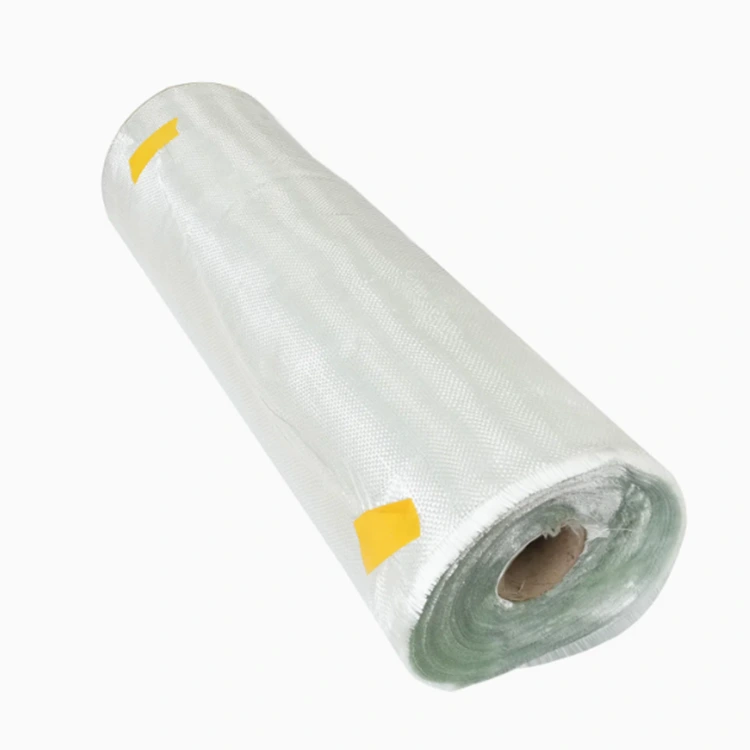
Fiberglass woven roving is a fundamental reinforcement material in the composites industry, and Custom Fiberglass Woven Roving takes this versatility a step further by tailoring the fabric to meet specific performance, processing, and application requirements. At Yuruis, understanding how this material is produced and what distinguishes it from standard woven roving helps engineers, fabricators, and procurement teams make informed decisions for their projects.
The Manufacturing Process of Custom Fiberglass Woven Roving
The production of Custom Fiberglass Woven Roving follows a carefully controlled sequence. Each stage can be adjusted to achieve unique properties.
| Stage | Description | Customization Variables |
|---|---|---|
| 1. Glass Melting & Fiber Forming | Raw glass marbles or batch materials are melted and drawn into continuous filaments. | Glass type (E-glass, C-glass, AR-glass), filament diameter |
| 2. Sizing Application | A chemical sizing is applied to protect fibers and improve compatibility with resins. | Sizing chemistry for epoxy, polyester, vinyl ester, or specialty resins |
| 3. Strand Formation | Filaments are gathered into strands, which are wound onto bobbins. | Strand tex, number of filaments per strand |
| 4. Weaving | Strands are woven into a bidirectional fabric on a loom. | Weave pattern, warp/weft ratio, loom width |
| 5. Finishing & Roll Formation | The fabric is heat-cleaned, optionally chopped or stitched, and rolled. | Roll length, width, edge treatment, surface finish |
Each of these stages offers opportunities for customization. For example, Yuruis can adjust the sizing formulation to ensure optimal wet-out and bonding with a customer's specific resin system, whether that is a high-performance epoxy or a general-purpose polyester.
What Makes Custom Fiberglass Woven Roving "Custom"?
Custom Fiberglass Woven Roving is not merely a standard product with a different label. It is engineered around the end-use requirements. The following list highlights the most common customization dimensions:
-
Weight and Thickness: Available from lightweight 300 g/m² to heavy-duty 1200 g/m² or more, depending on the desired laminate build-up.
-
Weave Architecture: Plain weave, twill weave, or special constructions that influence drapeability, conformability, and mechanical performance.
-
Width and Roll Length: Custom slitting to exact widths reduces waste and improves lay-up efficiency.
-
Sizing Compatibility: Optimized for specific resin systems, including epoxy, polyester, vinyl ester, phenolic, and polyurethane.
-
Surface Treatments: Silane coupling agents, powder binders, or stitching can be added for improved handling and interlaminar adhesion.
-
Color and Identification: Tracer yarns or custom colors for easy identification during lay-up.
-
Mechanical Property Targets: Tensile strength, flexural modulus, and impact resistance can be tuned through fiber and weave selection.
Yuruis works closely with customers to define these parameters, ensuring that every roll of Custom Fiberglass Woven Roving delivers consistent performance in the final composite part.
Quality Control and Consistency
Consistency is critical in composite manufacturing. Yuruis implements rigorous quality control measures throughout production:
-
Incoming raw material inspection
-
Real-time monitoring of filament diameter and strand tex
-
Weave density and areal weight verification
-
Sizing pickup percentage checks
-
Roll-to-roll visual inspection and mechanical testing
These controls ensure that Custom Fiberglass Woven Roving meets both internal specifications and customer requirements, batch after batch.
Frequently Asked Questions About Custom Fiberglass Woven Roving
Q: What is the typical lead time for Custom Fiberglass Woven Roving orders?
A: Lead time depends on the degree of customization and order volume. Standard custom configurations typically ship within 2 to 4 weeks after specification approval. For highly specialized weave patterns or unique sizing chemistries, Yuruis may require 4 to 6 weeks. Rush options are available for urgent projects.
Q: Can Custom Fiberglass Woven Roving be used in marine and automotive applications?
A: Yes. Custom Fiberglass Woven Roving is widely used in boat hulls, decks, automotive body panels, and structural components. The customization of sizing and weave architecture allows for excellent resin wet-out and strong interlaminar bonding, which are essential for high-stress marine and automotive environments.
Q: How does Custom Fiberglass Woven Roving compare to chopped strand mat?
A: Custom Fiberglass Woven Roving offers significantly higher directional strength and stiffness than chopped strand mat because its continuous strands are woven in a bidirectional pattern. Chopped strand mat provides more isotropic properties and faster wet-out but lower mechanical performance. In many laminates, the two materials are combined to balance cost, handling, and strength.
Conclusion
Custom Fiberglass Woven Roving is a highly engineered reinforcement solution that bridges the gap between standard woven roving and specialized composite requirements. From fiber forming and sizing to weaving and finishing, every step can be tailored to optimize performance, processing, and cost. With Yuruis's expertise in custom manufacturing and quality assurance, customers receive a reliable material that meets their exact specifications.
Contact us today to discuss your Custom Fiberglass Woven Roving requirements and discover how Yuruis can support your next composite project with tailored solutions, competitive pricing, and dependable delivery.