

How Is Nylon Industrial Yarn Made and What Are Its Specifications
2025-12-17
When it comes to high-performance materials for demanding applications, Nylon Industrial Yarn stands out for its exceptional strength, elasticity, and resistance to abrasion. As a leader in synthetic fibers, Yida has perfected the production of this versatile material, serving industries from automotive to safety gear. Understanding its manufacturing process and technical specifications is key to selecting the right yarn for your project. This guide delves into how Yida's Nylon Industrial Yarn is engineered and the precise parameters that define its superior quality.
The production of Nylon Industrial Yarn begins with the polymerization of raw materials (adipic acid and hexamethylenediamine for Nylon 66) to form chips. These chips are melted and extruded through a spinneret to form continuous filaments. At Yida, this crucial step is followed by a high-tech drawing process, where the filaments are stretched to align the polymer molecules. This orientation dramatically enhances the yarn's tenacity and durability. The final steps include heat-setting for dimensional stability and winding onto precision bobbins, ready for industrial use.
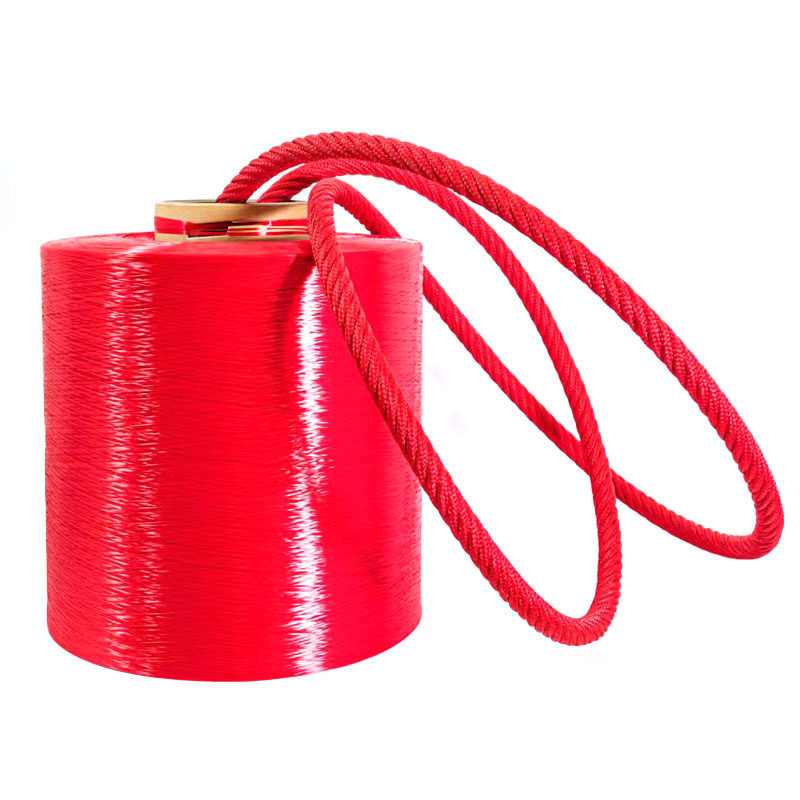
Yida's Nylon Industrial Yarn is defined by a set of rigorous specifications ensuring reliability. Key parameters include:
-
High Tenacity: Offering superior tensile strength for heavy-duty use.
-
Excellent Elastic Recovery: Provides resilience under repeated stress.
-
Outstanding Abrasion Resistance: Ensures long service life in frictional applications.
-
Good Resistance to Oils & Many Chemicals: Ideal for harsh industrial environments.
For a detailed breakdown, refer to the standard specifications for our flagship product line:
| Specification | Typical Value/Description | Importance |
|---|---|---|
| Fineness (Denier) | 840D, 1260D, 1680D | Determines yarn thickness and weight. |
| Tenacity (g/den) | 8.0 - 9.5 | Measures strength; higher values indicate greater load capacity. |
| Elongation at Break (%) | 16 - 22 | Indicates stretch before breaking; crucial for energy absorption. |
| Thermal Shrinkage (%) | < 7.0 | Shows stability under heat, vital for processes like tire curing. |
Nylon Industrial Yarn FAQ
What are the main differences between Nylon 6 and Nylon 66 Industrial Yarn?
Nylon 66, which Yida specializes in, has a higher melting point, better tensile strength, and superior resistance to abrasion and heat compared to Nylon 6. This makes it the preferred choice for the most demanding applications like tire cords and high-stress conveyor belts.
Can Nylon Industrial Yarn be treated for UV resistance?
Yes, absolutely. Yida offers specially treated Nylon Industrial Yarn with enhanced UV stabilization. This treatment significantly slows down degradation from sunlight exposure, making the yarn perfect for outdoor applications like safety nets, tarpaulins, and geotextiles.
How does the yarn's denier affect my final product?
Denier directly correlates to thickness and strength. A higher denier (e.g., 1680D) yields a thicker, stronger, and more durable fabric or cord, suitable for heavyweight lifting slings or ballistic materials. A lower denier offers more flexibility and is used in finer technical textiles.
Choosing the right Nylon Industrial Yarn is pivotal to the performance and safety of your industrial products. With Yida's commitment to precision engineering and consistent quality, you gain a reliable partner dedicated to meeting your most stringent specifications. Ready to integrate top-tier strength and durability into your manufacturing process?
Contact us today to discuss your project needs, request samples of our Nylon Industrial Yarn, or get a detailed technical consultation from our expert team. Let Yida be the foundation of your strength.