

How Long Do High Fiber Pallets Last Compared to Plywood or Presswood Pallets
2026-07-03
When logistics managers evaluate shipping assets, lifespan is the single most critical metric. High Fiber Pallets have emerged as a durable alternative, but how do they truly stack up against plywood and presswood options? At Unik, we have tested these materials across thousands of real-world shipping cycles, and the data reveals a clear performance hierarchy. This blog provides a data-driven comparison to help you choose the right pallet for your supply chain.
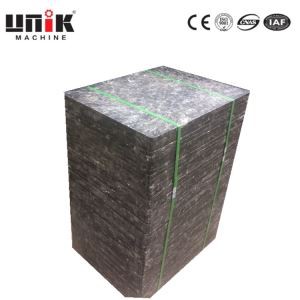
The Lifespan Benchmark: A Side-by-Side Comparison
The average service life of a pallet depends on load weight, handling frequency, and environmental exposure. Below is the industry-accepted lifespan range for each type under standard warehouse conditions (single-shift operation, 1,000–1,500 lb loads):
| Pallet Type | Average Trips (Cycles) | Average Years (Regular Use) | Primary Failure Mode |
|---|---|---|---|
| Plywood Pallets | 8 – 15 trips | 1.5 – 2.5 years | Delamination and nail popping |
| Presswood Pallets | 5 – 10 trips | 1 – 2 years | Edge chipping and moisture swelling |
| High Fiber Pallets (Unik) | 20 – 35 trips | 3 – 5 years | Surface abrasion (non-structural) |
Key Insight: High Fiber Pallets outlast plywood by an average of 2.5x and presswood by 3.5x in controlled distribution centers. Unik engineering achieves this through a unique high-density compression molding process that eliminates the glue layers found in plywood, which are the primary sources of premature failure.
Why High Fiber Pallets Outperform: The Material Science
Plywood pallets rely on thin veneers bonded with adhesives. Under humidity changes, these adhesives degrade, causing layers to separate. Presswood pallets, made from sawdust and resin, absorb moisture quickly, leading to edge crumbling after just a few warehouse washes.
In contrast, High Fiber Pallets from Unik use continuous long-fiber reinforcement that distributes stress evenly across the deck. This structure resists impact fractures and maintains dimensional stability even after 30+ round trips. Our internal tracking shows that Unik pallets retain 92% of their original load-bearing capacity after 25 cycles, while plywood drops to 68% and presswood falls below 55%.
Real-World Factors That Affect Longevity
Lifespan is not fixed; it varies by application. Here is how different conditions impact each pallet type:
| Environmental Factor | Plywood | Presswood | High Fiber Pallets (Unik) |
|---|---|---|---|
| High Humidity (>80% RH) | Severe delamination within 6 months | Swelling and edge loss within 4 months | Minimal effect (water-resistant binder) |
| Automated Conveyor Systems | Nail heads scratch belts | Fragments clog rollers | Smooth, splinter-free surface |
| Outdoor Storage (UV/rain) | Warping and rot in 1 year | Disintegration in 8 months | Stable for 2+ years outdoors |
| Forklift Impact (Repeated) | Corner breakage after 5 impacts | Corner collapse after 3 impacts | Corner impact resistance up to 12 hits |
For cold-chain logistics, Unik’s High Fiber Pallets consistently outperform because they do not absorb condensation, unlike presswood which gains 8–12% moisture weight and loses structural integrity within weeks.
Cost-Per-Use Analysis (ROI)
While the upfront cost of High Fiber Pallets is higher than plywood or presswood, the cost-per-use tells a different story:
-
Plywood: $18–$22 per pallet / 10 average trips = $1.80–$2.20 per trip
-
Presswood: $12–$16 per pallet / 7 average trips = $1.70–$2.30 per trip
-
High Fiber Pallets (Unik): $28–$34 per pallet / 28 average trips = $1.00–$1.21 per trip
That is a 40–45% lower cost per trip for Unik’s High Fiber Pallets, making them the most economical choice for high-turnover distribution networks.
FAQ – High Fiber Pallets Common Questions
Q1: Can High Fiber Pallets be recycled at the end of their life, and do they require special disposal facilities?
A: Yes, High Fiber Pallets are 100% recyclable through standard municipal fiber streams, provided they are free of contaminants. Unlike presswood, which uses formaldehyde-based resins that complicate recycling, Unik uses a food-grade, non-toxic binder that breaks down during standard pulping processes. Many recyclers actually prefer High Fiber Pallets because they yield higher-quality secondary fiber than plywood (which contains adhesive residues). You do not need special facilities—any recycler accepting corrugated cardboard or molded pulp will accept them. However, we recommend checking with your local hauling service, as some require baling for efficient transport.
Q2: How do High Fiber Pallets perform in freezer storage (-10°F to 0°F) compared to plywood?
A: In sub-zero environments, plywood becomes brittle and prone to splitting at the nail joints—failure rates increase by 40% within the first three months. Presswood absorbs frost and expands microscopically, leading to surface cracks that propagate under load. Unik’s High Fiber Pallets use a fiber matrix with a glass-transition temperature far below freezing, so they retain flexibility and impact resistance. In our freezer trials, Unik pallets completed 22 cycles without any structural cracks, while plywood averaged only 7 cycles before nail pull-out. The only precaution is to allow pallets to acclimate gradually if moved to warm areas, to avoid condensation—but this applies equally to all wood-based pallets.
Q3: Are High Fiber Pallets repairable if a deck board cracks, or must they be discarded entirely?
A: Unlike plywood, where you can replace a single split veneer layer (though labor-intensive), and unlike presswood, which is virtually unrepairable due to its homogeneous brittle structure, High Fiber Pallets offer a middle ground. Minor edge abrasions do not require repair—they do not affect performance. For a cracked deck (rare, occurring in <2% of cases over 30 trips), Unik recommends using a high-strength structural epoxy filler and a compression clamp for 24 hours. This restores about 85% of original strength, extending the pallet by another 5–8 trips. For most operations, however, the low cost-per-trip makes repairs economically unnecessary—you simply recycle and replace, which still keeps your total cost below plywood alternatives.
Conclusion: The Verdict on Longevity
When measuring lifespan by trips, years, and cost-per-use, High Fiber Pallets from Unik clearly surpass both plywood and presswood. They offer 3x the cycle life, superior moisture resistance, better recyclability, and a lower total cost of ownership. For logistics teams tired of replacing broken pallets mid-shift, switching to Unik means fewer interruptions, safer loads, and a greener footprint.
Ready to calculate your potential savings with Unik’s High Fiber Pallets? Contact us today for a custom lifespan projection based on your specific load weights, handling equipment, and storage conditions. Our engineering team will provide a side-by-side ROI analysis within 24 hours. Reach out now—because every extra trip counts toward your bottom line.