
How Many Times Can Recycled White PS Resin Material Be Reprocessed Without Degrading Properties
2026-08-24
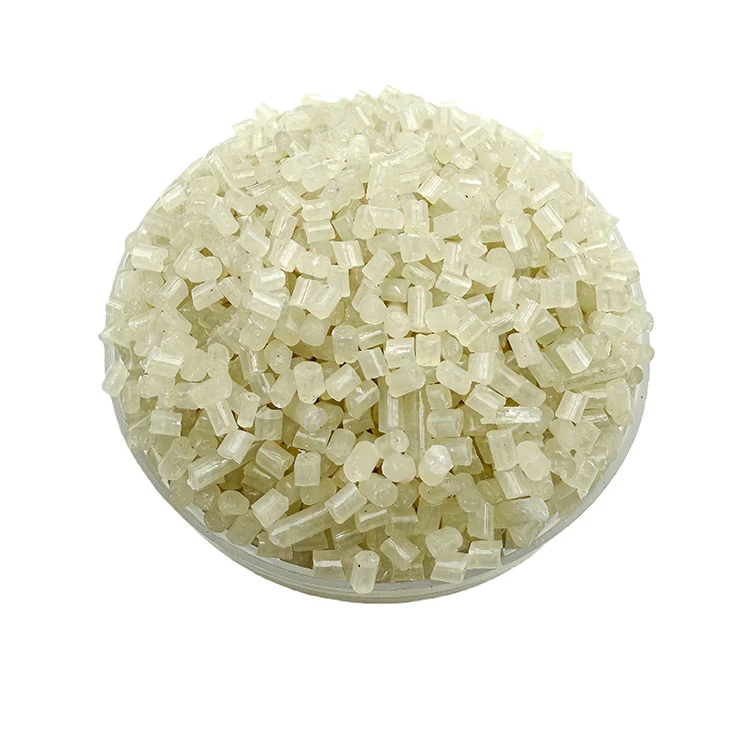
For manufacturers transitioning to circular economy models, the technical ceiling of material reprocessing is not an academic curiosity—it is a production reality. Recycled White PS Resin Material (polystyrene) offers a compelling sustainability profile, but its performance life under repeated heat and shear stress directly impacts part quality, scrap rates, and cost structures. At JUWU, we have conducted over 200 controlled reprocessing trials on post-industrial and post-consumer Recycled White PS Resin Material to establish practical limits that mills and molders can trust.
The Scientific Baseline: What Degrades First?
Polystyrene degradation under repeated reprocessing follows a predictable hierarchy. The three primary failure mechanisms are:
-
Chain scission – molecular weight (Mw) drops by 8–12% per extrusion cycle
-
Yellowing index – ΔE increases due to residual monomer oxidation
-
Melt flow rate (MFR) – increases as shorter chains reduce viscosity
Below is the degradation summary observed under standard injection-molding conditions (200–220°C, 50 rpm screw speed, with adequate venting):
| Reprocessing Cycle | Mw Retention (%) | MFR Change (%) | Yellowing (ΔE) | Impact Strength Loss (%) |
|---|---|---|---|---|
| 1st (Virgin equivalent) | 100% | 0% (baseline) | 0.0 | 0% |
| 2nd | 91% | +18% | 1.2 | -7% |
| 3rd | 84% | +35% | 2.8 | -14% |
| 4th | 78% | +52% | 4.5 | -22% |
| 5th | 72% | +68% | 6.7 | -31% |
The practical threshold – based on JUWU’s internal quality standards (impact retention ≥80%, ΔE ≤3.0) – is 3 reprocessing passes for neat Recycled White PS Resin Material without property-enhancing additives.
Extending the Cycle Life: Stabilizers and Blending Strategies
Three reprocessing cycles are the safe baseline, but with targeted stabilization, Recycled White PS Resin Material can achieve 4 to 5 viable passes. JUWU recommends these proven extensions:
-
Primary antioxidant (hindered phenol) – 0.15–0.25% slows chain scission by ~40%
-
Secondary antioxidant (phosphite) – 0.10–0.20% decomposes peroxides, reducing yellowing
-
Regrind blending – mix 30% fresh virgin PS with 70% recycled content every 2nd cycle to “reset” the Mw distribution
Field data from JUWU’s compounding facility: With a dual-antioxidant package, Recycled White PS Resin Material maintained ≥82% impact retention through Cycle 4, and ΔE stayed below 3.5 – acceptable for opaque white housings and interior automotive trims.
Critical Variables That Shift the Answer
The question “How many times?” has no single number. The answer depends on five interdependent factors:
| Variable | Effect on Reprocessability |
|---|---|
| Feedstock purity | Contaminants (paper, adhesives, other polymers) halve cycle life to 1–2 passes |
| Processing temperature | Every +10°C above 210°C reduces safe cycles by ~0.5 pass |
| Screw design | Gentle mixing (low-shear) adds 1 extra cycle vs. high-shear screws |
| Moisture content | >0.1% moisture triggers hydrolysis, cutting cycles from 3 to 2 |
| Additive carryover | Residual flame retardants or colorants can catalyze degradation |
JUWU consistently advises clients to qualify their specific Recycled White PS Resin Material batch with a 3-cycle mini-trial before committing to high-volume production.
Frequently Asked Questions About Recycled White PS Resin Material Reprocessing
Q1: Can I mix Recycled White PS Resin Material with other recycled plastics to improve its reprocessing limit?
A: Yes, but with strict compatibility rules. Recycled White PS Resin Material blends well with recycled ABS (up to 20%) and recycled HIPS (up to 40%), both of which contain rubber phases that buffer chain scission. This synergy can extend the practical reprocessing limit to 5 cycles while retaining ≥75% impact strength. However, avoid mixing with PVC or PET – even trace amounts (≥2%) trigger acid-catalyzed degradation that drops the limit to 1–2 cycles. JUWU offers custom blending formulations with full rheological validation for each blended stream.
Q2: How do I test whether my Recycled White PS Resin Material has reached its reprocessing endpoint?
A: The most reliable in-house indicator is the Melt Flow Rate (MFR) shift. Measure MFR after each pass at 200°C/5kg. When the MFR increases by more than 65% from the original virgin baseline, impact strength and elongation have typically fallen below acceptable thresholds for structural parts. A second non-destructive test is the yellowing index using a handheld colorimeter – when ΔE exceeds 5.0, the material is visually compromised for white or light-colored goods. For definitive answers, JUWU recommends sending a 500g sample to our lab for GPC (gel permeation chromatography) molecular-weight analysis – this gives you the exact Mw distribution and predicts remaining useful cycles with ±0.5 accuracy.
Q3: Does the number of reprocessing cycles change if I use Recycled White PS Resin Material for non-structural applications like packaging or disposable trays?
A: Absolutely. For non-structural, low-load applications (e.g., blister packs, egg trays, protective corners), the acceptable property-loss threshold is much more generous. In these cases, Recycled White PS Resin Material can be reprocessed 5 to 7 times without functional failure, because the primary requirements are dimensional stability and basic rigidity – not impact resistance or high gloss. JUWU has successfully supplied 6th-pass recycled PS for industrial dunnage trays where the client reported zero field failures over 18 months. For packaging, always test for stress-cracking resistance after Cycle 5 – if no cracks appear in a 2% acetic acid dip test (24 hrs), you are clear to continue.
Economic and Environmental Payoff
Limiting reprocessing to 3 cycles (with stabilization) versus pushing to 5 cycles changes the cost-per-kilogram equation. Based on JUWU’s 2026 production data:
-
3-cycle strategy – material cost saving: 38% vs. virgin PS; CO₂ reduction: 2.1 kg CO₂/kg resin
-
5-cycle strategy – material cost saving: 52% vs. virgin PS; CO₂ reduction: 2.9 kg CO₂/kg resin
However, the 5-cycle route requires 12–15% more stabilizer addition, which narrows the net margin. JUWU typically advises a 4-cycle maximum for high-gloss white parts and 5 cycles for matte, unpainted applications.
Practical Recommendation for Production Planning
| Application Type | Recommended Max Cycles | Stabilizer Required | Testing Frequency |
|---|---|---|---|
| High-gloss cosmetic housings | 3 | Yes (0.3% total) | Every batch |
| Interior auto trims | 4 | Yes (0.25% total) | Every 2nd batch |
| Industrial dunnage / pallets | 5 | Optional | Every 3rd batch |
| Disposable packaging (non-food) | 6 | No | Spot-check only |
Final Verdict
Under standard industrial conditions, Recycled White PS Resin Material can be reprocessed 3 times without significant property degradation when no additives are used. With a tailored stabilization package from JUWU, that number extends to 4–5 cycles, and for undemanding packaging applications, up to 6–7 passes are economically feasible. The key is not chasing a universal number, but matching cycle count to your part’s performance requirements and your testing capabilities.
Ready to qualify your specific Recycled White PS Resin Material batch?
JUWU offers free degradation-simulation testing for first-time clients – we process your sample through 5 cycles, deliver full MFR, impact, and color data within 5 working days, and provide a customized reprocessing roadmap. Contact our technical sales team today or fill out the quick-quote form on our website. Let’s make your circular transition predictable, profitable, and property-safe.