

How Sports Rope Nets Improve Safety and Performance in Sports Facilities
2026-03-10
Sports facilities, training centers, playgrounds, and stadiums require reliable protection systems to ensure safety and maintain smooth sports activities. One of the most practical solutions is the installation of Sports Rope Nets. These nets are widely used to prevent balls from leaving play areas, protect spectators, and create safe training environments.
This article explains how sports rope nets work, why they are essential for modern sports venues, and how to choose the right type. The guide also explores their materials, applications, and installation considerations to help buyers and facility managers make informed decisions.
Article Summary
- Understand what sports rope nets are and how they function.
- Learn about the materials and construction used in modern sports nets.
- Discover common applications across different sports environments.
- Explore key features to consider when selecting sports rope nets.
- Review frequently asked questions about installation and maintenance.
Table of Contents
- 1. What Are Sports Rope Nets
- 2. How Sports Rope Nets Work
- 3. Key Materials Used in Sports Rope Nets
- 4. Main Applications of Sports Rope Nets
- 5. Important Specifications and Parameters
- 6. How to Choose the Right Sports Rope Net
- 7. Installation and Maintenance Tips
- 8. Frequently Asked Questions
- 9. Conclusion
1. What Are Sports Rope Nets
Sports rope nets are durable mesh structures made from high-strength ropes or fibers designed to control balls, improve safety, and define boundaries within sports environments. They are commonly used in stadiums, playgrounds, training facilities, and recreational parks.
These nets are usually constructed using synthetic materials such as nylon, polyethylene, or polypropylene, which provide excellent durability, weather resistance, and flexibility for both indoor and outdoor use. Different sports require specific mesh sizes and rope thickness to effectively contain balls or provide climbing support. :contentReference[oaicite:0]{index=0}
Unlike ordinary nets, sports rope nets are engineered to withstand repeated impacts, environmental exposure, and long-term tension while maintaining structural integrity.
2. How Sports Rope Nets Work
The primary function of sports rope nets is to absorb and distribute the impact force generated by fast-moving balls or physical interaction during sports activities.
The working principle involves three key elements:
- Mesh Structure – The interconnected rope grid forms a flexible barrier that captures or redirects balls.
- Tension Distribution – Impact forces are spread across multiple ropes rather than a single point.
- Energy Absorption – Elastic rope materials stretch slightly, reducing rebound force and preventing damage.
Modern rope nets are designed with optimal mesh spacing and high tensile strength to maintain performance even after repeated impacts from sports balls or players. :contentReference[oaicite:1]{index=1}
3. Key Materials Used in Sports Rope Nets
The quality and durability of sports rope nets depend largely on the materials used in their construction. Manufacturers typically select materials based on weather exposure, strength requirements, and budget considerations.
| Material | Main Characteristics | Typical Application |
|---|---|---|
| Nylon | High strength, abrasion resistant | Professional sports facilities |
| Polyethylene (PE) | Excellent UV resistance and outdoor durability | Outdoor courts and stadiums |
| Polypropylene (PP) | Lightweight and cost-effective | Indoor sports areas |
| Polyester | Strong tension resistance and long lifespan | Climbing nets and playground structures |
Many modern sports nets also include UV stabilizers and anti-aging additives to extend service life when exposed to sunlight and outdoor environments. :contentReference[oaicite:2]{index=2}
4. Main Applications of Sports Rope Nets
Sports rope nets serve multiple functions in both professional and recreational sports environments.
- Ball Stop Nets – Prevent balls from leaving the playing area in sports like football, tennis, baseball, and golf.
- Protective Nets – Shield spectators, lighting equipment, and walls from ball impacts.
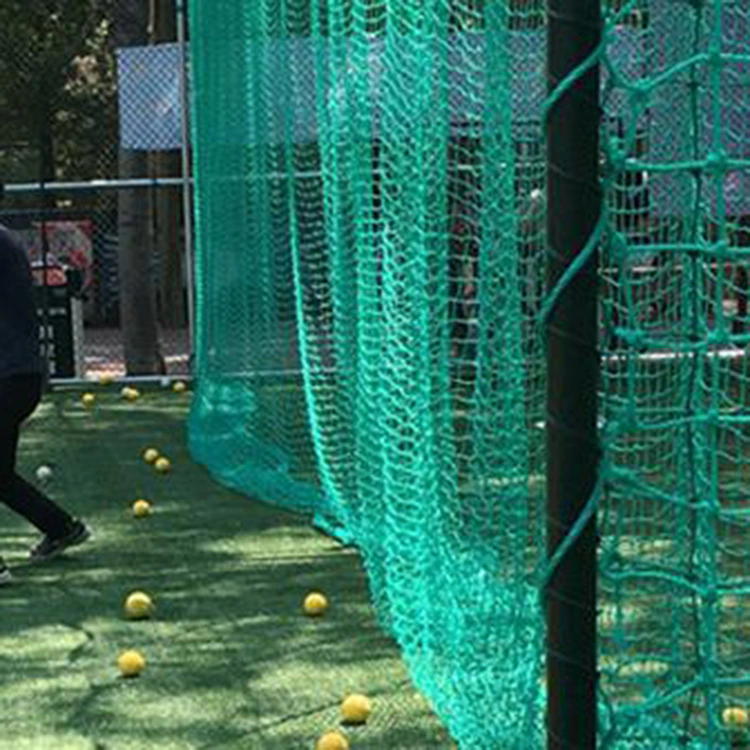
- Training Nets – Used for practice areas such as batting cages or golf driving ranges.
- Playground Climbing Nets – Provide safe physical activity structures for children.
- Stadium Safety Nets – Installed behind goals or around courts to protect audiences.
Sports rope nets are widely used in sports complexes, school playgrounds, gyms, golf courses, and recreational parks because of their versatility and durability. :contentReference[oaicite:3]{index=3}
5. Important Specifications and Parameters
When purchasing sports rope nets, buyers typically evaluate several technical parameters.
| Parameter | Description |
|---|---|
| Mesh Size | Distance between ropes; varies depending on ball size. |
| Rope Diameter | Thickness of rope affecting strength and durability. |
| Material Type | Nylon, PE, PP, or polyester. |
| UV Resistance | Ability to withstand sunlight exposure. |
| Breaking Strength | Maximum load the net can withstand before failure. |
| Net Dimensions | Length, width, and custom shapes. |
Typical sports nets can feature mesh sizes ranging from 20 mm for small balls to 100 mm for larger sports balls such as handballs or footballs. :contentReference[oaicite:4]{index=4}
6. How to Choose the Right Sports Rope Net
Selecting the correct sports rope net depends on the intended application and environmental conditions.
Consider the following factors:
- Sport Type – Different sports require different mesh sizes and strengths.
- Indoor or Outdoor Use – Outdoor nets must be UV and weather resistant.
- Impact Resistance – High-speed sports require thicker ropes.
- Installation Area – Height, width, and mounting structure.
- Durability Requirements – Professional facilities require long-lasting materials.
Custom manufacturing is often recommended for large sports venues or unique facility layouts.
7. Installation and Maintenance Tips
Proper installation is essential to maximize the performance and lifespan of sports rope nets.
- Ensure strong anchor points such as steel poles or reinforced frames.
- Maintain proper tension across the entire net surface.
- Inspect ropes regularly for wear or damage.
- Clean debris and dirt to maintain flexibility.
- Replace damaged sections immediately to maintain safety.
Routine maintenance helps extend the service life of sports nets and ensures consistent safety performance.
8. Frequently Asked Questions
Q1: What sports commonly use rope nets?
Sports rope nets are commonly used in football fields, tennis courts, golf ranges, baseball fields, volleyball courts, and playground climbing structures.
Q2: How long do sports rope nets typically last?
With proper materials and maintenance, high-quality sports rope nets can last between 5 and 10 years depending on environmental conditions and usage frequency.
Q3: Can sports rope nets be customized?
Yes. Manufacturers often provide custom sizes, mesh patterns, colors, and rope thickness to match the requirements of specific sports facilities.
Q4: Are sports rope nets safe for children?
Yes. When designed with proper mesh spacing and strong rope materials, they provide safe climbing structures and protective barriers for playground environments.
9. Conclusion
Sports rope nets play a critical role in modern sports facilities by improving safety, maintaining game flow, and protecting both players and spectators. Their durable construction, flexible mesh structure, and customizable specifications make them suitable for a wide range of sports environments.
Whether installed in stadiums, training centers, playgrounds, or sports complexes, high-quality rope nets provide reliable protection and long-term performance.
As a professional manufacturer, Yisen provides durable and customizable sports rope nets designed for stadiums, playgrounds, and sports facilities worldwide. If you are planning a new sports venue or upgrading existing equipment, our team can help you select the most suitable solution.
For product details and professional support, please visit our product page or contact us to receive expert guidance and customized solutions for your project.