
How to Choose the Right Laserable Plastic Sheet for Precision Engraving?
2026-03-20
Article Summary
Laserable plastic sheets are widely used in signage, industrial labeling, control panels, awards, and decorative applications. However, selecting the correct material often presents challenges such as poor engraving contrast, melting edges, or inconsistent durability. This article provides a structured and practical guide to understanding material types, key parameters, selection criteria, and common mistakes. It also includes a detailed comparison table and answers to frequently asked questions to help buyers make informed decisions.
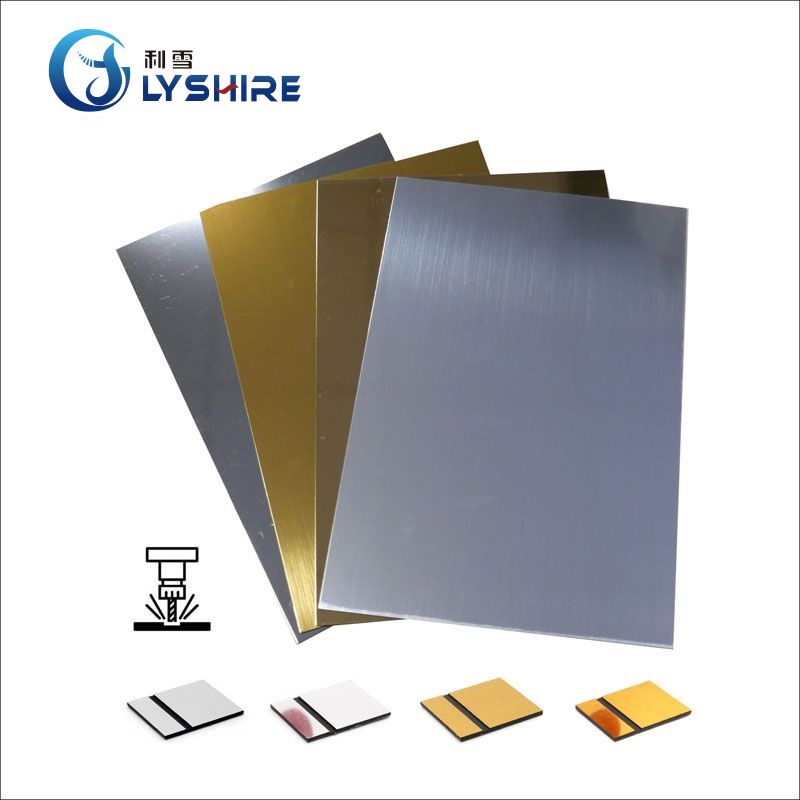
Table of Contents
1. What Is a Laserable Plastic Sheet?
2. Why Material Selection Matters
3. Key Parameters to Evaluate
4. Types of Laserable Plastic Sheets
5. How to Choose the Right Sheet
6. Common Problems and Solutions
7. Practical Applications
8. FAQ
9. Conclusion
1. What Is a Laserable Plastic Sheet?
A laserable plastic sheet is a specially engineered material designed to react predictably under laser engraving or cutting. Unlike standard plastics, these sheets produce high-contrast markings without excessive melting, burning, or deformation.
- Consistent engraving contrast
- Minimal edge deformation
- Wide compatibility with CO2 and fiber lasers
- Available in multi-layer or single-layer constructions
Manufacturers such as Lyshire develop these sheets to meet industrial and commercial engraving requirements, ensuring stability and precision during processing.
2. Why Material Selection Matters
Choosing the wrong laserable plastic sheet can lead to several operational issues:
- Low contrast engraving results
- Surface charring or discoloration
- Warping due to heat sensitivity
- Reduced product lifespan in outdoor conditions
For businesses relying on high-volume engraving, incorrect material selection increases waste rates and production costs. Therefore, understanding the material characteristics is essential for achieving consistent output quality.
3. Key Parameters to Evaluate
| Parameter | Description | Importance |
| Material Type | Acrylic, ABS, polycarbonate, or laminate | Determines engraving quality and durability |
| Thickness | Typically 0.5mm to 3mm | Affects cutting depth and engraving clarity |
| Layer Structure | Single-layer or multi-layer | Controls color contrast after engraving |
| Heat Resistance | Ability to withstand laser heat | Prevents warping and melting |
| Surface Finish | Matte, glossy, or textured | Impacts visual appearance and readability |
| UV Stability | Resistance to sunlight exposure | Important for outdoor applications |
4. Types of Laserable Plastic Sheets
1. Acrylic Sheets
- High clarity and smooth engraving
- Suitable for signage and display panels
- May crack under high stress
2. ABS Laserable Sheets
- Excellent impact resistance
- Commonly used in industrial labels
- Provides consistent engraving contrast
3. Laminated Plastic Sheets
- Multi-layer construction for dual-color engraving
- Ideal for nameplates and badges
- Widely used in control panels
4. Polycarbonate Sheets
- High durability and heat resistance
- Used in harsh environments
- Requires precise laser settings
5. How to Choose the Right Sheet
Selecting the right laserable plastic sheet involves matching material properties with application requirements. The following structured approach can simplify the decision-making process:
-
Define the Application
Indoor signage, industrial labeling, or decorative engraving each requires different material properties. -
Check Laser Compatibility
Ensure the sheet is compatible with your laser machine type (CO2 or fiber). -
Evaluate Environmental Conditions
Consider exposure to sunlight, moisture, or chemicals. -
Determine Required Contrast
Multi-layer sheets provide higher visual contrast for text and graphics. -
Assess Production Volume
High-volume production requires materials with consistent engraving performance.
6. Common Problems and Solutions
-
Problem: Burn marks on edges
Solution: Reduce laser power and increase speed. -
Problem: Poor engraving contrast
Solution: Switch to multi-layer laminated sheets. -
Problem: Material warping
Solution: Use heat-resistant plastics such as polycarbonate. -
Problem: Inconsistent engraving depth
Solution: Calibrate laser focus and ensure uniform sheet thickness.
7. Practical Applications
Laserable plastic sheets are used across multiple industries due to their versatility and precision:
- Industrial equipment labeling
- Electrical control panels
- Custom signage and branding
- Awards and decorative items
- Safety and compliance tags
Their ability to deliver permanent, high-contrast markings makes them essential for both functional and aesthetic applications.
8. FAQ
Q1: What thickness is best for laser engraving?
A: Thickness between 1.5mm and 3mm is generally optimal for balancing durability and engraving clarity.
Q2: Can all plastics be laser engraved?
A: No. Only specially formulated laserable plastics produce clean and safe engraving results. Standard plastics may melt or release harmful fumes.
Q3: How can higher contrast engraving be achieved?
A: Use dual-layer laminated sheets where the top layer is removed during engraving to reveal a contrasting core.
Q4: Are laserable plastic sheets suitable for outdoor use?
A: Yes, but only if they have UV-resistant properties. Always verify outdoor durability specifications.
9. Conclusion
Choosing the correct laserable plastic sheet is essential for achieving precise, durable, and visually appealing engraving results. By evaluating material type, thickness, structure, and environmental resistance, businesses can significantly improve production efficiency and product quality.
Lyshire offers a comprehensive range of high-performance laserable plastic sheets designed to meet diverse industrial and commercial needs. With consistent quality and advanced material engineering, these solutions support reliable engraving outcomes across various applications.
For tailored recommendations and product inquiries, contact us today to explore the most suitable laserable plastic sheet solutions for your specific requirements.