

Is an Aluminum Facade Wall Panel the Smartest Choice for Modern Building Envelopes?
2025-12-31
When I first started evaluating exterior cladding solutions for commercial and mixed-use projects, I quickly realized how often performance, aesthetics, and long-term maintenance were in conflict. Over time, working closely with Nante helped me see how an Aluminum Facade Wall Panel can balance these competing demands without forcing compromises. In this article, I want to share practical insights based on real project needs rather than marketing buzz, focusing on why Aluminum Facade Wall Panel systems continue to gain traction across global construction markets.
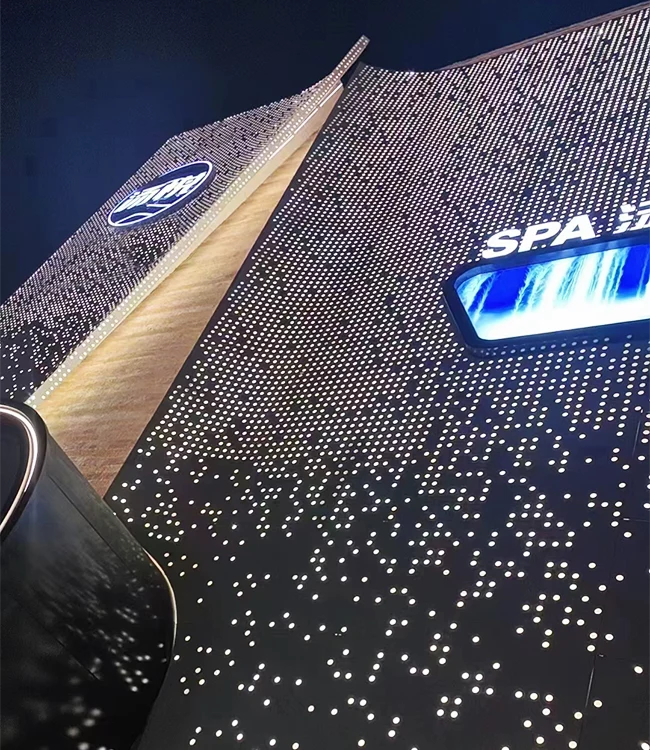
Why do architects and developers increasingly ask for an Aluminum Facade Wall Panel?
From my perspective, the appeal starts with predictability. Developers want materials that behave consistently across climates, while architects want freedom of form. An Aluminum Facade Wall Panel answers both. Aluminum remains dimensionally stable under temperature changes, resists corrosion, and allows precise fabrication. That combination reduces site-level surprises, which is often where budgets and schedules derail.
- Lightweight structure that lowers load on the main frame
- High resistance to moisture, UV exposure, and urban pollution
- Flexible surface treatments that support modern and classic designs
- Efficient installation compared with heavier facade materials
How does an Aluminum Facade Wall Panel solve long-term maintenance concerns?
One of the most common pain points clients raise is lifecycle cost. Stone and concrete may look solid, but repairs are expensive and time-consuming. With an Aluminum Facade Wall Panel, routine maintenance is simplified. Surface coatings are engineered to resist fading and peeling, and individual panels can be replaced without dismantling large facade sections. This modularity is especially valuable for high-rise and commercial buildings where downtime directly impacts revenue.
| Performance Aspect | Traditional Materials | Aluminum Facade Wall Panel |
|---|---|---|
| Weight | Heavy, structural reinforcement needed | Lightweight, reduced structural load |
| Maintenance | Frequent repairs and surface treatment | Low maintenance, easy panel replacement |
| Design Flexibility | Limited shaping and finishes | High customization in color and form |
| Weather Resistance | Prone to cracking or staining | Stable under diverse climate conditions |
Can an Aluminum Facade Wall Panel support energy efficiency goals?
Energy performance is no longer optional. I often see facade systems evaluated alongside insulation and ventilation strategies. An Aluminum Facade Wall Panel integrates well with ventilated facade designs, helping regulate heat transfer and moisture control. When combined with proper insulation layers, it contributes to lower cooling and heating demands, which aligns with stricter building codes and sustainability targets.
What stands out in practice is how easily aluminum panels adapt to different wall assemblies. Whether the project emphasizes thermal performance or acoustic control, the panel system can be configured accordingly without redesigning the entire facade concept.
What makes Aluminum Facade Wall Panel systems suitable for global projects?
Working across regions taught me that materials must perform consistently under different standards and climates. An Aluminum Facade Wall Panel meets this requirement well. It is compatible with international fabrication standards, transport-friendly due to its low weight, and adaptable to local installation practices. This reduces coordination friction for contractors and project managers working with multinational teams.
- Consistent quality across large production batches
- Ease of customization for regional architectural styles
- Shorter installation cycles on site
- Reliable supply chain for large-scale developments
Is choosing an Aluminum Facade Wall Panel a future-proof decision?
From what I have observed, facade systems must evolve with urban environments. Buildings are expected to last decades while remaining visually relevant and operationally efficient. An Aluminum Facade Wall Panel offers that adaptability. Panels can be refinished, replaced, or upgraded without structural disruption, which protects long-term asset value.
For developers, architects, and contractors looking for a balance between design freedom, durability, and cost control, this solution continues to prove its worth across residential, commercial, and public projects.
If you are evaluating facade options for your next project and want to explore how a well-engineered Aluminum Facade Wall Panel system can meet your specific requirements, I encourage you to contact us. Share your project details, request technical guidance, or ask for samples. Reach out today and let us help you move forward with confidence.