
What Are the Advantages of Polyester-Coated Aluminum Alloy Coils for Interior Applications?
2026-09-03
Interior surfaces are subjected to a different set of demands than exterior cladding. They must resist occasional impacts, clean easily, maintain color consistency under artificial lighting, and meet fire safety requirements. They do not need to withstand UV radiation or extreme temperature cycles. This distinction makes polyester-coated aluminum alloy coils a particularly suitable option for interior applications, but the suitability depends on correct specification of substrate thickness, coating weight, and surface preparation.
1. What Specifications Define a Polyester-Coated Aluminum Coil for Interior Use?
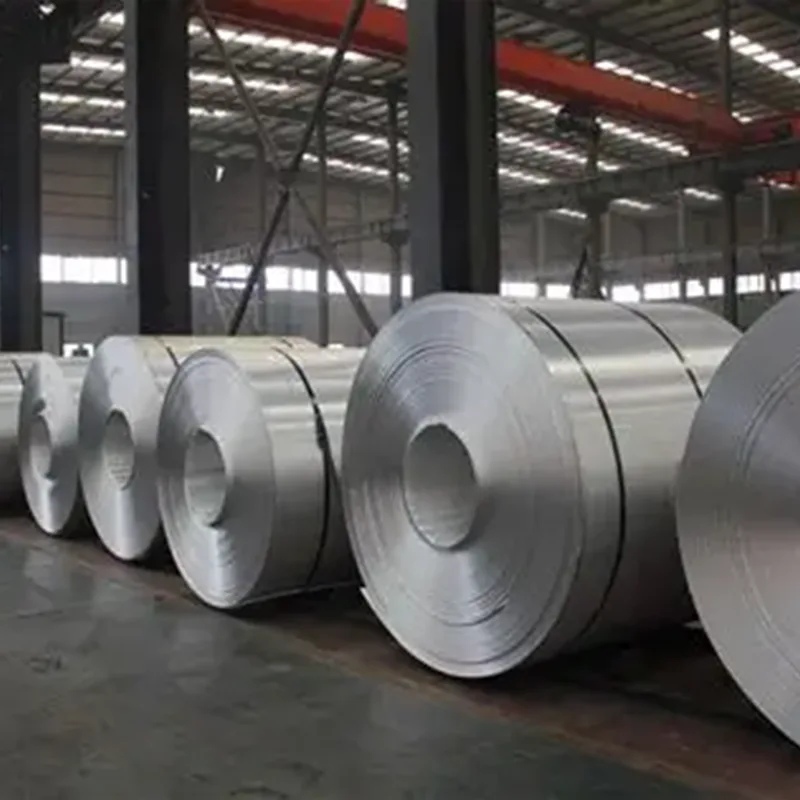
The performance of an interior Aluminum Alloy Coil is determined by three factors: the alloy composition of the substrate, the thickness of the coating system, and the mechanical properties of the metal. For interior applications, 3000 series alloys (typically 3003 or 3005) are common. These alloys offer sufficient strength for ceiling panels, wall cladding, and column covers without the higher cost of 5000 or 6000 series alloys. The polyester coating is a thermosetting resin system that provides a hard, cleanable surface. In our factory, we apply a polyester coating with a total dry film thickness of 25 to 35 microns for interior applications. This is sufficient for normal wear and tear while keeping the coating flexible enough for bending and forming during installation.
Typical specification for interior-grade material:
• Alloy: 3005 (or equivalent) with temper H14 or H24
• Substrate thickness: 0.5 mm to 1.2 mm (ceiling panels often use 0.6 to 0.8 mm)
• Coating system: Polyester primer (5-8 µm) + polyester topcoat (20-25 µm)
• Total coating thickness: 25-33 µm
• Hardness: ≥ 2H pencil hardness per ASTM D3363
At Shanghai Perfect Industry Co.,Ltd., we manufacture Aluminum Alloy Coils with a polyester coating that is tested for adhesion (cross hatch test per ASTM D3359), flexibility (T-bend test), and impact resistance. These tests confirm that the coating will not crack during roll forming or during normal service.
The table below shows the typical test results for our interior-grade material.
| Test parameter | Test method | Our typical result | Acceptance criterion (interior) |
| Coating adhesion | Cross hatch (ASTM D3359) | 5B (no flaking) | ≥ 4B |
| Pencil hardness | ASTM D3363 | 3H | ≥ 2H |
| T-bend flexibility | EN 13523-7 | 2T (no cracking) | ≤ 3T |
| Impact resistance | ASTM D2794 | 2.5 J (no crack) | ≥ 2.0 J |
| MEK rub resistance | EN 13523-11 | > 100 rubs | > 80 rubs |
2. Why Choose Polyester Coating Over Other Coating Types for Interior Work?
The coating type selection is a trade-off between cost, performance, and aesthetic requirements. Polyester coatings are the most cost-effective option for interior applications. They are less durable than PVDF (polyvinylidene fluoride) coatings, but PVDF is over-specified for interior use because UV resistance is not required. Polyester coatings are also more flexible than powder coatings, which is important for profiles that require tight bending.
The table below compares the most common coating systems for interior Aluminum Alloy Coils.
| Coating type | Typical thickness | Hardness (pencil) | Flexibility (T-bend) | Relative cost | Best suited for |
| Polyester (our standard) | 25-35 µm | 2H – 3H | 2T – 3T | 1.0x | Ceilings, wall panels, column covers |
| PVDF (70% fluorocarbon) | 25-30 µm | H – 2H | 3T – 4T | 2.5x | Exterior cladding, high UV exposure |
| Polyester powder coating | 60-100 µm | 2H – 4H | 5T – 6T | 1.8x | Furniture, fixtures, thick profiles |
| Epoxy/polyester hybrid | 40-60 µm | 3H – 4H | 4T – 5T | 1.5x | High abrasion areas, kitchen |
Polyester coatings also offer good color retention under interior lighting conditions. Fluorescent lights and LED lights do not degrade polyester coatings significantly, unlike the UV radiation from sunlight. Our factory uses a color spectrophotometer to match every batch of Aluminum Alloy Coils to the same color standard, with a ΔE of less than 0.3.
3. How Does Polyester-Coated Aluminum Compare to Other Interior Materials?
When specifying interior surfaces, the alternatives to coated aluminum include painted steel, stainless steel, solid wood, and high-pressure laminate (HPL). Each material has different characteristics in terms of weight, formability, cost, and maintenance. The comparison below is based on a typical interior ceiling or wall application with a moderate traffic load. The Aluminum Alloy Coil with a polyester coating offers a balance of light weight (reducing structural load), good formability (allowing for complex ceiling shapes), and cleanability (the smooth surface does not harbor dust).
Practical installation note: The lower weight of Aluminum Alloy Coils compared to steel reduces the load on ceiling suspension systems. For a typical 1.2 mm thick material, aluminum weighs about 3.2 kg/m² compared to 9.4 kg/m² for steel of the same thickness. This can reduce the cost of the suspension system and the structural support required.
In our factory, we produce Aluminum Alloy Coils that are compatible with common roll forming and brake forming equipment. The polyester coating has a coefficient of friction of 0.25 to 0.35, which allows the material to slide through forming rolls without marring the surface. The coating also acts as a protective layer during installation, preventing scratches from tools or handling. Shanghai Perfect Industry Co.,Ltd. supplies Aluminum Alloy Coils in widths from 600 mm to 1500 mm, which covers most interior panel fabrication requirements.
4. What Fire Safety and Indoor Air Quality Standards Apply?
Interior building materials must meet fire safety regulations. Polyester-coated aluminum is inherently fire-resistant because the aluminum substrate does not burn and the polyester coating has a high ignition temperature (above 350°C). When tested to ASTM E84 (Surface Burning Characteristics), the material typically achieves a flame spread index of less than 25 and a smoke development index of less than 50, which qualifies it for Class A interior finish in most building codes. The coating does not produce significant toxic smoke when heated, which is a concern with some plastic-based materials.
In addition to fire safety, indoor air quality is a consideration. Polyester coatings are fully cured during the factory application process. They do not off-gas volatile organic compounds (VOCs) under normal service conditions. In our factory, we use polyester resins that are formulated without heavy metal catalysts (such as lead or cadmium). The coating system complies with the RoHS directive and the requirements of LEED v4. We also offer an HPD (Health Product Declaration) for our Aluminum Alloy Coils, which can be used to support green building certification. Shanghai Perfect Industry Co.,Ltd. maintains a library of product declarations that are updated whenever there is a formulation change.
Frequently Asked Questions About Polyester-Coated Aluminum Coils
Summary for Specification Writers and Project Teams
Polyester-coated Aluminum Alloy Coils are a proven material for interior applications where weight, cleanability, and cost are the primary drivers. The material offers good formability, excellent fire safety characteristics, and a range of color and finish options. The key to a successful project is specifying the correct substrate thickness, coating weight, and edge protection for the specific application. A well-specified material will perform reliably over the life of the building.
Shanghai Perfect Industry Co.,Ltd. supplies Aluminum Alloy Coils with polyester coating to construction projects worldwide. We provide full test documentation, including coating thickness measurements, adhesion test results, and material certificates. Our technical team can assist with specification development and fabrication advice.