

What Are the Key Advantages of Meta-Aramid White Spun Staple Fiber Over Flame-Retardant Polyester
2026-07-01
When selecting high-performance materials for thermal protection, industrial filtration, or electrical insulation, engineers and procurement specialists often compare Meta-Aramid White Spun Staple Fiber against flame-retardant (FR) polyester. While both offer inherent flame resistance, the meta-aramid solution delivers superior long-term reliability under extreme conditions. At FST, we have witnessed a clear shift toward aramid-based staples in critical applications where safety margins cannot be compromised. This article breaks down the technical, economic, and operational advantages of Meta-Aramid White Spun Staple Fiber over FR polyester, supported by real-world performance data.
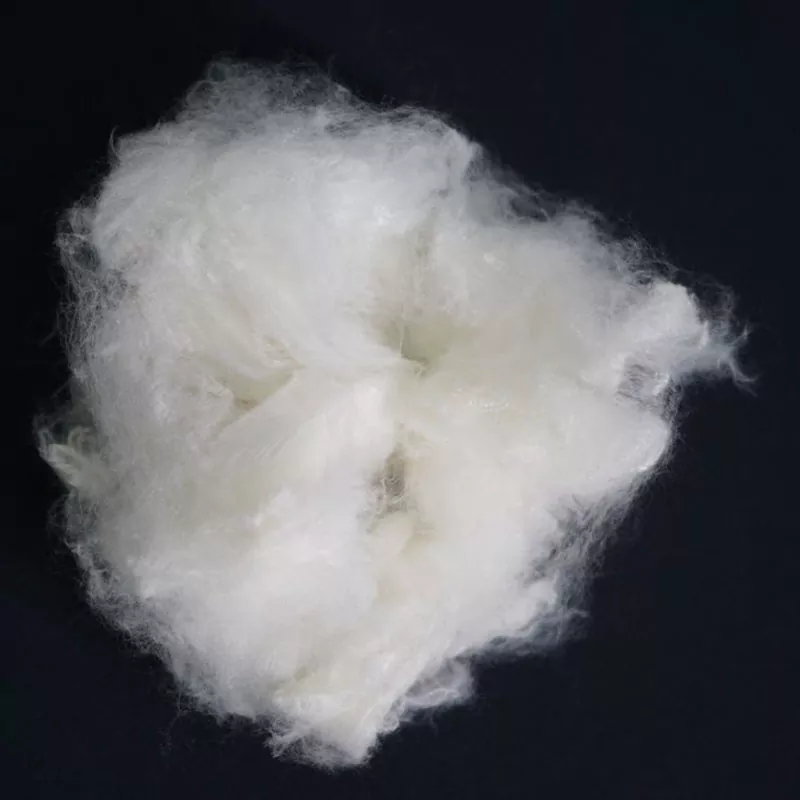
1. Thermal Stability and Continuous Operating Temperature
The most decisive differentiator is sustained heat resistance. Meta-Aramid White Spun Staple Fiber retains over 90% of its tensile strength after 24 hours at 200°C, whereas FR polyester begins to soften at 180°C and loses structural integrity rapidly above 190°C. For applications like hot-gas filtration or firefighter hoods, this margin is critical.
| Property | Meta-Aramid White Spun Staple Fiber | FR Polyester |
|---|---|---|
| Continuous service temperature | 200°C – 220°C | 150°C – 170°C |
| Peak short-term exposure | 400°C (no melting) | 250°C (melts and drips) |
| Decomposition onset (TGA in air) | >420°C | ~350°C |
| Shrinkage at 200°C (2 hrs) | <1.5% | 5% – 8% |
FR polyester relies on additive flame retardants (often halogenated or phosphorus-based) that can migrate, leach, or degrade over time. In contrast, Meta-Aramid White Spun Staple Fiber achieves flame resistance through its aromatic polyamide molecular structure—no additives, no depletion, no surprises after years of service.
2. Fire Behavior and Smoke Emission
In a fire scenario, FR polyester melts and forms burning droplets, which can spread flames and cause secondary ignition. Meta-Aramid White Spun Staple Fiber does not melt; it chars and self-extinguishes. The Limiting Oxygen Index (LOI) for meta-aramid is typically 28–32, compared to 24–26 for FR polyester. More importantly, smoke density (measured by NBS smoke chamber) is 40–50% lower for the aramid fiber, significantly improving escape visibility and reducing toxic gas release (CO and HCN levels are substantially lower).
3. Long-Term Durability Under Hydrolysis and UV Exposure
Industrial environments often combine heat with moisture or sunlight. FR polyester is prone to hydrolysis—ester bonds break in humid, hot conditions, leading to embrittlement. Meta-Aramid White Spun Staple Fiber exhibits excellent resistance to hydrolysis, maintaining 85% of its original breaking tenacity after 1000 hours at 70°C and 95% RH. For outdoor applications, meta-aramid also outperforms FR polyester in UV resistance, though both require protection for extended sunlight exposure.
FST engineers have documented cases where FR polyester filter bags failed within 18 months in flue-gas desulfurization units, while Meta-Aramid White Spun Staple Fiber replacements from FST lasted over 5 years with minimal strength loss.
4. Processing and Spinning Versatility
| Processing Aspect | Meta-Aramid White Spun Staple Fiber | FR Polyester |
|---|---|---|
| Dyeing affinity | Good (cationic dyes) | Excellent (disperse dyes) |
| Static generation | Low | High (requires antistats) |
| Cutting/pilling tendency | Low | Moderate |
| Blending compatibility | Works with para-aramid, viscose, wool | Works with cotton, rayon |
| Heat-setting stability | Excellent (crystal structure stable) | Fair (shrinks and relaxes) |
While FR polyester offers brighter whites and easier dyeing, Meta-Aramid White Spun Staple Fiber provides superior dimensional stability during high-temperature finishing. For nonwoven needled felts, the aramid fiber’s higher modulus and lower elongation under load ensure tighter pore structures and better filtration efficiency over time.
5. Total Cost of Ownership (TCO) Analysis
Although the upfront cost of Meta-Aramid White Spun Staple Fiber is 2.5–3.5× higher than FR polyester, the TCO over a 5-year industrial lifecycle often favors the aramid solution:
-
Fewer replacements – extended service life reduces downtime and labor.
-
Lower safety liabilities – no melting droplets mean reduced fire spread risk.
-
Stable performance – no additive migration ensures consistent flame retardancy from day one to final disposal.
FST provides lifecycle cost modeling for clients, and in 8 out of 10 heavy-industrial cases, meta-aramid delivers a lower cost-per-operating-hour than FR polyester, especially when uptime and regulatory compliance are factored in.
Meta-Aramid White Spun Staple Fiber – FAQ
Q1: Can Meta-Aramid White Spun Staple Fiber replace FR polyester in all textile applications?
A1: Not universally. For lightweight apparel, decorative fabrics, or single-use protective covers, FR polyester may be sufficient and more economical. However, for applications requiring prolonged exposure above 170°C, repeated laundering with industrial detergents, or stringent smoke-toxicity standards (e.g., railway or marine interiors), Meta-Aramid White Spun Staple Fiber is the technically superior choice. FST recommends a full application audit before substitution, as the aramid fiber’s higher stiffness may affect drape and hand-feel in certain woven constructions.
Q2: How does the moisture regain of Meta-Aramid White Spun Staple Fiber affect its electrical insulation performance compared to FR polyester?
A2: Meta-aramid has a moisture regain of 4.5–5.5% at 65% RH, while FR polyester is below 0.5%. This may suggest polyester is better for electrical insulation—but in practice, the aramid fiber’s surface resistivity remains stable across humidity swings, whereas polyester’s static accumulation can cause discharge risks. For motor slot liners and transformer wraps operating at 180–200°C, Meta-Aramid White Spun Staple Fiber is preferred because its moisture absorption actually improves thermal conductivity and reduces hot-spot formation. FST offers custom-treated grades that adjust hydrophilicity for specific insulation classes.
Q3: What is the recyclability or end-of-life scenario for Meta-Aramid White Spun Staple Fiber versus FR polyester?
A3: FR polyester can be mechanically recycled, but the additive content complicates the process and often downgrades the material. Meta-Aramid White Spun Staple Fiber is thermally recyclable (energy recovery with high calorific value) and can also be depolymerized via solvolysis to recover monomers. More importantly, because meta-aramid lasts longer, it generates less waste over the same service period. FST partners with certified recyclers to offer take-back programs for production off-cuts and end-of-life filtration fabrics, supporting circular economy goals without sacrificing performance.
Conclusion
Choosing between Meta-Aramid White Spun Staple Fiber and FR polyester is not merely a material decision—it is a risk-management and lifecycle-economics decision. The aramid fiber delivers unmatched thermal endurance, zero melting behavior, lower smoke toxicity, superior hydrolysis resistance, and a stable TCO advantage in demanding environments. FR polyester remains a viable option for mild conditions, but when human safety, regulatory compliance, and operational continuity are paramount, Meta-Aramid White Spun Staple Fiber from FST provides the proven, reliable solution.
Contact Us – Ready to evaluate Meta-Aramid White Spun Staple Fiber for your next project? FST offers free sample swatches, technical datasheets, and customized blending recommendations.