

What Are the Machining and Fabrication Considerations for PEEK Tubes
2026-01-26
When integrating high-performance PEEK Tubes into your critical applications, understanding their machining and fabrication requirements is paramount to ensuring optimal performance and longevity. As a leading supplier, Guangzhou Ideal emphasizes that while PEEK (Polyetheretherketone) is renowned for its exceptional mechanical and chemical properties, it requires specific handling techniques distinct from metals or standard plastics. Proper fabrication prevents stress, cracking, or a reduction in the material's inherent advantages.
The successful machining of PEEK Tubes hinges on controlling heat and stress. Unlike metals, PEEK is a thermoplastic, and excessive heat from tools can lead to melting, poor surface finish, or residual stresses.
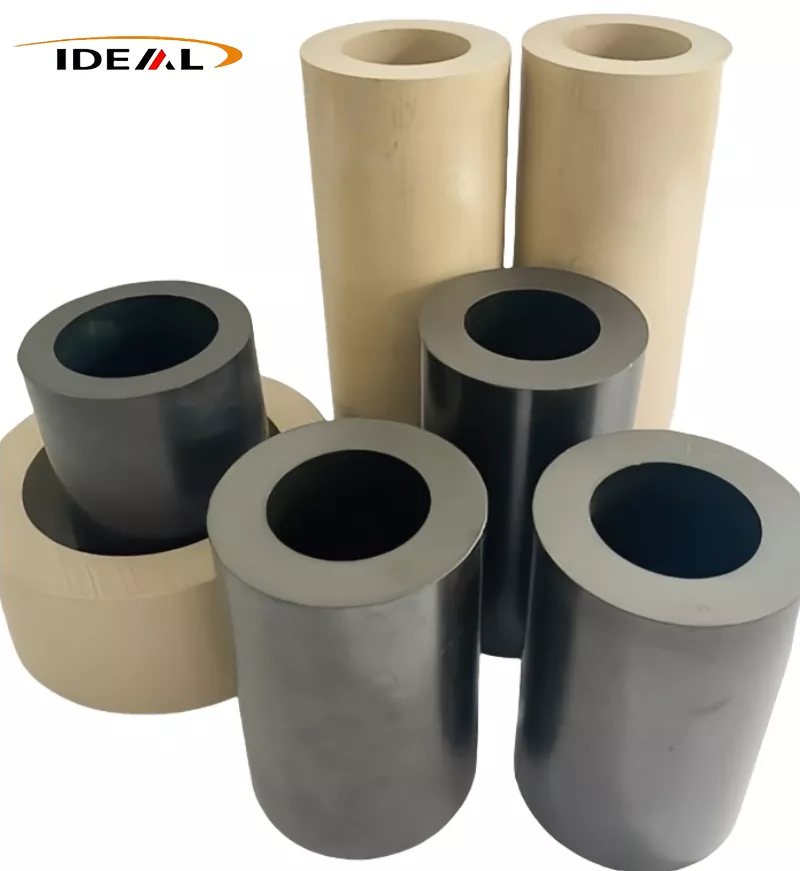
Key Machining Guidelines:
-
Tooling: Use sharp, high-speed steel or carbide tools with positive rake angles.
-
Cooling: Employ a constant stream of compressed air or coolants compatible with PEEK to dissipate heat.
-
Speeds & Feeds: Utilize high cutting speeds with moderate feed rates to minimize heat buildup.
-
Clamping: Apply uniform, gentle pressure to avoid deformation or crushing of the tubes.
For fabrication processes like bending or flaring, pre-heating the PEEK Tubes to a specific forming temperature is often necessary to achieve precise shapes without causing material compromise.
FAQ 1: What is the best way to cut PEEK tubing without causing delamination or burrs?
For clean cuts, use a sharp, fine-toothed band saw or a dedicated tube cutter. Always support the tube near the cut to prevent vibration and ensure a slow, steady feed rate. A final light deburring with fine sandpaper will yield a smooth, ready-to-use edge.
FAQ 2: Can PEEK tubes be welded or bonded together effectively?
Traditional welding is not typical. For permanent, high-strength joints, thermal fusion (butt welding or socket fusion) using specialized equipment is the preferred method. For non-structural seals, high-performance epoxy adhesives designed for PEEK can be used after proper surface preparation, such as plasma treatment.
FAQ 3: How critical is post-machining annealing for PEEK tube components?
It is highly recommended for precision parts. Annealing relieves internal stresses induced during machining by heating the component to a temperature below its melting point and cooling it in a controlled manner. This process enhances dimensional stability and prevents future cracking or distortion in service.
The following table summarizes critical parameters for common fabrication processes:
| Fabrication Process | Primary Consideration | Recommended Practice |
|---|---|---|
| Turning/Milling | Heat Management & Tool Sharpness | High speed, low-to-moderate feed, continuous cooling. |
| Drilling | Chip Removal & Hole Quality | Peck drilling cycle, sharp drill bit with polished flutes. |
| Bending | Preventing Wall Collapse/Kinking | Use mandrel bending with pre-heating to the material's specific forming range. |
| Cutting | Clean Edge Finish | Use sharp, supported cutting tools; avoid excessive clamping force. |
Mastering these considerations is key to unlocking the full potential of PEEK tubing in demanding fields like medical, semiconductor, and aerospace. At Guangzhou Ideal, we provide not only premium-grade PEEK Tubes but also comprehensive technical support to guide your fabrication success. Have a specific project challenge or need material certification details?
Contact us today to discuss your requirements with our engineering specialists.