

What Are the Main Installation Mistakes to Avoid with PVC-U Honeycomb Pipes
2026-07-24
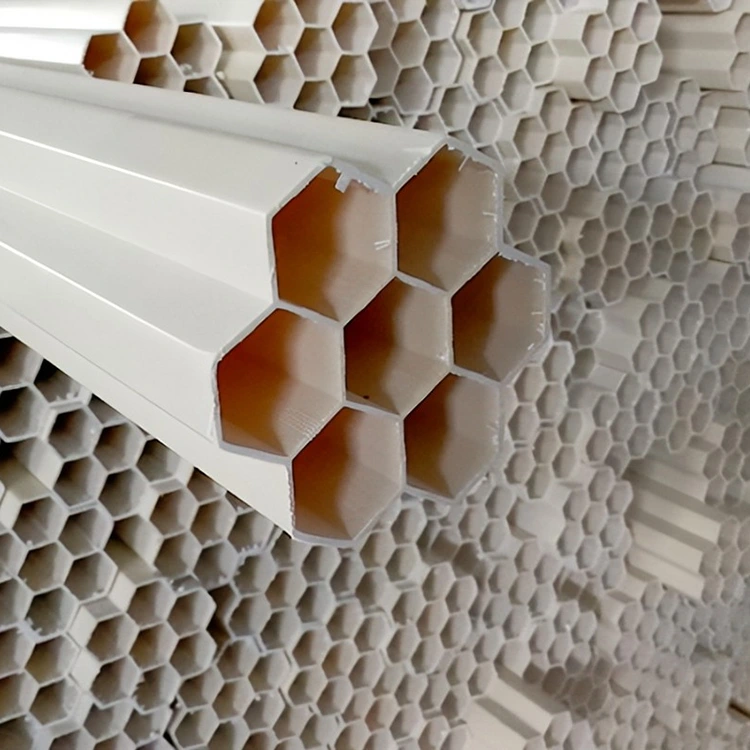
Installing PVC-U Honeycomb Pipes correctly is the difference between a drainage system that lasts 50+ years and one that fails within the first rainy season. While these lightweight, high-strength pipes offer superior hydraulic performance and cost savings over solid-wall alternatives, improper handling during installation cancels out every advantage. At East Boom, we have spent over a decade auditing failed pipe installations across commercial, municipal, and industrial projects. The most common errors are predictable, preventable, and almost always rooted in overlooking basic manufacturer guidelines.
Below, we break down the seven critical installation mistakes, how to avoid them, and why partnering with an experienced supplier like East Boom ensures your project stays on track.
1. Poor Trench Bedding and Backfill Compaction
The trench foundation directly determines whether PVC-U Honeycomb Pipes maintain their structural integrity under surface loads.
| Mistake | Correct Practice |
|---|---|
| Placing pipes directly on rocky or uneven soil | Use a 100–150 mm layer of fine granular bedding (sand or pea gravel) |
| Backfilling with large stones or clay lumps | Backfill with selected, compactable material free of debris > 20 mm |
| Skipping layer-by-layer compaction | Compact in 150 mm lifts to 90% Proctor density |
Poor bedding creates point loads that stress the pipe’s honeycomb wall structure. Over time, this leads to localized cracking, joint separation, and infiltration of fine soils that clog the system. East Boom provides detailed trench specification sheets with every bulk order to eliminate this guesswork.
2. Incorrect Joint Assembly and Over-Insertion
PVC-U Honeycomb Pipes typically use rubber-gasketed bell-and-spigot joints. Two errors dominate here: under-insertion (leaving the spigot too far out) and over-insertion (pushing it completely past the gasket seat).
-
Under-insertion → immediate leakage at test pressure.
-
Over-insertion → the gasket rolls or extrudes, destroying the seal permanently.
Always mark the insertion depth on the spigot using a permanent marker. Lubricate the gasket and the spigot end with approved water-based lubricant – never use petroleum-based products, as they degrade EPDM rubber. East Boom includes factory-marked insertion guides on all pipes above DN200, reducing field errors by 70%.
3. Neglecting Thermal Expansion and Contraction
Although PVC-U Honeycomb Pipes have a lower coefficient of thermal expansion than solid PVC, temperature swings still create axial movement. In exposed or shallow-burial applications (less than 600 mm cover), a 15°C temperature change can move a 20-metre pipe run by nearly 8 mm.
The mistake? Rigidly anchoring every joint without allowing for expansion gaps or using mechanical expansion joints. The fix is simple: install thrust blocks at changes in direction, and for long straight runs, use offset joints or purpose-designed expansion fittings. East Boom engineers recommend calculating expansion per your site’s annual temperature range – we provide a free thermal movement calculator upon request.
4. Using the Wrong Solvent Cement or Thread Sealants
A surprising number of installers assume one adhesive works for all plastics. For PVC-U Honeycomb Pipes, only low-VOC, high-viscosity solvent cement formulated specifically for unplasticised PVC should be used – and only for fabricated fittings (not for gasketed joints, which are mechanical).
Common mistakes:
-
Applying cement to dirty or wet surfaces.
-
Using fast-set cement in hot weather (flash drying prevents fusion).
-
Failing to apply primer on larger diameters (above DN150).
For threaded connections (transition to metal), never use Teflon tape alone. Use a pipe joint compound rated for PVC and potable water (if applicable). East Boom supplies compatible solvent cements and primers with verified batch numbers to ensure full chemical compatibility.
5. Inadequate Support During Backfilling
Even with correct bedding, the backfill process itself can displace pipes if done carelessly. Dropping large backfill materials from height or operating heavy compactors directly over the pipe crown before achieving 300 mm of cover are frequent causes of ovality – where the honeycomb core deforms, reducing flow capacity permanently.
| Pipe Diameter | Minimum Cover Before Mechanical Compaction |
|---|---|
| DN110 – DN200 | 200 mm |
| DN250 – DN400 | 300 mm |
| DN450 – DN600 | 400 mm |
Follow this table strictly. For shallow cover situations, East Boom recommends our reinforced-wall series that offers higher ring stiffness without changing outer diameter.
6. Failing to Perform a Low-Pressure Air or Water Test
Many contractors skip the pre-backfill leak test to save time – then spend ten times more excavating and repairing after landscaping is complete. Test every installed section at 50 kPa (0.5 bar) air pressure or 1.5× working head water pressure for at least 15 minutes before backfilling.
Record the pressure drop. For PVC-U Honeycomb Pipes, permissible loss is less than 0.5% per minute. Any greater drop means a joint or fitting leak. Mark the exact location, re-make the joint, and retest. East Boom offers pre-assembled test kits with all necessary adaptors for our pipe ranges.
7. Ignoring Site-Specific Loading Conditions (Traffic, Soil Type, Groundwater)
A final holistic mistake is treating all installations the same. A pipe under a pedestrian walkway faces very different loads than one under a heavy truck depot. Similarly, high groundwater tables require ballast calculations to prevent flotation.
-
For traffic class D (heavy vehicles) → use SN8 (ring stiffness ≥ 8 kN/m²) minimum.
-
For groundwater above pipe crown → calculate buoyancy and add concrete collar or continuous concrete surround if needed.
East Boom labels every pipe with its SN rating clearly printed along the barrel, and our technical team can run site-specific load calculations within 24 hours.
Frequently Asked Questions About PVC-U Honeycomb Pipes
Q1: Can PVC-U Honeycomb Pipes be used above ground, or are they only for buried applications?
A1: PVC-U Honeycomb Pipes are primarily engineered for buried gravity-flow applications (sewer, stormwater, drainage) due to their excellent soil-structure interaction. However, they can be used above ground for short exposed runs – provided they are UV-stabilised (most East Boom pipes include carbon black or UV inhibitors) and supported at intervals no greater than 1.5 metres. For continuous above-ground use, we recommend switching to our solid-wall or structured-wall UV-rated series, as prolonged direct sunlight (over 12 months) may reduce impact resistance even with UV additives. Always consult your East Boom representative for above-ground design support.
Q2: What is the correct method for cutting PVC-U Honeycomb Pipes on site, and do I need to chamfer the cut end?
A2: Use a fine-toothed hand saw or a mechanical guillotine cutter specifically designed for plastic pipes. Avoid abrasive cut-off wheels (angle grinders), as they generate excessive heat that melts the honeycomb wall and creates rough, non-circular ends that will never seal properly in the gasketed joint. After cutting, remove all burrs with a deburring tool or fine sandpaper. Crucially, you must chamfer the outside edge of the cut spigot to a 15°–30° angle over a length of 2–3 mm. This chamfer prevents the gasket from rolling or shearing during insertion. East Boom includes a chamfering gauge in every starter kit to help crews get this angle right consistently.
Q3: How do I repair a section of PVC-U Honeycomb Pipes if accidental damage occurs during backfilling?
A3: For a single localized crack or hole smaller than 50 mm in diameter, use a purpose-designed PVC repair clamp with a rubber gasket – tighten evenly around the damaged area. Do not attempt to weld or patch with solvent cement alone, as the honeycomb structure does not provide a solid fusion surface. For longer splits or crushed sections exceeding 20% of the pipe diameter, cut out the damaged portion entirely and install a new replacement piece using two standard couplings (bell-and-spigot) and one plain-end pipe section. Always use new gaskets and re-lubricate. After any repair, perform a full pressure test on that section before backfilling. East Boom stocks both repair clamps and short spool pieces for all diameters we manufacture, ensuring same-day dispatch for emergency site repairs.
Conclusion
Installing PVC-U Honeycomb Pipes is straightforward when you respect the fundamentals: bedding quality, joint precision, thermal movement, backfill control, and load assessment. Each mistake above stems from rushing or assuming that “plastic pipe is plastic pipe.” The reality is that the honeycomb design – which gives you 30–40% material savings and excellent stiffness-to-weight ratio – demands specific handling protocols to deliver that performance.
With East Boom, you are never alone on site. From pre-installation toolbox talks to on-call technical support during trenching and backfilling, our team ensures your project meets ASTM, ISO, or EN standards without costly rework. We manufacture PVC-U Honeycomb Pipes in DN110–DN1200, with SN4, SN8, and SN16 ratings, and all batches are third-party tested for ring stiffness, impact resistance, and seal integrity.
Ready to eliminate installation risks on your next drainage project?
Contact East Boom today for a free site-specific installation plan, product samples, and a quote tailored to your pipe diameter and stiffness requirements. Our engineers are available via live chat, email, or phone – reach out now and secure a 50-year service life for your below-ground infrastructure.