

What Are The Temperature And Pressure Limitations Of Hastelloy Welded Pipes
2026-02-06
When specifying materials for demanding industrial processes, understanding the operational boundaries is crucial. For Hastelloy welded pipes, these boundaries are defined by their temperature and pressure limitations. At Shiwang, we specialize in providing high-performance nickel-alloy solutions, and a clear grasp of these parameters ensures system safety, longevity, and cost-effectiveness. This blog delves into the factors that define the performance envelope of these robust piping components.
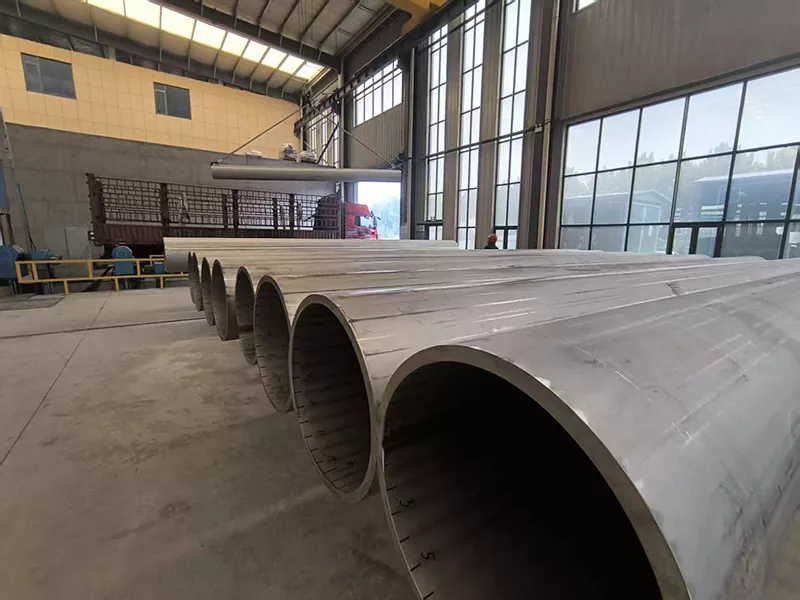
The limits of a Hastelloy welded pipe are not a single universal value but depend on a synergy of factors:
-
Alloy Grade: Different Hastelloy alloys (like C-276, C-22, B-3) have varying strength and corrosion resistance at temperature.
-
Pipe Dimensions: Wall thickness and diameter directly influence pressure-bearing capacity.
-
Design Codes: Applications follow standards like ASME B31.3, which dictate design stress values based on temperature.
-
Service Environment: The presence of specific corrosive media can lower effective temperature limits even if mechanical strength is sufficient.
As a general guide, below is a simplified reference table for annealed Hastelloy welded pipe based on common grades. Always consult detailed material datasheets for critical design.
Typical Temperature & Pressure Reference (Guideline Only)
| Hastelloy Grade | Continuous Service Temperature Range | Maximum Allowable Stress (Approx.) at 100°C (ASME) |
|---|---|---|
| Hastelloy C-276 | -196°C to +400°C | 205 MPa (30 ksi) |
| Hastelloy C-22 | -196°C to +425°C | 200 MPa (29 ksi) |
| Hastelloy B-3 | Up to +425°C in reducing environments | 220 MPa (32 ksi) |
Hastelloy Welded Pipe FAQ
What primarily determines the maximum pressure rating of a Hastelloy welded pipe?
The pressure rating is primarily determined by the pipe's wall thickness, diameter, and the allowable stress value of the specific Hastelloy alloy at the operating temperature, as defined by applicable design codes like ASME B31.3.
Does the welded seam create a weakness under high temperature or pressure?
No, when properly fabricated and solution-annealed, the weld seam of a Hastelloy welded pipe from a reputable manufacturer like Shiwang exhibits mechanical and corrosion-resistant properties comparable to the base metal, ensuring integrity across its rated limits.
How does prolonged high-temperature exposure affect Hastelloy pipes?
Prolonged exposure at the upper end of the temperature range can lead to microstructural changes like carbide precipitation in some grades, potentially reducing ductility and corrosion resistance. Proper alloy selection for the service temperature is vital.
Selecting the correct Hastelloy welded pipe requires balancing alloy chemistry, mechanical design, and environmental factors. At Shiwang, our technical experts leverage deep material science knowledge to guide clients in specifying pipes that operate reliably within their precise temperature and pressure windows. We ensure our products meet the highest standards, providing the data and support needed for your critical applications.
Contact us today to discuss your project's specific requirements. Let Shiwang provide you with the engineered Hastelloy welded pipe solutions that deliver performance and peace of mind.