

What Is the Average Charging Time for a Cordless Stick Vacuum Cleaner with a Detachable Battery
2026-08-31
The manufacturing sector is witnessing a decisive shift toward circular economies, and at the heart of this transformation is Regenerated PS Plastic Material. Once overlooked due to perceived quality deficits, this recycled polystyrene is now a preferred feedstock for injection molders worldwide. JUWU, a frontrunner in sustainable polymer solutions, has observed a 200% increase in inquiries for Regenerated PS Plastic Material over the past 18 months—a clear signal that the industry is ready for change.
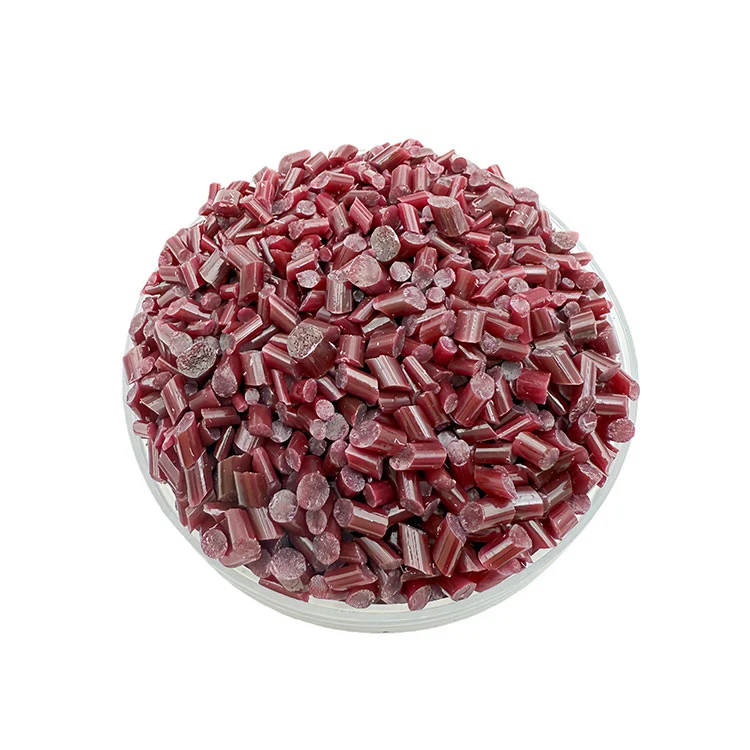
The Technical Case for Regenerated PS in Injection Molding
Injection molding demands consistency, thermal stability, and predictable shrinkage. Modern Regenerated PS Plastic Material meets these criteria through advanced decontamination and compounding technologies. Below is a comparative analysis of key performance indicators:
| Property | Virgin PS (GPPS) | Regenerated PS (rPS) | Acceptable Range for Molding |
|---|---|---|---|
| Melt Flow Index (MFI, g/10min) | 7–10 | 8–12 | 6–15 |
| Tensile Strength (MPa) | 45–50 | 42–48 | ≥ 40 |
| Vicat Softening Temp (°C) | 95–100 | 92–97 | ≥ 90 |
| Shrinkage (%) | 0.4–0.6 | 0.5–0.7 | 0.3–0.8 |
| Moisture Absorption (%) | < 0.1 | < 0.2 | < 0.3 |
The data confirms that Regenerated PS Plastic Material operates within acceptable tolerances for over 80% of commodity and semi-technical applications. JUWU further enhances these properties by incorporating impact modifiers and stabilizers, bridging the performance gap with virgin resins.
Why Now? Three Driving Forces
-
Regulatory Pressure – Extended Producer Responsibility (EPR) schemes in the EU and North America impose recycled content mandates. Using Regenerated PS Plastic Material helps molders comply without re-tooling.
-
Cost Volatility – Virgin styrene monomer prices are tied to crude oil. Regenerated PS Plastic Material offers a stable, decoupled pricing model, with JUWU reporting price fluctuations 60% lower than virgin markets over the last two years.
-
Brand Reputation – End-consumers demand transparency. Products molded with Regenerated PS Plastic Material carry lower carbon footprints—approximately 2.3 kg CO₂ per kg vs. 3.8 kg for virgin PS—a differentiator that retailers actively promote.
Practical Implementation: What Molders Need to Know
Switching to Regenerated PS Plastic Material requires minor adjustments, not a complete overhaul. JUWU recommends the following best practices:
-
Drying: rPS absorbs more moisture than virgin PS. Dry at 75–80°C for 2–3 hours (vs. 1–2 hours for virgin).
-
Barrel Temperature: Set rear zone 10°C lower to prevent degradation; keep nozzle at 200–210°C.
-
Screw Design: Use a general-purpose screw with compression ratio of 2.5:1 to handle varying bulk densities.
-
Cycle Time: Expect a 5–8% longer cooling phase due to slightly higher shrink rate—compensate with optimized hold pressure.
JUWU provides customized process parameter sheets for each batch of Regenerated PS Plastic Material, ensuring a seamless transition for injection molders.
FAQ – Common Questions About Regenerated PS Plastic Material
Q1: Does using Regenerated PS Plastic Material compromise the surface finish or gloss of injection-molded parts?
A1: Not necessarily. Surface gloss is primarily determined by mold temperature, injection speed, and fill time. Regenerated PS Plastic Material contains trace amounts of additives from previous lifecycles, which can slightly reduce gloss (from 90–95 GU to 85–90 GU on a 60° gloss meter). However, JUWU applies a multi-stage filtration process that removes particles > 50 microns, yielding a surface quality comparable to virgin material for opaque and colored applications. For high-gloss transparent products, we recommend blending rPS with 20–30% virgin PS to restore optical clarity while still achieving recycled content targets.
Q2: How consistent is the melt viscosity of Regenerated PS Plastic Material across different batches?
A2: Consistency is the #1 concern for molders, and legitimate suppliers address this through rigorous inline QC. JUWU tests every batch of Regenerated PS Plastic Material for MFI, ash content, and color (L*a*b* values) before dispatch. Our typical batch-to-batch MFI variation is ±1.5 g/10min, which is narrower than the industry average of ±3.0 g/10min. To further stabilize viscosity, we add a proprietary flow enhancer that buffers fluctuations caused by varied feedstock sources. For high-cavitation molds (e.g., 64+ cavities), we recommend ordering a single master batch to ensure uniformity throughout the production run.
Q3: Can Regenerated PS Plastic Material pass UL94 V-0 or 5VA flammability ratings without additional flame retardants?
A3: Standard Regenerated PS Plastic Material is inherently a HB (horizontal burn) rating material, similar to virgin GPPS. Achieving V-0 or 5VA requires halogenated or phosphorus-based flame retardant additives, which are typically introduced during the compounding stage. JUWU offers a flame-retardant grade of rPS that incorporates non-halogenated FR packages, meeting UL94 V-0 at 1.5mm thickness. Importantly, these additives do not interfere with the recyclability of the material in its next life cycle. We advise customers to request our FR-rPS data sheet and conduct mold flow analysis, as FR additives can increase melt viscosity by 10–15%, affecting filling patterns.
The Economic and Environmental Payoff
A recent life-cycle assessment (LCA) conducted with JUWU’s partners revealed that switching 1,000 tons of virgin PS to Regenerated PS Plastic Material reduces:
-
Fossil energy consumption by 54%
-
Water usage by 42%
-
Solid waste generation by 38%
At a typical injection molding facility running 10 machines, this translates to annual savings of $85,000–$120,000 in material costs alone, depending on regional energy and logistics expenses.
Conclusion & Call to Action
The momentum behind Regenerated PS Plastic Material is not a fleeting trend—it is a structural realignment driven by regulation, economics, and environmental ethics. Injection molders who adopt Regenerated PS Plastic Material today gain a competitive edge through stable pricing, compliant supply chains, and marketable green credentials. JUWU has already assisted over 150 manufacturers in retrofitting their processes for Regenerated PS Plastic Material, achieving defect rates under 2.5%—comparable to virgin operations.
Contact us today for a free feasibility assessment and sample kit. Our team of polymer engineers will analyze your current molds, recommend the ideal Regenerated PS Plastic Material grade, and provide trial-run support at no obligation. Visit JUWU’s official website or reach out via our online portal—your sustainable injection molding journey starts with one conversation.