

What Is the Difference Between PE and PVDF Coating on Nano Aluminum Composite Panel
2026-08-11
When selecting exterior cladding for modern architecture, the coating system determines long-term performance far more than the aluminum substrate itself. For Nano Aluminum Composite Panel, the choice between PE (polyester) and PVDF (polyvinylidene fluoride) coatings is not merely a cost decision—it influences weather resistance, color retention, maintenance cycles, and overall project lifecycle value. At Yuntai, we consistently observe that specifiers who understand these coating chemistries specify more durable, cost-effective building envelopes.
Coating Composition and Chemistry
| Property | PE Coating | PVDF Coating |
|---|---|---|
| Resin Type | Polyester resin (70% ±) | PVDF resin (≥70% Kynar 500® or equivalent) |
| Binder System | Melamine or isocyanate cross-linkers | Acrylic resin combined with PVDF |
| Curing Temperature | 180–220°C | 240–260°C (higher energy process) |
| Film Thickness | 18–22 microns (nominal) | 25–30 microns (nominal) |
| Pigment Tolerance | Moderate | Excellent for inorganic pigments |
The fundamental distinction lies in the fluorine-carbon bond within PVDF—one of the strongest chemical bonds in polymer science. This bond gives Nano Aluminum Composite Panel with PVDF coating an inherent resistance to ultraviolet degradation that PE chemistry simply cannot match.
Performance Comparison Table
| Performance Indicator | PE Coated Panel | PVDF Coated Panel |
|---|---|---|
| Color Retention (5 years) | ΔE ≤ 3.0 (noticeable fading) | ΔE ≤ 1.0 (virtually no visible change) |
| Chalking Resistance | Moderate – light powdering after 3–5 years | Excellent – no chalking up to 15 years |
| Salt Spray Resistance (ASTM B117) | 500–1,000 hours | 3,000–4,000 hours |
| Abrasion Resistance (Taber test) | Good – loses gloss faster | Superior – maintains surface texture |
| Chemical Resistance | Vulnerable to alkaline cleaners | Resists industrial pollutants and acid rain |
| Flexibility (T-bend) | 1T–2T (good) | 2T–3T (slightly less flexible) |
| Field Repairability | Easier – touch-up paints available | Difficult – requires factory-matched coatings |
Application Scenarios – Which One Should You Specify?
Choose PE coating for:
-
Interior walls, ceilings, and partition systems
-
Temporary structures or buildings with expected service life under 8 years
-
Budget-sensitive projects in non-industrial environments
-
Applications where color matching is not critical
Choose PVDF coating for:
-
High-rise curtain wall systems (above 15 stories)
-
Coastal or marine environments with salt-laden air
-
Industrial zones with chemical emissions or acid rain
-
Landmark buildings requiring 20+ year warranty-backed performance
-
Projects where low-maintenance lifecycle cost is prioritized
For Yuntai, PVDF-coated Nano Aluminum Composite Panel is the default recommendation for exterior applications, while PE remains a cost-effective interior solution.
Cost-Benefit Analysis (per square meter, approximate)
| Cost Factor | PE Coating | PVDF Coating |
|---|---|---|
| Initial Panel Price | Base + 0% | Base + 25–35% |
| Maintenance (10 years) | 3–4 wash/repaint cycles | 1–2 wash cycles only |
| Replacement Risk (10 years) | 12–18% fading-driven replacement | < 2% |
| Total Lifecycle Cost (10 years) | Higher | Lower |
The premium for PVDF on Nano Aluminum Composite Panel typically recoups itself within 5–7 years through reduced cleaning, repainting, and replacement expenditures.
Three Critical Factors Often Overlooked
-
Heat Build-up – PVDF's higher infrared reflectance keeps the panel surface 5–8°C cooler than PE under direct sunlight, reducing thermal expansion stress on the building structure.
-
Application Method – Both coatings use roller-coil coating (factory-applied), but PVDF requires stricter environmental controls during application. Yuntai operates fully enclosed coating lines with humidity and temperature regulation to ensure PVDF adhesion consistency.
-
Warranty Reality – Many PVDF warranties cover 20 years of color and gloss retention, but PE warranties rarely exceed 5 years. Always review the exclusion clauses—UV exposure and coastal conditions are the first exclusions in PE warranties.
Frequently Asked Questions About Nano Aluminum Composite Panel Coatings
Q: Can I paint over an existing PE-coated Nano Aluminum Composite Panel with PVDF paint on site?
A: No. PVDF coatings require factory baking at 240°C minimum to achieve proper cross-linking and film integrity. Field-applied PVDF touch-up paints do not cure at ambient temperatures and will delaminate within months. If your Nano Aluminum Composite Panel has a PE finish and you require PVDF-level performance, the only reliable solution is panel replacement with factory-coated PVDF material. Some contractors offer field-applied fluoropolymer topcoats, but these are not true PVDF systems and typically fail ASTM adhesion tests within 18 months.
Q: How do I visually identify whether my existing Nano Aluminum Composite Panel has PE or PVDF coating without lab testing?
A: Four field indicators help: (1) Solvent rub test – rub a cloth soaked with MEK (methyl ethyl ketone) firmly on the surface for 20 strokes. PE will soften or show color transfer; PVDF remains unchanged. (2) Gloss meter reading – PE typically measures 60–70 gloss units at 60°, while PVDF is 30–40° for standard finishes. (3) Edge observation – PVDF coating appears slightly thicker and more uniform at cut edges under magnification. (4) Price documentation – legitimate PVDF-coated Nano Aluminum Composite Panel will always have mill test certificates with resin identification. Yuntai provides coating identification labels on every PVDF shipment, eliminating field guesswork.
Q: Does the nano-technology layer affect PE and PVDF coatings differently on Nano Aluminum Composite Panel?
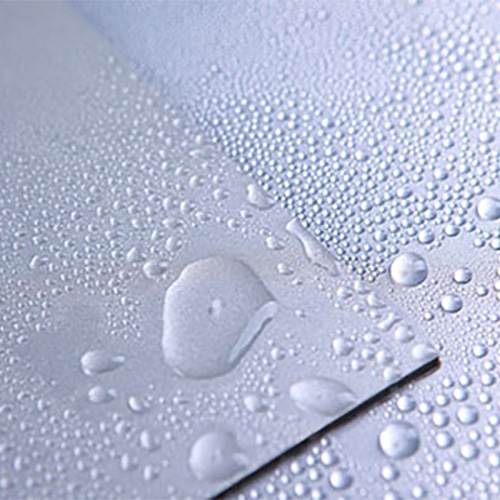
A: Yes, significantly. The nano-ceramic or nano-silica topcoat applied over the color coat interacts differently with each resin system. On PVDF, the nano-layer bonds through fluorine-hydrogen interactions, creating a dense hydrophobic surface with water contact angles exceeding 110°. This self-cleaning effect reduces dirt pickup by 60–70% compared to uncoated PVDF. On PE, the nano-layer relies on weaker van der Waals forces, so adhesion durability is reduced—particularly under thermal cycling (−20°C to +80°C). Yuntai applies a specialized primer between the nano-layer and PVDF base coat, ensuring intercoat adhesion exceeds 8 MPa in pull-off tests, whereas PE-based nano systems rarely exceed 4 MPa. Therefore, for exterior applications with nano-enhanced performance requirements, PVDF is the mandatory substrate choice.
Final Recommendation
For any exterior application exceeding 5 years of design life, PVDF-coated Nano Aluminum Composite Panel delivers superior return on investment despite higher upfront cost. For interior partitions, temporary façades, or rental properties, PE coating provides adequate service at a competitive price point. Yuntai manufactures both systems with full traceability, offering 20-year color retention warranties on PVDF lines and 5-year warranties on PE lines.
Ready to specify the right coating for your project? Contact Yuntai today for coating samples, accelerated weathering test reports, and project-specific lifecycle cost modeling. Our technical team provides coating selection matrices tailored to your climate zone, building height, and maintenance access constraints. Reach out via our website or email—we respond with verified test data, not generic brochures. Let us help you build with certainty.