

What Is the Fire Resistance Rating of Standard PUR Insulation Panels
2026-07-24
When selecting building materials for industrial, commercial, or cold-storage facilities, fire safety often ranks as the top concern alongside thermal efficiency. PUR Insulation Panels (polyurethane rigid foam panels) are widely praised for their superior insulating properties, but their fire performance remains a misunderstood topic. At HANYORK, we frequently receive questions about whether these panels meet local building codes and how they behave under actual fire conditions. This blog cuts through the myths and delivers the technical facts you need.
Understanding Fire Resistance vs. Combustibility
Before examining numbers, it is critical to distinguish between two concepts:
-
Combustibility – whether a material ignites and contributes to flame spread.
-
Fire Resistance – how long a constructed assembly (panel + facings + structure) can withstand fire exposure while maintaining integrity and insulation.
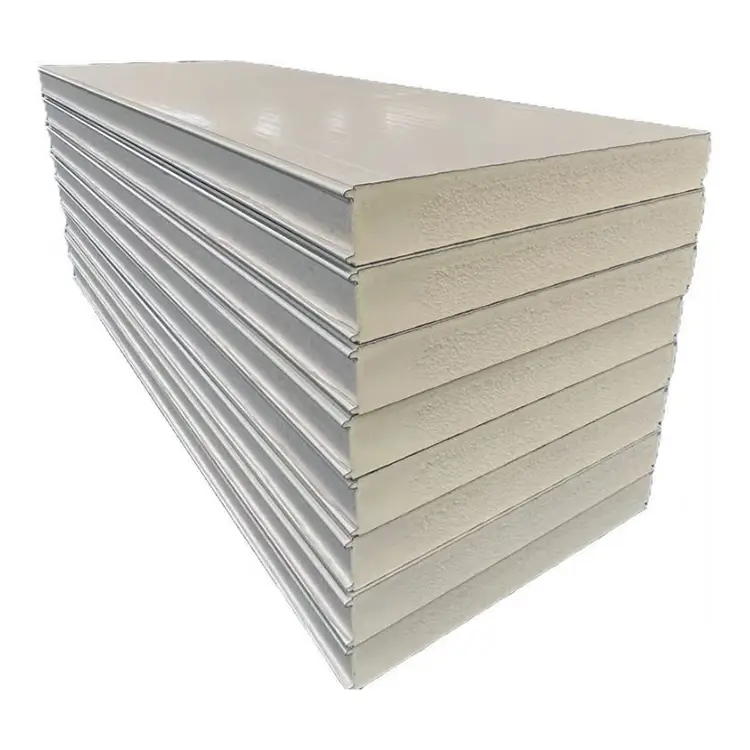
Standard PUR Insulation Panels are organic foam materials, meaning they are inherently combustible. However, modern manufacturing incorporates flame retardants and protective facings (steel, aluminum, or reinforced foil) to significantly slow ignition and flame propagation. The fire resistance rating is never a single number—it depends on panel thickness, core density, facing type, and the specific test standard applied.
Key Test Standards and Typical Ratings
Different regions apply different testing protocols. Below is a practical reference table for the most common standards:
| Test Standard | Region | What It Measures | Typical Result for PUR Panels |
|---|---|---|---|
| ASTM E84 | USA | Flame Spread Index (FSI) & Smoke Developed Index (SDI) | Class A (FSI ≤ 25, SDI ≤ 450) with steel facings |
| EN 13501-1 | Europe | Reaction to fire – Euroclass rating | Often C-s3, d0 or B-s2, d0 depending on facings |
| BS 476 Part 7 | UK | Surface spread of flame | Class 1 or Class 0 (with approved facings) |
| ISO 1182 | International | Non-combustibility test | Does not pass – PUR is combustible |
| FM 4880 | Global | Approval for insulated panels in industrial roofs | Class 1 with specific core/facing combinations |
Critical takeaway: A standard 40–50 mm PUR Insulation Panel with 0.5 mm steel facings typically achieves ASTM E84 Class A and EN 13501-1 C-s3, d0, which means it is suitable for many commercial and industrial applications—but it is not non-combustible.
What Affects the Fire Rating of a PUR Insulation Panel?
Several variables directly influence the final fire classification:
-
Core density – Higher density (≥ 40 kg/m³) reduces oxygen permeability and slows pyrolysis.
-
Flame retardant additives – Phosphorus-based or halogenated compounds interrupt free-radical chain reactions.
-
Facing material – Steel (0.4–0.7 mm) acts as a thermal barrier, delaying core ignition by 2–5 minutes under direct flame.
-
Panel joint design – Cam-lock or tongue-and-groove joints reduce flame spread through gaps.
-
Installation orientation – Vertical walls perform differently from horizontal roofs due to ventilation and drip effects.
At HANYORK, our standard production line offers PUR Insulation Panels with fire ratings verified by third-party laboratories, and we provide full test certificates upon request.
Real-World Performance: 30-Minute vs. 60-Minute Integrity
In a standard furnace test (e.g., ASTM E119 or EN 1363-1), an un-faced PUR core fails within 5–8 minutes. However, when encapsulated between two galvanized steel sheets, a 100 mm thick PUR Insulation Panel can maintain structural integrity for 25–35 minutes under moderate fire load. For a 60-minute rating, manufacturers increase thickness to 120–150 mm or add a mineral-fiber interlayer.
This is why building codes often require PUR Insulation Panels to be installed behind sprinkler systems or with automatic fire shutters in high-risk zones.
FAQ – Common Questions About PUR Insulation Panel Fire Safety
Q: Can a standard PUR Insulation Panel achieve a 2-hour fire resistance rating?
A: Not as a standalone product. A plain PUR Insulation Panel without additional passive protection (e.g., gypsum board, mineral wool overlay, or intumescent coatings) cannot pass a 2-hour ASTM E119 test. The organic polyurethane core begins thermal degradation at around 200–250°C, and even with steel facings, the assembly typically reaches failure (temperature rise or structural collapse) within 45–60 minutes under standard fire curves. To achieve 120 minutes of integrity, you would need a composite panel system where the PUR core acts as an insulating layer behind a separate fire-rated board, or you would use a specially engineered version with ceramic-fiber reinforcements. Always consult your local authority and request official test data—never rely on generic promises.
Q: Are all PUR Insulation Panels with steel facings automatically Class A fire-rated?
A: No. The ASTM E84 Class A rating (Flame Spread Index ≤ 25) is not automatic; it depends on the specific combination of core formulation, facing thickness, and adhesive bonding. While many reputable suppliers—including HANYORK—design their PUR Insulation Panels to meet Class A, some low-cost imports use inferior flame retardants or thinner facings (0.3 mm or less), which can push the FSI up to 75–100 (Class B or C). Additionally, the Smoke Developed Index (SDI) is often overlooked; a Class A panel must also stay below 450 for SDI. Always request a current test report from an accredited laboratory (e.g., UL, FM, or Intertek) for the exact product SKU you intend to purchase, because changing the core density by just 5 kg/m³ can alter the result.
Q: Do PUR Insulation Panels release toxic gases when burning, and does that affect their fire rating?
A: Yes, thermal decomposition of polyurethane produces carbon monoxide, hydrogen cyanide, and various isocyanate compounds—all of which are hazardous in smoke. However, fire resistance ratings (such as ASTM E119 or EN 13501-1) do not directly measure gas toxicity; they focus on flame spread, heat release, and structural integrity. Toxicity is assessed under separate standards like ISO 19700 or NFPA 269. A PUR Insulation Panel with a high fire rating (Class A or Euroclass B) still releases toxic fumes, which is why building codes often require smoke detectors, mechanical ventilation, and evacuation plans in enclosed spaces. From a life-safety perspective, you should evaluate fire resistance and smoke toxicity as two independent factors. At HANYORK, we recommend pairing our panels with active fire-suppression systems for applications like cold storage or data centers, where human occupancy may be limited but asset protection is critical.
Best Practices for Specifying PUR Insulation Panels
To ensure compliance and safety, follow these professional guidelines:
-
Always match the panel’s fire classification with the building occupancy type and height.
-
For roofs over 25 meters high, choose PUR Insulation Panels with Euroclass B or FM Class 1 approval.
-
Install with fire-stopping seals at all penetrations and joints.
-
Store panels away from ignition sources during construction—uncured adhesives are more flammable than the cured core.
-
Request batch-specific test certificates, not just generic brochure values.
HANYORK supplies full documentation packages including CE marking, UL certification, and local test reports for every shipment of PUR Insulation Panels.
Summary Table – Fire Rating Selection Guide
| Application | Required Rating | Recommended PUR Panel Thickness | Facing Required |
|---|---|---|---|
| Interior walls (office) | Class C or B | 30–50 mm | 0.4 mm steel |
| Cold storage / freezer | Class C (low risk) | 80–100 mm | 0.5 mm steel + aluminum |
| Industrial roofs (sprinklered) | Class A or FM 4880 | 60–80 mm | 0.6 mm galvanized steel |
| Data centers / high-value assets | > 60 min integrity | 120 mm + mineral core layer | 0.7 mm steel + intumescent paint |
| External cladding (high-rise) | Euroclass B-s1, d0 | 50–70 mm | 0.5 mm steel + fire-retardant adhesive |
Final Professional Verdict
Standard PUR Insulation Panels are not fireproof, but with proper facings and formulation, they comfortably meet the requirements for most commercial and industrial buildings. Their fire resistance rating is a system property—not a material property—so the final classification depends on how you specify, install, and protect the entire assembly. Always prioritize third-party verification over marketing claims.
Ready to specify the right PUR Insulation Panel for your project? Contact HANYORK today to request fire test reports, technical datasheets, and tailored recommendations for your climate and code requirements. Our engineering team responds within 24 hours with certified documentation and comparative performance analysis. Reach us via our website or email—let’s build safer, smarter insulated structures together.