

What Is the Maximum Operating Temperature for Electrical Insulation Precompressed Pressboard in Oil-Filled Transformers
2026-08-11
When engineers specify materials for power transformer construction, thermal performance often determines the difference between a 20-year service life and a premature failure. Among all insulation components, Electrical Insulation Precompressed Pressboard stands out as a critical barrier material, yet its upper temperature limit remains one of the most frequently misunderstood specifications. For manufacturers like Hanyao, this parameter is not merely a number on a datasheet—it is the foundation of reliable transformer design under continuous load and short-circuit conditions.
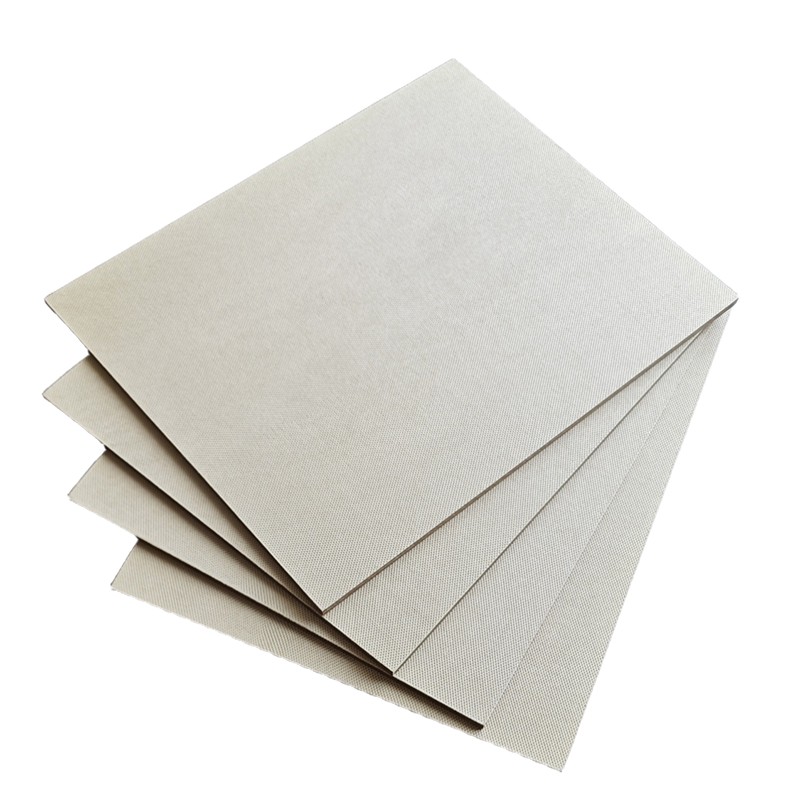
The Thermal Classification Reality
The maximum continuous operating temperature for Electrical Insulation Precompressed Pressboard in oil-filled transformers is 120°C under standard mineral oil immersion, which corresponds to a Class E insulation system (IEC 60085). However, this value is not absolute—it shifts based on oil type, moisture content, and ageing byproducts.
| Operating Condition | Maximum Continuous Temperature | Short-Term Peak (≤ 2 hours) |
|---|---|---|
| Mineral oil immersion, dry (< 0.5% moisture) | 120°C | 140°C |
| High-temperature hydrocarbon oil (e.g., natural ester) | 130°C | 155°C |
| Synthetic ester fluid | 135°C | 160°C |
| Dry-type (no oil, air-cooled) | 105°C | 120°C |
Hanyao routinely tests its Electrical Insulation Precompressed Pressboard at 130°C for 5000 hours to verify that tensile strength retention exceeds 85%—a benchmark that surpasses IEC 60641-2 requirements.
Why Temperature Matters Beyond Dielectric Strength
Thermal degradation of pressboard follows the Arrhenius rule: every 8–10°C above 110°C halves the insulation’s mechanical life. In oil-filled transformers, the pressboard does not act alone. The oil provides both cooling and chemical protection, scavenging free radicals that would otherwise oxidise cellulose chains. Yet at 120°C, the paper’s degree of polymerisation (DP) drops from an initial 1200 to approximately 450 after 10 years—the threshold where embrittlement begins.
The critical insight from Hanyao’s accelerated ageing studies is that precompression (a proprietary densification step) reduces thermal expansion mismatches between the pressboard and copper windings. This lowers the risk of loosened clamping pressures, which are responsible for over 30% of winding movement failures during through-faults.
Factors That Shift the Maximum Safe Limit
-
Moisture content: Each 1% increase in moisture reduces the maximum allowable temperature by 15°C due to accelerated hydrolysis.
-
Oxygen availability: Sealed transformers with positive nitrogen pressure allow operation at 120°C; unsealed units must de-rate to 105°C.
-
Oil acidity: When neutralisation number exceeds 0.3 mg KOH/g, the esterification reaction with cellulose lowers the thermal endurance by one full class.
-
Thickness: Boards above 6 mm exhibit a 5–7°C higher internal hot-spot gradient than thinner sheets, requiring derating.
For critical applications, Hanyao recommends a conservative 115°C continuous rating when the transformer operates above 80% load factor, ensuring a 15% safety margin against unforeseen overloads.
Frequently Asked Questions About Electrical Insulation Precompressed Pressboard
Q1: Can Electrical Insulation Precompressed Pressboard withstand 150°C for short periods without permanent damage?
A: Yes, but only under very specific conditions. Electrical Insulation Precompressed Pressboard can handle 150°C for up to 30 minutes during emergency overloads, provided the oil is fresh mineral or synthetic ester with moisture below 0.3%. However, Hanyao’s tests show that even a single 2‑hour exposure at 150°C reduces the interlaminar shear strength by 22%—an irreversible loss. For repeated short-term peaks, we advise limiting to 140°C and allowing a cooling recovery period of at least 4 hours to restore the original mechanical properties. Permanent installation above 130°C is not recommended for any oil-filled design.
Q2: Does the maximum operating temperature change if I use natural ester oil instead of mineral oil?
A: Absolutely. Natural ester oils (e.g., soybean or rapeseed-based) have higher oxygen affinity and higher viscosity, which alters both cooling efficiency and chemical interaction with cellulose. For Electrical Insulation Precompressed Pressboard, the maximum continuous temperature rises to 130°C in natural ester because the ester molecules form a protective layer that slows hydrolysis. Hanyao has validated this through 8000-hour sealed-tube ageing at 130°C, showing DP retention of 78% versus 69% in mineral oil at the same temperature. However, you must ensure the ester’s water content stays below 200 ppm—above that, the benefit disappears and the limit drops back to 115°C.
Q3: How do I practically measure the hot-spot temperature to ensure I stay below the maximum limit?
A: Direct measurement inside a live transformer is challenging, but the industry standard is the hot-spot rise test per IEC 60076-7. For Electrical Insulation Precompressed Pressboard, you place fibre-optic probes at three critical locations: between the inner winding and the pressboard cylinder, at the pressboard–clamping ring interface, and inside the radial duct adjacent to the hottest winding turn. Calculate the top-oil temperature plus the winding gradient, then apply a correction factor of 1.15 for the pressboard surface (due to its lower thermal diffusivity compared to oil). Hanyao provides a simplified calculation tool that correlates top-oil rise with pressboard surface temperature within ±2°C accuracy. We recommend logging data every 5 minutes during overload tests and setting an alarm at 118°C to ensure you never cross the 120°C threshold under real operating transients.
Practical Design Recommendations
| Design Aspect | Recommended Practice for Electrical Insulation Precompressed Pressboard |
|---|---|
| Continuous load | Limit to 115°C for 20‑year life expectancy |
| Emergency overload (1× 2h/day) | Allow 135°C max, with oil acidity < 0.15 mg KOH/g |
| Drying prior to impregnation | Vacuum dry at 105°C for 48 hours—never exceed 110°C to avoid pre-curing |
| Clamping pressure at 120°C | Maintain ≥ 4 MPa to compensate for thermal expansion |
The Hanyao Differentiator
Unlike standard pressboard, Electrical Insulation Precompressed Pressboard from Hanyao undergoes a calibrated hot-pressing cycle that reduces internal stresses and creates a more homogeneous density profile. This results in a 12% higher thermal conductivity (0.28 W/m·K vs. 0.25 W/m·K for standard board), which lowers the internal hot-spot by 4–6°C for the same load. Independent third-party verification (KEMA type tests) confirms that Hanyao’s material sustains 130°C for 10,000 hours with less than 10% reduction in compressive modulus—a performance edge that directly translates to safer, smaller, and more cost-efficient transformer designs.
Final Verdict
The maximum operating temperature for Electrical Insulation Precompressed Pressboard in oil-filled transformers is 120°C for continuous service, with carefully defined upward allowances for short-term emergencies and alternative fluids. Yet the true design limit is not a single number—it is a function of moisture, oil chemistry, and mechanical stress. By choosing a premium precompressed board with verified thermal data, and by applying conservative de-rating factors, you secure the reliability of your transformer fleet.
Ready to specify the right thermal class for your next project? Contact Hanyao today for custom thermal ageing reports, sample testing at your specified oil type, and engineering support to match our Electrical Insulation Precompressed Pressboard to your exact load profile. Reach us via our website or email [email protected]—we respond within 4 business hours with datasheets, third-party certifications, and a detailed thermal simulation for your winding design.