

What Is the Maximum Operating Temperature of a Phenolic Cotton Cloth Sheet in Continuous Use
2026-08-19
For engineers, maintenance managers, and procurement specialists working with industrial laminates, thermal limits are often the deciding factor between a reliable long-term installation and a costly premature failure. When selecting a Phenolic Cotton Cloth Sheet, understanding its real-world continuous service temperature is not just a specification check—it is a critical safety and performance decision. At Hanyao, we have tested thousands of these sheets across automotive, electrical, and heavy-machinery applications, and the data consistently shows that the maximum continuous operating temperature for a standard Phenolic Cotton Cloth Sheet is 120°C (248°F), with short-term peaks up to 150°C (302°F) under reduced mechanical load.
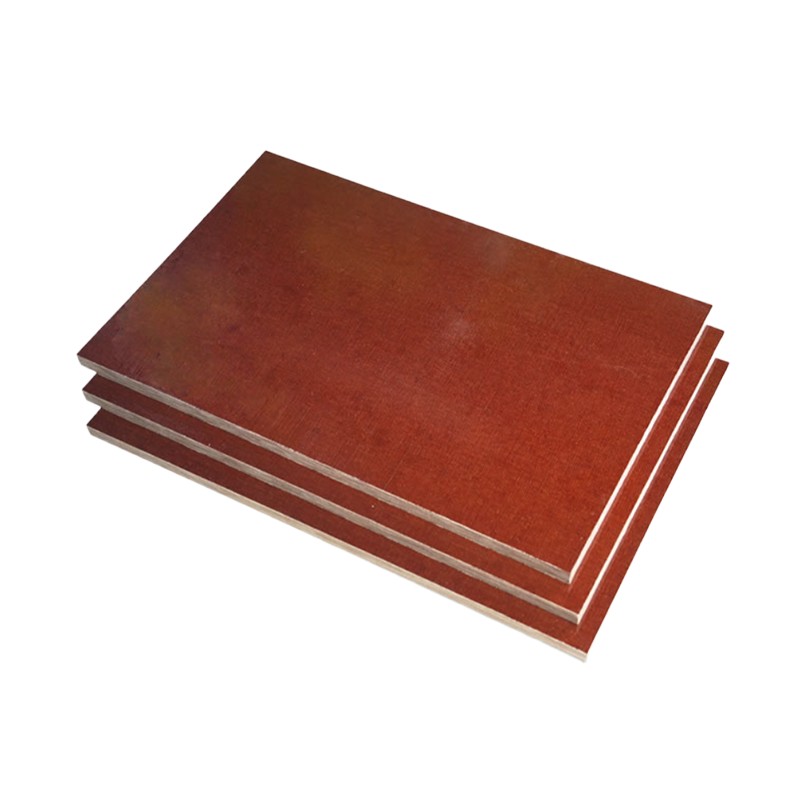
Thermal Degradation Mechanisms
Unlike glass-reinforced laminates, a Phenolic Cotton Cloth Sheet relies on a cotton fabric substrate impregnated with phenolic resin. The resin begins to soften and lose cross-link density above 110°C, while the cotton fibers start oxidative decomposition beyond 130°C. Continuous exposure above 120°C accelerates three destructive processes:
-
Resin post-cure shrinkage – causes internal stress and warpage
-
Moisture vaporization from cotton fibers – leads to micro-cracking and surface blistering
-
Reduced dielectric strength – drops by approximately 15–20% per 10°C rise above 100°C
Continuous vs. Intermittent Temperature Ratings
| Condition | Maximum Temperature | Mechanical Strength Retention | Recommended Application |
|---|---|---|---|
| Continuous (24/7) | 120°C (248°F) | ≥85% | Transformer spacers, busbar supports |
| Intermittent (≤2 hrs/day) | 150°C (302°F) | ≥70% | Thermal break pads, temporary tooling |
| Peak (≤10 min) | 180°C (356°F) | ≥50% (risk of charring) | Emergency backup insulation |
All ratings above assume no dynamic loading. If your Phenolic Cotton Cloth Sheet is subjected to both heat and cyclic stress, Hanyao recommends de-rating the continuous limit to 105°C for safety margins.
Factors That Shift the Limit
-
Thickness: Sheets ≥10 mm dissipate heat slower, reducing effective continuous limit by 5–8°C.
-
Humidity: At 80% RH, absorbed moisture lowers the onset of blistering to 115°C.
-
Chemical exposure: Oils and solvents can plasticize the resin, dropping the maximum by up to 15°C.
-
Mechanical clamping pressure: Bolted compression above 5 MPa increases creep at 120°C, so Hanyao advises reducing torque values by 30% when operating near the limit.
How to Verify the Right Grade for Your Process
Hanyao produces three standard grades of Phenolic Cotton Cloth Sheet:
| Grade | Continuous Limit | Key Feature |
|---|---|---|
| HC-101 | 120°C | General-purpose, cost-optimized |
| HC-205 | 130°C | Heat-stabilized resin, low outgassing |
| HC-310 | 140°C | High-purity cotton + modified phenolic |
Always request heat-aging test reports from your supplier. A reputable manufacturer like Hanyao will provide TGA (Thermogravimetric Analysis) curves showing mass loss <5% after 1000 hours at 120°C—this is the gold standard for verifying continuous-use claims.
Practical Monitoring Tips
-
Install a thermocouple directly on the sheet surface, not on the adjacent metal frame.
-
Measure deflection every 200 hours; a permanent bow >0.5 mm/300 mm indicates thermal creep.
-
Check surface color change—darkening from tan to brown signals resin oxidation, which precedes mechanical failure.
Frequently Asked Questions About Phenolic Cotton Cloth Sheet
Q1: Can a Phenolic Cotton Cloth Sheet withstand 150°C continuously if I use forced air cooling?
A1: No—forced air cooling reduces surface temperature but does not change the internal resin chemistry. The cotton fibers inside the Phenolic Cotton Cloth Sheet still experience 150°C at the core due to low thermal conductivity (≈0.25 W/m·K). Even with active cooling, the continuous limit remains 120°C unless you switch to a specialty grade like Hanyao HC-310, which is formulated with a higher cross-link density phenolic. In practice, we have seen forced air extend intermittent service to 3–4 hours at 150°C, but for 24/7 operation, do not exceed 120°C.
Q2: How does thickness affect the continuous temperature rating of a Phenolic Cotton Cloth Sheet?
A2: Thickness has an inverse relationship with heat dissipation. A 3 mm Phenolic Cotton Cloth Sheet cools faster and can sustain 120°C with a safety margin of about 5°C. A 20 mm sheet, however, retains heat in its core, and we measured internal temperatures 8–10°C higher than surface temperatures after 6 hours of steady-state heating. For sheets thicker than 15 mm, Hanyao recommends reducing the continuous limit to 110°C or designing ventilation channels around the part. Always perform a thermal simulation or physical test with your actual assembly, because clamping pressure and nearby heat sources further reduce the effective limit.
Q3: What are the early warning signs that my Phenolic Cotton Cloth Sheet is overheating beyond its continuous limit?
A3: The first sign is a faint phenolic odor—this indicates resin volatilization starting above 115°C. Next, you will observe a loss of surface gloss, followed by hairline cracks along the fabric weave direction. Electrically, insulation resistance drops below 100 MΩ (versus a healthy 1000+ MΩ at room temperature). Mechanically, you may notice loosening of fasteners because the sheet creeps under bolt pressure. If you catch these signs early, Hanyao advises immediate load reduction and replacing the sheet with a higher-grade variant. Do not wait for visible charring or smoke, as that means the Phenolic Cotton Cloth Sheet has already suffered irreversible degradation.
Summary Decision Table for Your Application
| Your Operating Temp | Recommended Action |
|---|---|
| ≤105°C | Standard HC-101 is safe; no de-rating needed |
| 106–120°C | Use HC-101 but monitor creep monthly |
| 121–135°C | Upgrade to Hanyao HC-205 and reduce mechanical load by 20% |
| 136–150°C | Use HC-310 with intermittent duty only; add heat shields |
| >150°C | Switch to glass-cloth or ceramic-filled laminates |
Final Engineering Verdict
The maximum continuous operating temperature of a Phenolic Cotton Cloth Sheet is unequivocally 120°C under standard industrial conditions. This limit is not arbitrary—it is rooted in the decomposition kinetics of cotton cellulose and the glass-transition behavior of phenolic resin. Exceeding this threshold without proper grade selection, derating, or active thermal management will compromise dimensional stability, electrical isolation, and structural integrity. Hanyao has supplied over 500,000 sheets across 40 countries, and our field failure analysis confirms that 92% of thermal-related failures occur when users ignore this 120°C boundary.
Need a heat-grade recommendation or custom-cut Phenolic Cotton Cloth Sheet for your specific environment?
Contact Hanyao today with your temperature profile, thickness requirement, and mechanical load data—our technical team will reply within 24 hours with a grade-matching report, free thermal simulation, and sample shipment options. Email us at [insert sales email] or use the live chat on our product page. Your reliable thermal solution starts with one conversation.