

What Makes a Brick-Concrete Structure Curing Kiln Essential for Modern Prefabrication?
2025-12-17
In the rapidly evolving construction and prefabrication industry, curing efficiency directly determines product strength, production rhythm, and overall profitability. A Brick-Concrete Structure Curing Kiln is designed to provide a controlled temperature and humidity environment, ensuring that concrete products reach optimal strength in a shorter time while maintaining consistent quality. For manufacturers aiming to scale production without sacrificing durability, this equipment has become a core infrastructure rather than an optional upgrade. By integrating automation, thermal insulation, and intelligent control, it bridges traditional concrete curing methods with modern industrial demands.
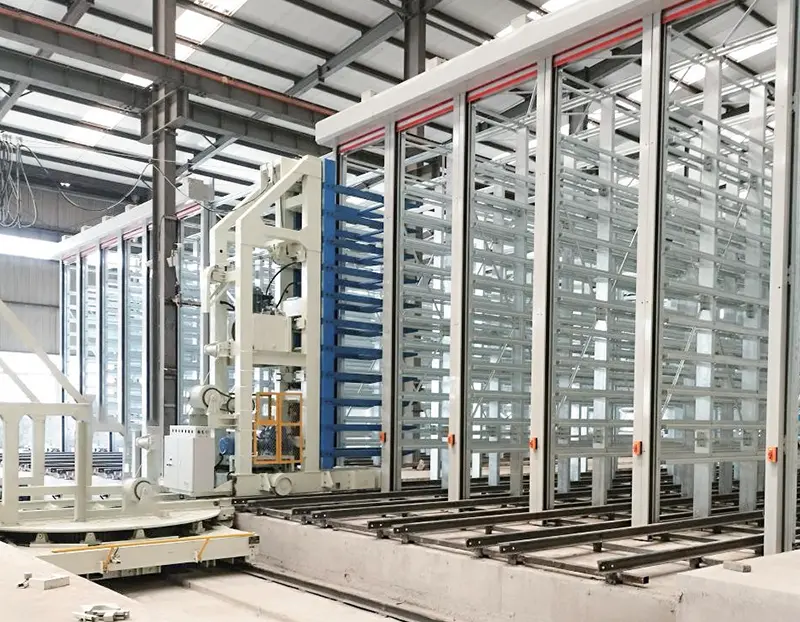
Understanding the Core Function
A Brick-Concrete Structure Curing Kiln works by enclosing concrete blocks, panels, or other precast components in a sealed space where temperature, moisture, and airflow are precisely regulated. This controlled curing accelerates cement hydration, reduces cracking, and improves compressive strength, especially in large-scale production lines.
Key Roles at a Glance
-
Stable temperature maintenance
-
Uniform humidity distribution
-
Reduced curing cycle time
-
Improved product consistency
Why It Matters in Industrial Production
Concrete products cured in uncontrolled environments are prone to uneven strength and surface defects. A Brick-Concrete Structure Curing Kiln eliminates these risks by standardizing the curing process, which is crucial for meeting international construction standards and client expectations.
Q1: Why is controlled curing better than natural curing?
A: Controlled curing ensures predictable strength development and reduces waste caused by defective products.
Practical Effects and Results
The use of a Brick-Concrete Structure Curing Kiln directly translates into measurable improvements on the factory floor. Production cycles become shorter, inventory turnover improves, and energy usage is optimized through insulation and heat recovery systems.
Q2: How does this equipment improve daily output?
A: Faster curing allows more batches per day without compromising quality.
Comparison: Traditional Curing vs Kiln Curing
| Item | Traditional Curing | Kiln Curing |
|---|---|---|
| Time Efficiency | Slow | High |
| Quality Stability | Inconsistent | Uniform |
| Labor Dependence | High | Low |
| Energy Control | Poor | Precise |
Importance for Long-Term Competitiveness
In markets where quality certification and delivery speed define competitiveness, adopting a Brick-Concrete Structure Curing Kiln is a strategic decision. It supports standardization, automation, and sustainability goals, especially when paired with intelligent manufacturing systems.
Q3: Which manufacturers benefit most from this solution?
A: Medium to large precast plants seeking scalable and standardized production.
Partnering with the Right Manufacturer
At QUANGONG MACHINERY CO.,LTD, advanced curing kiln systems are engineered with durability, energy efficiency, and integration flexibility in mind. Through years of industry experience, we focus on aligning equipment performance with real production needs. In project planning and after-sales support, we emphasize reliability and measurable ROI, ensuring clients can expand capacity with confidence. By combining innovation with proven engineering, we help manufacturers stay ahead in a competitive global market.
If you are planning to upgrade your curing system or build a new production line, contact us today to explore a solution tailored to your concrete manufacturing goals.